

Key Takeaways
Why Busy Schedules and Good Nutrition Seem to Conflict
Most adults already understand the basics of balanced eating. The gap isn't knowledge — it's execution under pressure. When calendars fill up and energy runs low, nutrition decisions default to whatever is fastest, not necessarily what supports the body best.
The good news: sustainable healthy eating doesn't require elaborate meal plans or significant cooking time. It requires a handful of reliable strategies applied consistently. For a grounding review of what balanced eating actually looks like on a plate, see what nutrition science says a well-rounded meal should contain.
Prep ingredients, not full meals, once or twice a week.
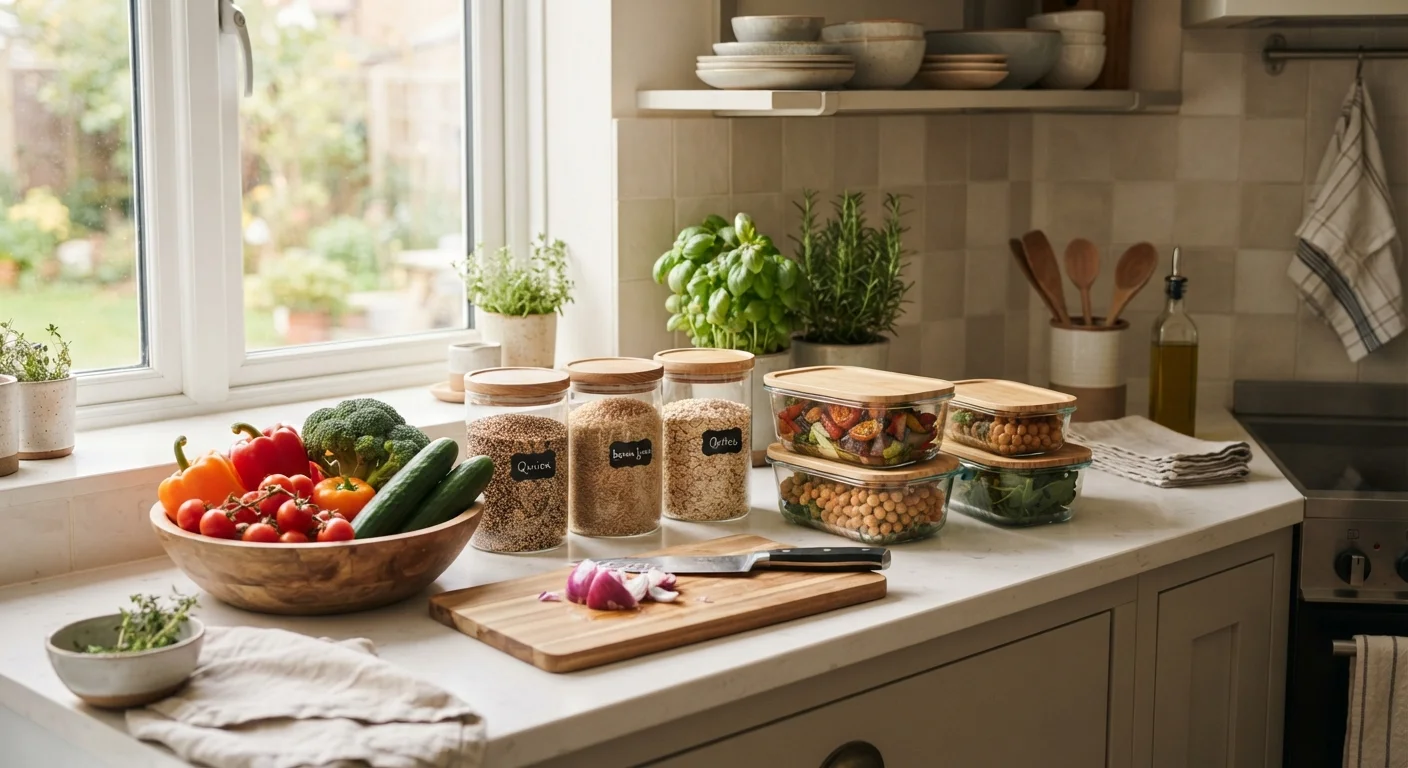
Prepping complete meals in advance can feel overwhelming and limits flexibility. Washing and chopping vegetables, cooking a batch of whole grains, and portioning a protein source takes 30–45 minutes but provides usable building blocks for several days of varied meals. This reduces the daily decision load without requiring you to eat the same thing repeatedly.
Apply a simple three-part plate structure at every meal.
Rather than tracking nutrients individually, a reliable shorthand — fill roughly half the plate with vegetables or fruit, one quarter with a protein source, and one quarter with a whole grain or starchy vegetable — covers most nutritional bases without mental overhead. This approach aligns with evidence-based frameworks for dietary variety. For a deeper look, this practical starting point for balanced eating covers the core principles clearly.
Stock minimally processed convenience options as deliberate backup.
Ultra-processed foods dominate the convenience aisle, but minimally processed options — canned legumes, frozen edamame, rotisserie chicken, pre-washed greens — offer comparable speed with meaningfully better nutritional profiles. Having these stocked removes the false choice between fast and nutritious on high-pressure days.
Protect at least one mindful meal per day.
Research consistently shows that eating while distracted is associated with reduced satiety awareness and greater overall intake. Even one meal per day eaten without screens or multitasking helps recalibrate hunger and fullness cues. This doesn't require silence or ritual — just a brief pause from other stimuli. See what research says about distracted eating and mindful mealtimes for more context.
Address micronutrient gaps with targeted, low-effort food choices.
Iron, magnesium, calcium, and vitamin D are among the nutrients most commonly under-consumed by US adults, and their shortfalls often go unnoticed. A few strategic additions — a small handful of pumpkin seeds, a can of sardines, a cup of fortified plant milk — can meaningfully shift intake without restructuring the entire diet. Discover which food sources help close common micronutrient gaps.
Core Practices That Hold Up Under Real-Life Pressure
The following strategies aren't theoretical ideals — they're approaches that work precisely because they reduce friction rather than add it. Each one fits within an already demanding schedule.
Building Consistency Without Rigidity
Rigid meal plans tend to collapse under real-world variability. A more durable approach is to build two or three anchor meals — reliable, nutritionally solid options you return to automatically during busy stretches. These don't need to be exciting; they need to be easy and good enough.
When those anchors are in place, the rest of the day has flexibility built in. Missing one meal or making an imperfect choice doesn't destabilize the overall pattern. This mirrors guidance explored in structuring meals when your day rarely goes to plan.
Anchor Meals Work Because of Repetition, Not Perfection
An anchor meal doesn't have to be nutritionally flawless — it just needs to be good enough and genuinely repeatable. Overly strict standards tend to backfire when time is short. Think of anchor meals as reliable defaults rather than ideal targets. Over time, even modest nutritional consistency outperforms sporadic perfection.
It's also worth noting that time pressure often compounds stress — and stress can directly affect appetite and food choices. Evidence-informed stress management techniques that fit into tight windows can support your eating patterns as much as any meal strategy.
This article provides general nutrition information and is not a substitute for personalized advice from a qualified healthcare professional or registered dietitian.