
The Science of Hunger and Satiety: Hormones, Signals, and What Drives Appetite

Key Takeaways
Why Appetite Is More Complex Than Hunger
Most people use "hunger" and "appetite" interchangeably, but nutrition science draws an important distinction. Hunger refers to the physiological drive to eat — triggered by energy depletion and hormonal signals. Appetite is broader, encompassing the psychological desire to eat, shaped by habits, emotions, sensory cues, and social environment.
What drives you to reach for food at 9 p.m. when you are not physically hungry is appetite — influenced by memory, reward pathways, and learned associations. Understanding both systems is essential for anyone trying to build sustainable eating habits, as explored in the comprehensive resource on balanced eating principles.
The body regulates energy intake through a remarkably precise feedback system involving hormones, the nervous system, and the gut. When this system functions well, it nudges intake toward energy balance. When disrupted — by poor sleep, chronic stress, or ultra-processed foods — it can push intake well beyond genuine need.
The Key Hunger and Satiety Hormones
Several hormones act as primary messengers in appetite regulation. Here are the most well-established ones:
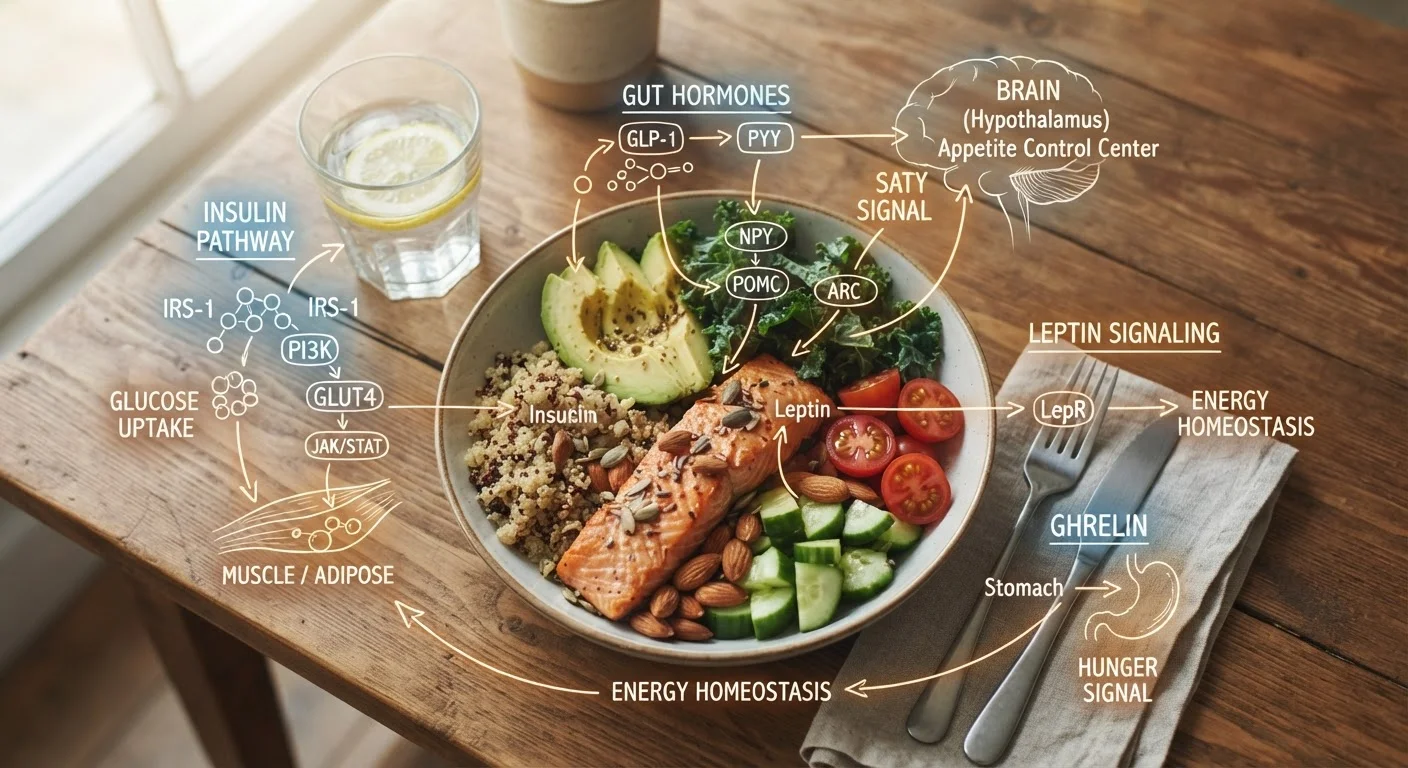
- Ghrelin: Often called the "hunger hormone," ghrelin is produced primarily in the stomach and rises sharply before meals, signaling the brain to initiate eating. Levels fall after food consumption. Importantly, research shows that ghrelin levels remain elevated for longer in people who are sleep-deprived.
- Leptin: Secreted by fat (adipose) tissue, leptin signals energy sufficiency to the hypothalamus — essentially telling the brain that adequate energy stores exist and suppressing appetite. Paradoxically, many people with obesity develop leptin resistance, meaning the signal is present but the brain stops responding to it effectively.
- GLP-1 (Glucagon-Like Peptide-1): Released by intestinal cells after eating, GLP-1 slows gastric emptying, stimulates insulin release, and reduces appetite. It has become a target for pharmaceutical appetite-regulation therapies, reflecting its central role in satiety.
- PYY (Peptide YY): Also released from the gut after meals, PYY suppresses appetite and is particularly responsive to protein intake, which helps explain why high-protein meals tend to be more satiating.
- Insulin: Beyond glucose regulation, insulin acts in the brain to suppress appetite over the medium term, working alongside leptin in longer-range energy balance signaling.
~20 min
Time for gut satiety signals to reach the brain
Research on gastric stretch and hormonal signaling consistently identifies a lag of roughly 15–20 minutes between eating and full satiety registration.
24–25%
Greater calorie intake linked to sleep restriction
Studies published in peer-reviewed journals have found that partial sleep deprivation is associated with meaningfully higher caloric intake the following day.
2–3x
Relative satiety advantage of protein vs. carbohydrates
Metabolic research indicates protein exerts roughly two to three times the satiety effect per calorie compared with refined carbohydrates, due in part to PYY and GLP-1 stimulation.
The Gut-Brain Axis: Your Body's Appetite Network
The gut and brain communicate constantly through what researchers call the gut-brain axis — a bidirectional network involving the vagus nerve, the enteric nervous system (often dubbed the "second brain"), gut-derived hormones, and increasingly, the gut microbiome.
The vagus nerve carries satiety signals from the gut directly to the brainstem, registering mechanical stretch (how full the stomach is) and chemical signals (nutrient composition). This is one reason eating slowly supports better satiety awareness — stretch receptors need time to register.
Emerging research suggests the gut microbiome also influences appetite. Certain bacterial communities affect how gut hormones like GLP-1 and PYY are secreted, and may even influence cravings through neural and inflammatory pathways. While this field is still developing, the principle that dietary diversity supports a healthy microbiome — and potentially better appetite regulation — is consistent with broader nutritional guidance. For a more critical look at how to evaluate claims in this space, see how to read nutrition research without being misled.
When building a meal specifically to manage hunger through the afternoon, anchor it with a protein source and a fiber-rich vegetable rather than relying on volume alone. These two factors drive the gut hormone response most strongly.
PYY secretion is particularly sensitive to both protein and fermentable fiber, making this combination more effective at sustaining satiety than a high-calorie but low-protein or low-fiber meal.
If you consistently feel hungry shortly after eating, consider the pace and environment of your meals before adjusting portion sizes — distracted or rapid eating routinely undermines the gut-brain satiety feedback loop.
The vagus nerve-mediated fullness signal requires adequate time to travel from the gut to the brainstem; eating speed is a modifiable behavior with direct hormonal consequences.
What Disrupts Appetite Regulation
Several lifestyle and dietary factors can override or impair the body's built-in appetite control system:
- Sleep deprivation
- Even a single night of shortened sleep has been shown in controlled studies to raise ghrelin and reduce feelings of satiety, while also increasing preference for calorie-dense foods.
- Chronic stress
- Elevated cortisol — the primary stress hormone — promotes fat storage and can increase appetite, particularly for high-fat, high-sugar foods. The stress-eating pattern has a documented hormonal basis.
- Ultra-processed foods
- Foods engineered for palatability — high in refined carbohydrates, fat, and sodium — can override satiety signals. They are digested rapidly, causing sharp rises and falls in blood glucose that re-trigger hunger sooner than whole foods would.
- Eating speed and distraction
- Distracted eating reduces awareness of satiety cues, often leading to greater intake before fullness registers. Research on mindful eating consistently finds that attention to food enhances satiety signaling — a topic examined in depth in the article on eating without distraction.
Unexplained shifts in hunger — persistent unusual thirst, sudden changes in appetite, or dramatic weight fluctuations — can sometimes signal underlying health conditions. These are body signals worth discussing with a healthcare provider rather than dismissing.
Evidence-Based Strategies to Support Healthy Appetite Signals
While no eating strategy guarantees a particular outcome, research consistently points to several habits that support the body's natural appetite regulation:
- Prioritize protein at meals. Protein is the most satiating macronutrient, stimulating PYY release and slowing gastric emptying. Including a quality protein source at each meal is among the most replicated findings in satiety research.
- Include fiber-rich foods. Dietary fiber slows digestion, blunts post-meal glucose spikes, and feeds gut bacteria that may support GLP-1 secretion. Legumes, vegetables, and whole grains are reliable sources.
- Eat at a measured pace. Satiety signals from the gut take approximately 15–20 minutes to reach the brain at full strength. Slowing the pace of eating gives these signals time to register before overconsumption occurs.
- Protect sleep quality. Consistently adequate sleep supports normal ghrelin and leptin levels. Treating sleep as a nutritional priority — not a luxury — has a direct impact on appetite hormones.
- Manage stress actively. Stress management techniques such as regular physical activity, adequate rest, and structured relaxation practices can moderate cortisol's impact on appetite.
Exploring how these strategies integrate into real eating patterns is worthwhile — the eating patterns hub offers frameworks that address hunger regulation in practical, schedule-friendly ways.
This article is for general informational and educational purposes only and does not constitute medical advice. If you have concerns about your appetite, weight, or overall health, consult a qualified healthcare professional.