

Key Takeaways
What Movement Snacks Are — and Why They Work
A movement snack is a brief, intentional bout of physical activity — typically two to ten minutes — taken multiple times throughout the day rather than consolidated into a single workout session. The concept rests on a well-supported principle in exercise physiology: accumulated activity totals matter, not just whether movement happens in one continuous block.
Research consistently shows that short, repeated bouts of moderate-intensity movement can produce measurable improvements in cardiovascular fitness, blood glucose regulation, and musculoskeletal health. For a deeper look at the mechanisms behind why this works, see the science behind why small movements add up.
Movement snacks are not a replacement for structured exercise when your goals require it — they are a practical complement, and for many busy adults, they represent the most realistic way to stay consistently active. The critical variable is not intensity; it is repetition over time. A two-minute walk taken five times per day, every workday, compounds into a meaningful volume of movement across weeks and months.
Habit Stacking Makes Snacks Stick
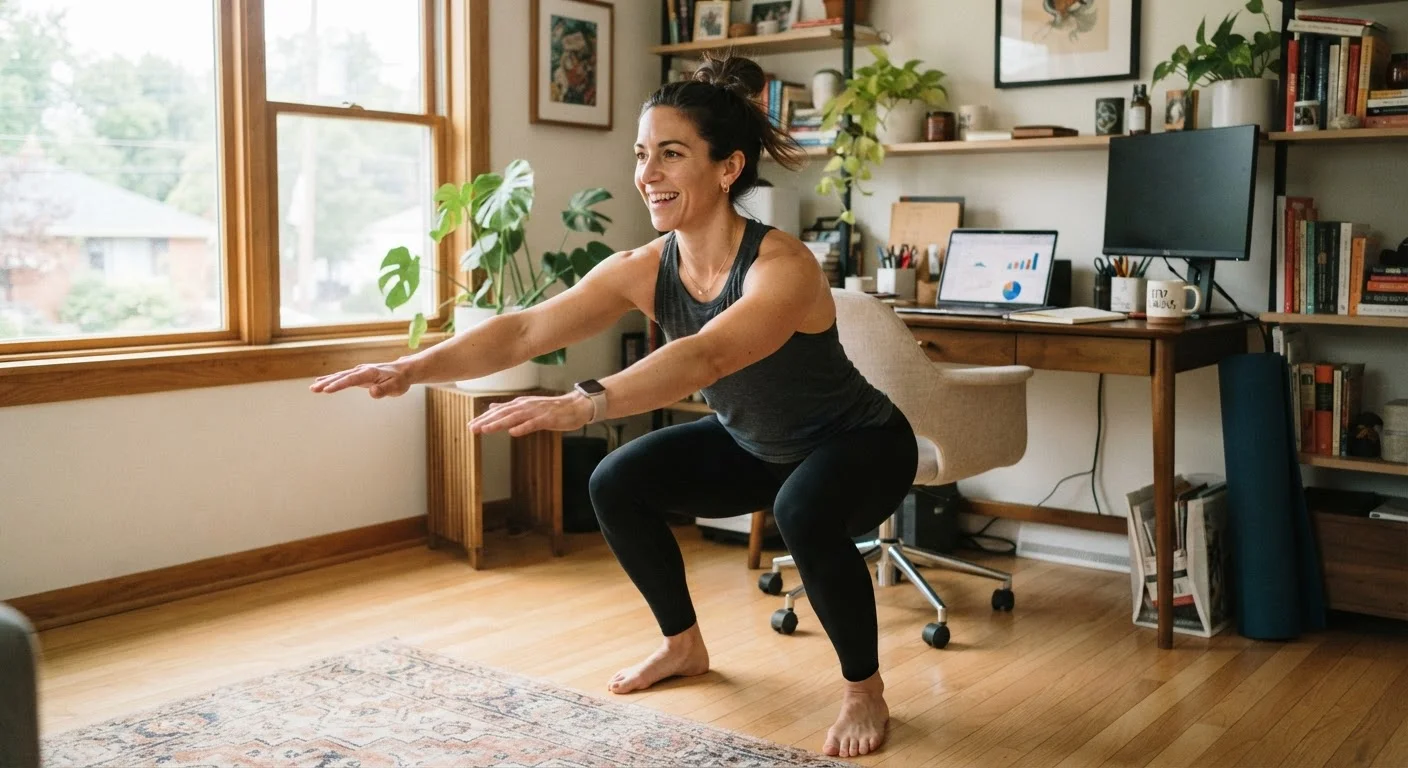
Attaching a movement snack to an existing habit — such as doing ten squats every time you pour a glass of water — leverages a well-established behavior-change technique called habit stacking. The existing cue (pouring water) triggers the new behavior automatically, reducing the mental effort required. Start with one stacked pair before adding more.
How to Build Your Movement Snack Routine
The steps below walk you through designing a sustainable, schedule-proof movement snack system. Before starting, review what you'll need:
What you will need
You'll also benefit from having a few go-to movement options ready. The following tools can help expand your options, though none are essential:
Timer or smartphone alarm
Triggers scheduled movement breaks at consistent intervals throughout the day.
Resistance band
Adds light resistance to seated or standing exercises during snack breaks, increasing muscular stimulus.
Step or low stair
Enables step-ups and calf raises for a quick lower-body movement snack anywhere there's a step.
Map your existing daily schedule
Before adding anything new, write down or review a typical workday hour by hour. Identify three to five natural transition points — moments where one task ends and another begins, such as after a meeting, before lunch, or following your first coffee. These are your anchor points for movement snacks. Treat them as built-in opportunities rather than interruptions.
Choose a movement menu that fits your context
Select three to five exercises you can perform in your available space and attire. At a desk, options include seated torso rotations, calf raises, and standing hip hinges. In a hallway or stairwell, try brisk walking, stair climbing, or lunges. At home, add bodyweight squats, push-ups, or a short yoga flow. Having a pre-selected menu removes decision fatigue in the moment.
Set timed reminders to trigger each snack
Use your phone's alarm or a calendar block to cue each planned movement snack. Label each alarm with the specific activity — for example, "10 squats + walk to kitchen" — so there's no guesswork when it goes off. Aim for at least three reminders spaced across the workday. Specificity is key: vague reminders like "move more" are easy to dismiss.
Start small and build duration gradually
Begin with two-minute snacks. After one to two weeks of consistent follow-through, extend each snack to four or five minutes. This gradual progression reduces the psychological barrier to starting and lets your body adapt without risk of overuse. The goal is to make movement feel automatic before increasing the dose.
Track your snacks and review weekly
At the end of each day, make a simple note — a tally in a notebook, a habit-tracking app, or a calendar checkmark — of how many movement snacks you completed. Review the week every Sunday. Look for patterns: which anchors worked, which were consistently skipped, and whether duration felt manageable. Use this information to adjust your schedule for the following week.
Integrate snacks into travel and varied settings
Movement snacks are especially valuable when your normal routine is disrupted. During travel days, use airport terminals for walking loops, do standing calf raises at the gate, or fit in a hallway lunge circuit at your hotel. The same principles apply: anchor to transitions, keep it brief, and use your pre-built movement menu. For strategies specific to being on the road, the movement-rich day guide offers adaptable approaches for non-gym environments.
Once your routine is established at home or in the office, the same framework transfers easily to travel. The Fitness While Traveling hub covers additional strategies for keeping movement consistent on the road, and turning everyday routines into more steps offers complementary ideas for embedding activity into moments you already move through each day.
This article is for general informational purposes only and is not a substitute for professional medical or fitness advice. If you have any health concerns or underlying conditions, consult a qualified healthcare provider before beginning a new exercise routine.