

Key Takeaways
Summary
22 items · 20–40 minutes
Why What You Bring Matters
A preventive health appointment is one of the most high-value interactions you can have with the healthcare system — but only if your provider has the information needed to make sound clinical decisions. Arriving without key records, history details, or insurance documents doesn't just slow things down; it can result in redundant tests, missed screenings, or follow-up gaps that undermine the whole purpose of the visit.
Preventive screenings differ from diagnostic tests in that they aim to detect risk factors or early-stage conditions before symptoms develop. That means the clinical picture your provider builds during the visit depends heavily on what you share — not just what shows up in a lab result. The checklist below is designed to help you walk in fully prepared.
Patient Portal or Health App
Access past lab results, visit summaries, and immunization records from your healthcare system before the appointment.
Paper Medication List or Pill Bottles
Provides an accurate reference for all medications, dosages, and frequencies — critical for medication reconciliation at check-in.
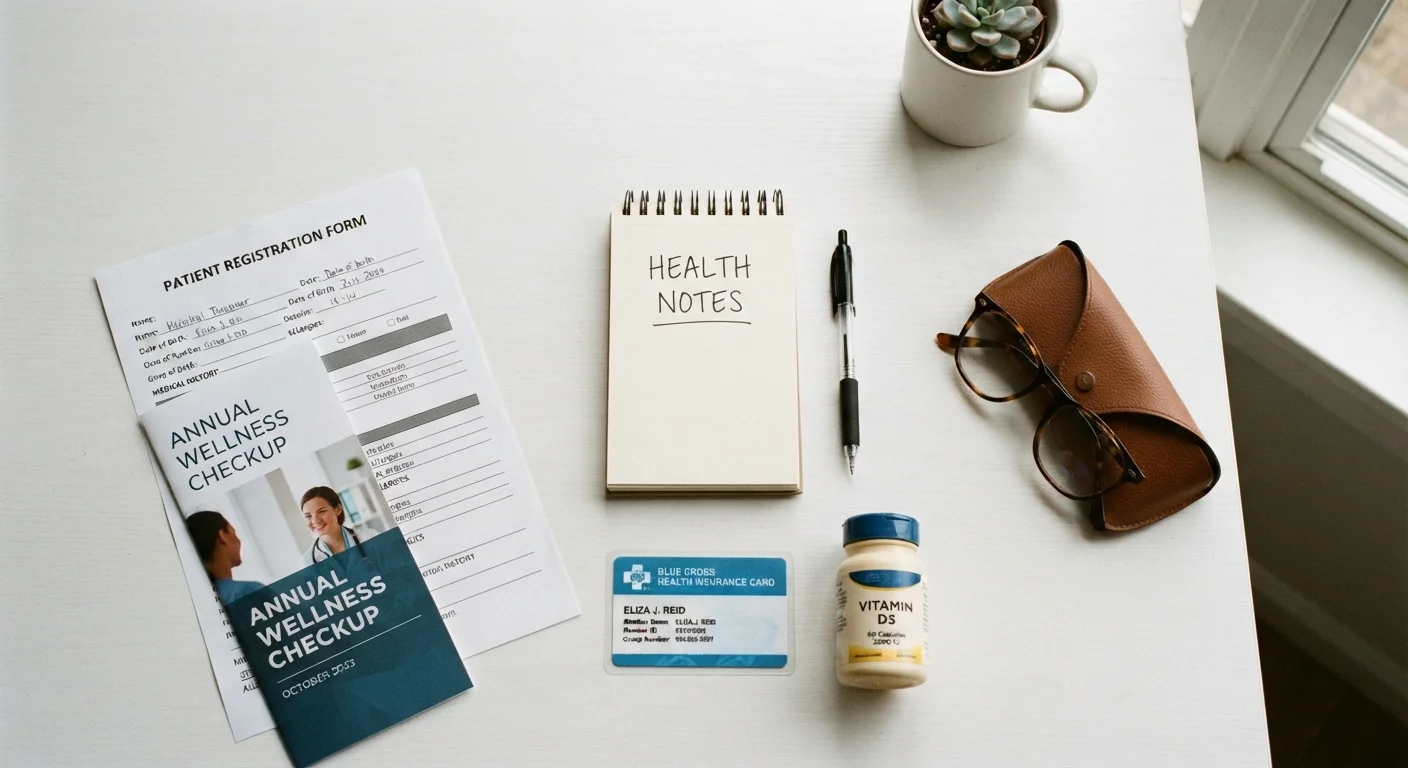
Notepad and Pen
Take notes on provider recommendations, follow-up actions, and next screening dates during the appointment.
Medical Records Release Form
Request and transfer records from prior providers or specialists to your current care team if records aren't already shared.
The Complete Preparation Checklist
Work through each group in the days before your appointment rather than scrambling the morning of. Some items — like gathering records from a previous provider — may take a few business days to obtain.
Identity & Insurance
Medical History
Medications & Supplements
Family Health History
Lifestyle & Social History
Questions to Ask Your Provider
Do Not Skip the Medication List
An incomplete or absent medication list is one of the most common and consequential gaps in preventive visits. Drug interactions, contraindications to certain screenings, and lab value distortions can all stem from unknown medications — including supplements and over-the-counter products. Take 10 minutes before your appointment to write out every substance you take regularly, and bring it in writing rather than relying on memory.
If you manage a chronic condition, your preparation may look somewhat different. Preventive care for people with chronic conditions often involves an adjusted screening schedule and additional specialist records worth bringing along.
Making the Most of Your Visit
Arriving prepared is the foundation; using your time well once you're there is the next step. Keep your list of questions short and prioritized — most primary care appointments run 20 to 30 minutes, and covering everything matters more than covering it exhaustively. If a concern isn't addressed, ask your provider whether a follow-up call or patient portal message is appropriate.
After the appointment, note any recommended follow-up screenings, referrals, or labs so nothing falls through the cracks. Building on the habits established at the visit — consistent sleep, physical activity, and stress management — reinforces what preventive care is designed to support. Proactive habits work alongside screenings, not instead of them. And don't overlook the checks that often get skipped: skin, vision, and dental exams are an important part of a complete preventive picture.
This article is for general informational purposes only and does not constitute medical advice. Always consult a qualified healthcare professional regarding your individual health needs, symptoms, or medical history.