

| Red flag urgency | Seek emergency care immediately |
| Yellow flag urgency | Schedule a provider visit within days to weeks |
| Green flag urgency | Monitor at home; reassess if symptoms worsen |
| When in doubt | Default to professional evaluation |
| Key triage question | Has anything changed in character, duration, or severity? |
Why Categorizing Symptoms Matters
Not every ache deserves an emergency room visit — and not every unusual sensation should be shrugged off. Most adults navigate a wide middle ground where the real skill is knowing which category a symptom falls into. Clinicians routinely use a mental triage framework: red flags signal potential emergencies requiring immediate care, yellow flags suggest symptoms worth monitoring or scheduling an appointment about, and green flags point to self-limiting issues likely to resolve on their own.
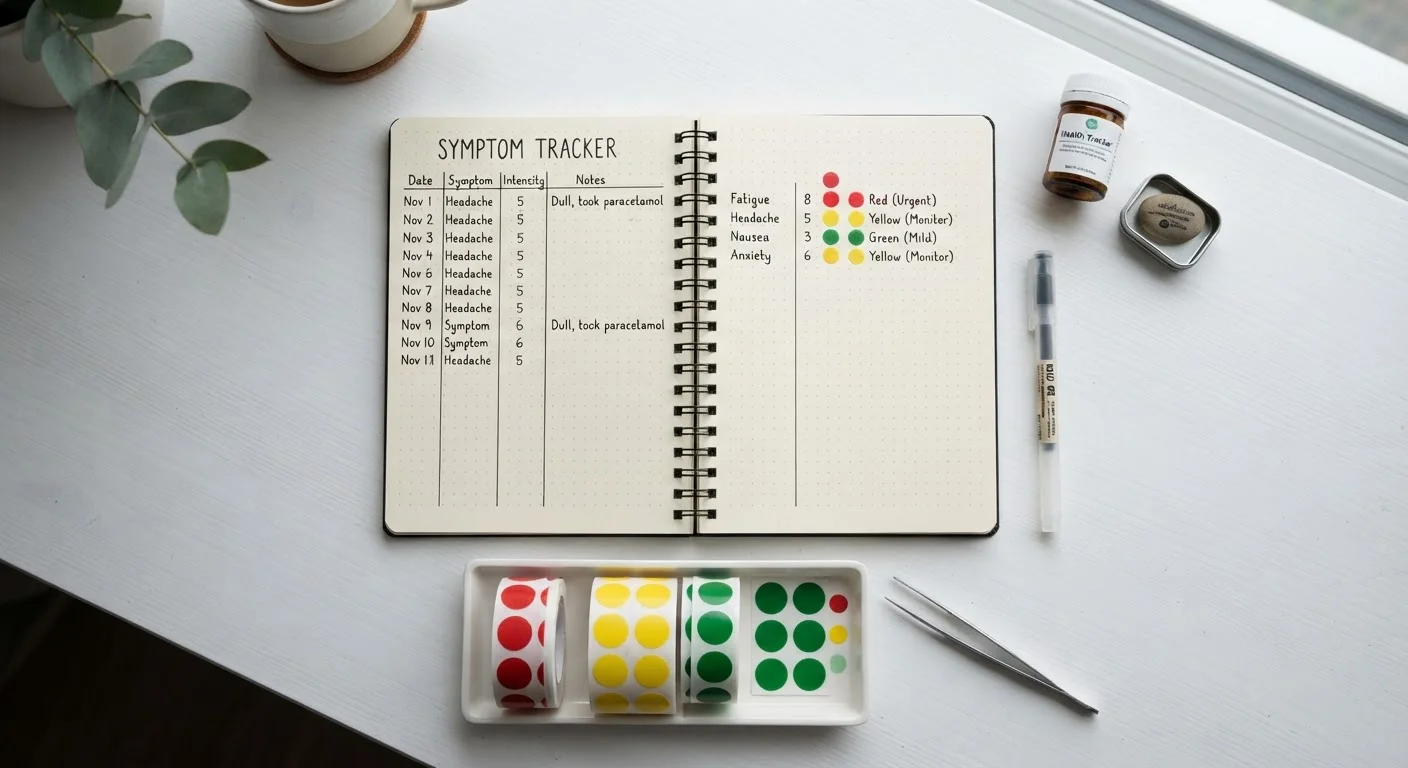
Building this kind of health literacy doesn't replace professional medical judgment, but it does help you make better decisions faster. If you're also trying to document what you notice over time, see our guide to symptom tracking habits for practical methods you can start using today.
| Red flag urgency | Seek emergency care immediately |
| Yellow flag urgency | Schedule a provider visit within days to weeks |
| Green flag urgency | Monitor at home; reassess if symptoms worsen |
| When in doubt | Default to professional evaluation |
| Key triage question | Has anything changed in character, duration, or severity? |
Red Flag Symptoms: Act Immediately
Red flag symptoms are those that may indicate a life-threatening condition or one that worsens rapidly without treatment. When these appear, the appropriate response is to call emergency services or go to an emergency department — not to wait and see.
- Chest pain or pressure, especially with shortness of breath, sweating, or pain radiating to the arm or jaw
- Sudden severe headache described as the worst of your life, with no prior history of similar episodes
- Difficulty speaking, facial drooping, arm weakness — classic signs that may indicate stroke
- Coughing or vomiting blood, or blood in the urine or stool that appears bright red or tar-black
- Sudden loss of vision or double vision
- High fever with stiff neck and sensitivity to light — a possible sign of meningitis
- Severe allergic reaction: throat swelling, hives spreading rapidly, difficulty breathing
These examples are not exhaustive. When in doubt, err toward getting professional evaluation rather than waiting. Time-sensitive conditions like stroke and cardiac events have significantly better outcomes with rapid intervention.
Red flag symptom
A symptom that may indicate a serious or life-threatening condition requiring immediate medical attention. Examples include sudden severe chest pain and stroke warning signs.
Yellow flag symptom
A symptom that is unlikely to be an emergency but warrants professional evaluation if it persists, worsens, or is unexplained. It sits between routine and urgent.
Green flag symptom
A self-limiting symptom expected to resolve on its own without medical treatment, such as mild cold symptoms or post-exercise muscle soreness.
Self-limiting condition
A condition that runs its natural course and resolves without specific medical intervention, given adequate rest and general supportive care.
Triage
The process of sorting patients or symptoms by urgency to prioritize who needs care first. The term originates in emergency medicine but applies to individual health decision-making.
Health literacy
The ability to find, understand, and use health information to make informed decisions about one's own care and well-being.
Yellow Flag Symptoms: Monitor and Seek Care
Yellow flag symptoms aren't usually emergencies, but they shouldn't be ignored. They warrant a scheduled call or visit to your primary care provider — often within days to a couple of weeks — especially if they persist or worsen.
- Unexplained fatigue lasting more than two weeks that isn't explained by sleep or activity changes
- Unintentional weight loss of more than a few pounds without a dietary or lifestyle explanation
- Recurring indigestion or heartburn that's new or has changed in character
- Changes in bowel habits lasting more than a few weeks
- Persistent low-grade fever without an obvious infection
- New or changing moles, skin lesions, or unusual lumps
- Shortness of breath during activities that didn't previously cause it
These symptoms often have benign explanations, but some can point to conditions that benefit from early detection. Our article on body signals adults often dismiss expands on why certain recurring symptoms deserve a closer look.
Context matters enormously. A yellow flag in someone with a relevant family history or existing chronic condition may need faster attention than the same symptom in a younger, otherwise healthy adult. Age-related shifts in how symptoms present are explored further in symptom awareness across life stages.
Green Flag Symptoms: Rest, Observe, Recover
Green flag symptoms are self-limiting — meaning they typically resolve without medical intervention. Recognizing these helps prevent unnecessary anxiety and over-medicalization of normal body responses.
- Mild muscle soreness 24–48 hours after unaccustomed physical activity (delayed onset muscle soreness)
- Common cold symptoms: runny nose, mild sore throat, low-grade fever, resolving within 7–10 days
- Minor cuts, scrapes, or bruises from everyday bumps
- Occasional loose stools after a dietary change or mild stomach upset
- Mild tension headache after a stressful day, responding to hydration and rest
Even green flag symptoms deserve attention if they shift in character. A cold that dramatically worsens after day five, a tension headache that changes in location or severity, or muscle soreness that's asymmetric or accompanied by swelling should all prompt reassessment.
If you tend to search symptoms online before deciding what to do, the practical checklist for searching symptoms online can help you approach that process more calmly and critically. For physical training specifically, understanding the difference between productive discomfort and warning signals is its own skill — covered in training signals worth paying attention to.
This article provides general health information and education only. It is not medical advice, a diagnosis, or a substitute for evaluation by a qualified healthcare professional. Always consult a doctor or seek emergency care if you are concerned about a symptom.