

Key Takeaways
Post-Traumatic Growth (PTG)
Post-traumatic growth refers to positive psychological change that some people experience as a result of struggling with highly challenging life circumstances. Rather than simply returning to their previous baseline after hardship, they emerge with a greater sense of personal strength, deeper relationships, or a renewed sense of purpose. It doesn't mean the trauma wasn't painful — it means the struggle itself became a catalyst for meaningful change.
The concept was formally developed by psychologists Richard Tedeschi and Lawrence Calhoun in the 1990s. PTG is typically measured across five domains: personal strength, new possibilities, relating to others, appreciation for life, and spiritual or existential change.
What Post-Traumatic Growth Actually Means
Most of us are familiar with the idea of resilience — the ability to weather difficulty and keep going. But researchers have identified something that goes a step further: post-traumatic growth (PTG), the experience of genuine positive transformation in the aftermath of struggle.
PTG doesn't mean trauma was a good thing, or that pain should be minimized. It means that for some people, the profound disruption caused by a major life event — illness, loss, relationship breakdown, or crisis — can shake loose old assumptions and open space for new ways of thinking, relating, and living.
Psychologists Richard Tedeschi and Lawrence Calhoun, who pioneered PTG research in the 1990s, identified five core domains where this growth tends to manifest: a heightened appreciation for life, deeper personal relationships, awareness of new possibilities, a stronger sense of personal strength, and changes in spiritual or existential understanding.
Critically, PTG is not the same as feeling better or returning to normal. It's a change that moves beyond the pre-trauma baseline — and it's often accompanied by continued pain, not instead of it. If you want to build the broader emotional habits that support this kind of growth, building a personal resilience practice is a valuable starting point.
Why Struggle — Not Just Stress — Matters
Not every difficult experience leads to PTG. Research suggests it tends to emerge from events that significantly challenge a person's core beliefs about the world — their sense of safety, identity, or meaning. Minor stressors rarely produce it. It's the encounters with life's hardest edges that carry the potential for this kind of transformation.
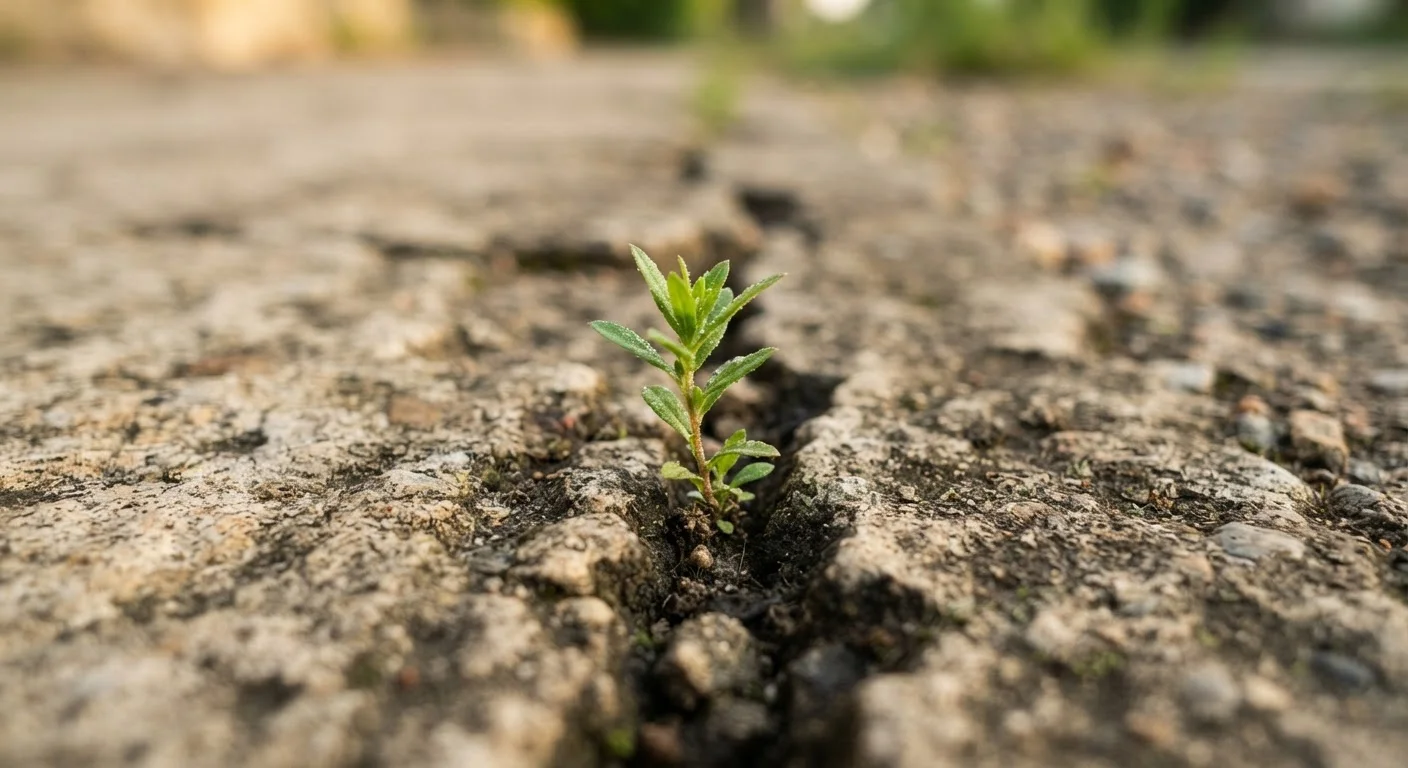
This is sometimes called the seismic metaphor: just as an earthquake reshapes the physical landscape, a profound crisis reshapes a person's psychological one. The rebuilding process — when supported and reflective — can produce a more complex, durable inner structure than existed before.
30–70%
Adults reporting some degree of PTG after trauma
Research compiled by Tedeschi and Calhoun suggests that between 30 and 70 percent of trauma survivors report at least some positive changes following their experience, depending on the population and type of event studied.
5
Core domains of post-traumatic growth
Tedeschi and Calhoun's Post-Traumatic Growth Inventory (PTGI) measures growth across five areas: personal strength, new possibilities, relating to others, appreciation for life, and spiritual or existential change.
It's worth noting that PTG research also highlights what doesn't help: avoidance, rumination, and minimizing distress. These patterns tend to delay or block growth. Understanding which behaviors quietly erode your emotional foundation is equally important — a topic explored in depth in our piece on resilience-undermining patterns.
Conditions That Support Post-Traumatic Growth
PTG is effortful. It doesn't arrive passively. Several conditions appear to make it more likely:
- Reflective processing: Deliberately making sense of what happened — through journaling, therapy, or honest conversation — helps people construct a coherent narrative rather than staying stuck in shock or avoidance.
- Social support: Connection with others who can listen without judgment creates the safety needed to process difficult emotions. This isn't about being told 'everything happens for a reason' — it's about feeling genuinely accompanied. Research consistently underscores how much relationships shape recovery, as outlined in our guide on social connection and emotional recovery.
- Cognitive flexibility: The ability to hold contradictions — 'this was terrible and something meaningful emerged' — is a hallmark of people who report PTG. Mindset shifts that support long-term emotional durability can help cultivate this capacity.
- Time and patience: Growth rarely follows a straight line. Expecting rapid transformation can itself become an obstacle.
“The assumption that people are damaged by adversity — that they always come away worse — is not supported by the evidence. Many people find themselves changed in ways they value deeply, even as they continue to grieve what they lost.”
— Richard Tedeschi, Professor of Psychology and co-developer of the Post-Traumatic Growth framework
Professional support — including trauma-informed therapy — can be a meaningful part of this process. If you're navigating ongoing distress after a difficult experience, speaking with a licensed mental health professional is strongly encouraged. This article provides general health information only and is not a substitute for personalized medical or mental health advice.
Growth and Pain Can Coexist
One of the most important — and often misunderstood — aspects of PTG is that it doesn't erase suffering. People who report significant post-traumatic growth often still carry grief, anger, or fear related to what they've been through. The growth happens alongside the pain, not in place of it.
This distinction matters because it protects against a harmful narrative: the idea that if you're still hurting, you're somehow failing to grow. In reality, the discomfort of processing a major life event may itself be part of what enables growth to take root. Recovering from burnout — a common precursor to deeper emotional reckoning — requires similar patience and care, as explored in our guide to strengthening resilience after burnout.
Understanding PTG isn't about silver linings or forced optimism. It's about recognizing that human beings have a remarkable, evidence-supported capacity to find meaning and emerge changed — not unscathed — from life's hardest chapters. And that capacity, when nurtured with honesty and support, can be genuinely transformative.