

Travel & Wellness

Packing Your Wellness Routine: What Actually Transfers to Travel

Share
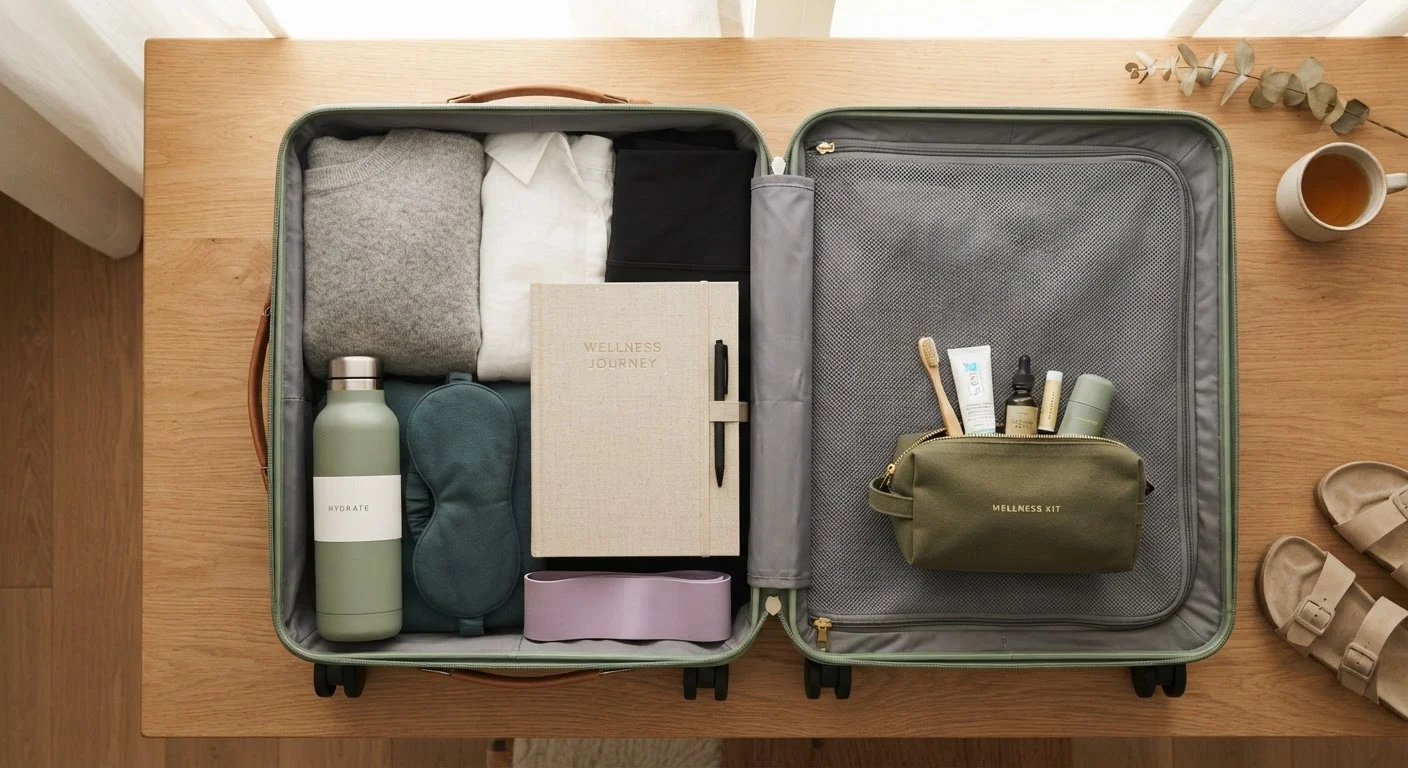
Open suitcase packed with wellness essentials including a journal, resistance band, and water bottle.

Key Takeaways

Not every home wellness habit is worth replicating exactly while traveling — some need adaptation.
Auditing your routine before departure helps you protect what matters most and release what doesn't.
Sleep, movement, hydration, and stress management are the four pillars most vulnerable to travel disruption.
A minimal, flexible version of each habit is more sustainable than trying to replicate your full home routine.
Planning for context — your destination, trip length, and schedule — shapes which habits will realistically transfer.
20–40 min

Summary

18 items · 20–40 minutes

Why Most Routines Don't Survive Contact With Travel

Health-conscious travelers often pack their intentions alongside their luggage — and leave both feeling overweight. The mistake isn't caring about wellness; it's assuming that what works in a stable home environment will automatically transfer to an unpredictable trip. It rarely does without deliberate adaptation.

Travel compresses sleep windows, removes familiar food environments, disrupts exercise schedules, and introduces low-grade stress that accumulates quickly. The result is a gap between the routine you planned and the one you actually follow. That gap tends to widen as trip length increases.

The more productive approach is a pre-trip audit: identifying which habits are genuinely load-bearing for your wellbeing and which ones only feel important because they're familiar. This checklist helps you do exactly that — across the four pillars most disrupted by travel: sleep, movement, nutrition, and mental health.

For a broader look at the emotional dimension of staying well on the road, the Mental Wellness Abroad starter framework is a useful companion to this audit.

Sleep Protection

Identify your non-negotiable sleep duration and plan your first 48 hours around protecting it. Must
Pack a sleep mask and earplugs to compensate for unfamiliar light and noise environments. Must
Research your destination's time zone and decide in advance whether gradual pre-adjustment is feasible. Should
Build a portable wind-down cue — a short breathing exercise, a consistent scent, or a specific playlist — that signals sleep regardless of location. Should
Avoid scheduling early-morning commitments on your first day in a significantly different time zone. Nice to have

Movement and Exercise

Determine the minimum effective movement session for your fitness level — the shortest workout that still leaves you feeling better than before. Must
Confirm what movement infrastructure exists at your destination (hotel gym, outdoor space, pool) before you arrive. Must
Pack at least one piece of equipment-free movement option — bodyweight circuits, a resistance band, or a jump rope — as a backup. Should
Schedule movement into your itinerary the same way you'd schedule a meeting, particularly on high-activity days. Should
Review the pre-trip fitness checklist to align gear with planned workouts. Nice to have

Nutrition and Hydration

Set a daily hydration baseline and identify how you'll track or maintain it on transit days specifically. Must
Pack a small selection of portable, non-perishable foods to bridge gaps when familiar options aren't available. Must
Research typical meal timing and food availability at your destination so you can plan around your energy needs. Should
Decide in advance how you'll navigate unfamiliar food environments — a useful perspective is available in the local food vs. familiar food guide. Nice to have

Mental Health and Stress Management

Identify the one mental health habit that most reliably regulates your stress — journaling, meditation, walking, calling a friend — and commit to protecting it. Must
Build in at least one unscheduled hour per travel day where you have no obligations, particularly on longer trips. Must
Adapt your mindfulness or meditation practice for shorter, location-flexible sessions — see the guide to mindfulness while moving for practical approaches. Should
Note early warning signs that your mental load is becoming unmanageable so you can intervene before burnout sets in. Nice to have

How to Use This Checklist Effectively

Work through each group before your next trip, not the morning of departure. The goal isn't to replicate your home routine item-by-item — it's to identify the minimum viable version of each habit that will keep you functional and feeling like yourself.

Pay particular attention to the must items; these are the habits with the clearest evidence base for sustaining energy, mood, and immune function during travel. The should items add meaningful support if your schedule allows. The nice-to-have items are worth including when conditions are favourable but aren't worth stressing over when they're not.

Required

Travel journal or notes app

Track which habits you attempted, what worked, and what to adjust for the next trip.

Required

Resistance band

Provides a full equipment-free strength training option in any hotel room or outdoor space.

Required

Refillable water bottle

Supports consistent hydration throughout transit days and at the destination.

Required

Sleep mask and earplugs

Mitigates unfamiliar light and noise environments that commonly disrupt sleep quality while traveling.

Optional

Meditation or breathwork app

Enables a portable, flexible mindfulness practice that doesn't depend on a quiet home environment.

Optional

Portable snack supply

Bridges nutritional gaps during long transit legs or when local food options don't align with your needs.

Once you've completed the audit, it's worth reviewing common wellness mistakes travelers make — the follow-up piece that covers what tends to go wrong even after a solid pre-trip plan.

This article is for general informational purposes only and does not constitute medical advice. Consult a qualified healthcare professional before making changes to your health routine, especially if you have an existing medical condition or are traveling with specific health considerations.

Travel & Wellness Editorial Team is the collective byline for our editorial team and contributor network. Articles published under this byline or an editorial pen name are researched, written, and reviewed according to our editorial standards for clarity, consistency, and independence before publication.

View all articles by Travel & Wellness Editorial Team →
Disclaimer: The content on this site is for informational purposes only and is not a substitute for professional advice. Always consult a qualified professional for guidance specific to your situation.