

Key Takeaways
Our Verdict
Neither rigid meal plans nor flexible eating is universally superior — what matters most is the approach you can consistently maintain. Rigid plans excel when structure reduces stress and supports clear goals; flexible eating works best when life is unpredictable or when rigidity has historically led to abandonment. A hybrid approach often offers the most sustainable path for busy adults.
| Best for | Recommended |
|---|---|
| Those who thrive on routine and want to eliminate daily food decisions | Rigid Meal Plans |
| People with variable schedules, travel demands, or social eating commitments | Flexible Eating |
| Anyone who has repeatedly abandoned strict plans due to 'all-or-nothing' thinking | Flexible Eating |
| Those pursuing specific, measurable nutrition or health goals with professional guidance | Rigid Meal Plans |
Defining the Two Approaches
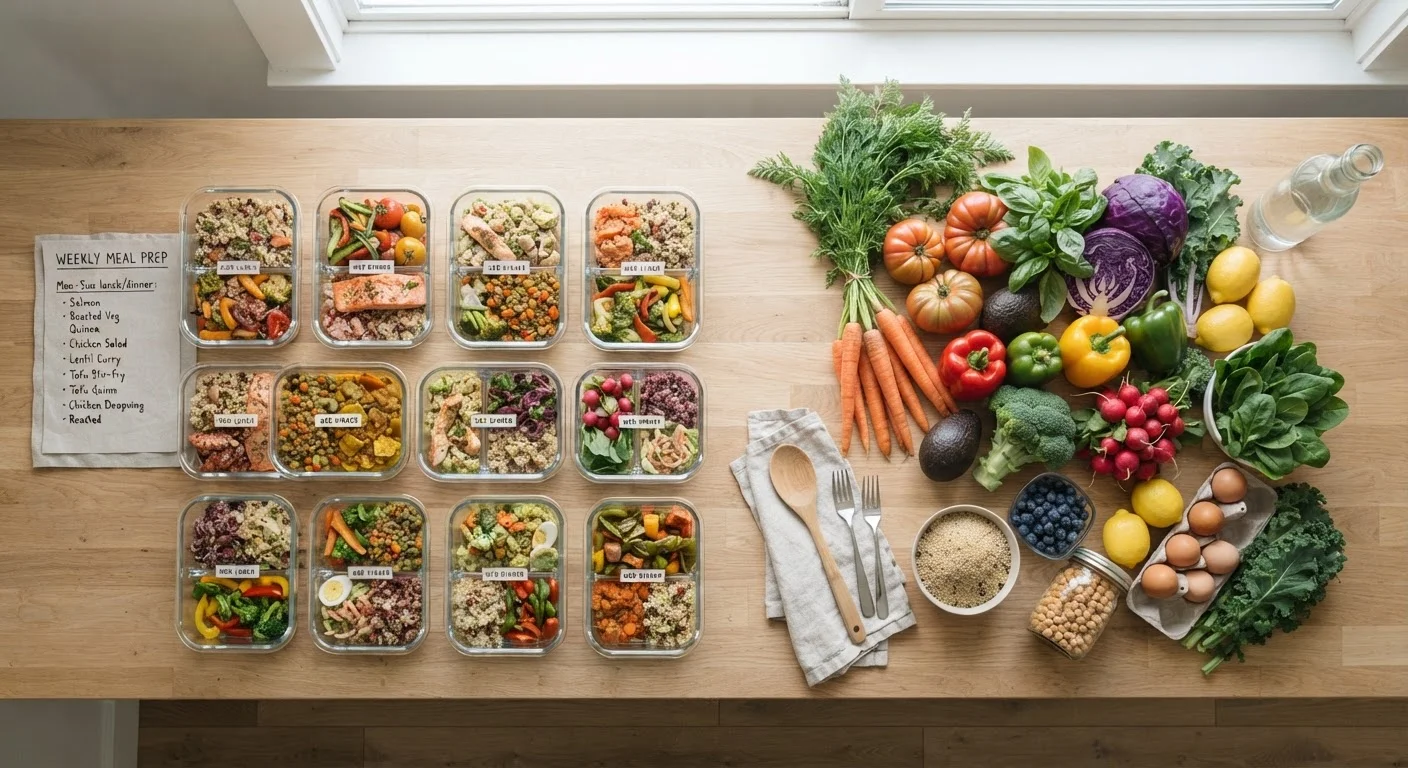
A rigid meal plan specifies what you eat at each meal, often down to portions and preparation methods, typically repeated on a weekly cycle. These plans remove ambiguity — breakfast is oatmeal, lunch is a chicken salad, dinner is salmon and vegetables — and that predictability is precisely the point.
Flexible eating, by contrast, operates around principles rather than prescriptions. You might aim for a certain balance of protein, vegetables, and whole grains across the day, then decide the specific foods in the moment. Approaches like intuitive eating and flexible dieting (sometimes called IIFYM — If It Fits Your Macros) fall into this category.
Both sit on the same nutritional spectrum. The difference is in how much structure you impose on the path to eating well. For context on how this tension mirrors broader lifestyle choices, see our comparison of fixed and flexible daily routines.
The Case for Rigid Meal Plans
Structured meal plans reduce what psychologists call decision fatigue — the mental exhaustion that accumulates from making too many choices throughout the day. When every meal is already decided, cognitive load drops, making it easier to stay consistent.
Rigid plans also excel in specific therapeutic contexts. People managing conditions such as type 2 diabetes, hypertension, or food allergies often benefit from predictable, controlled intake. Clinically supervised structured eating can help establish baselines that are difficult to track under flexible conditions.
The primary risk is rigidity itself. Research in behavioral nutrition consistently shows that highly restrictive frameworks increase the likelihood of complete abandonment when a deviation occurs — the so-called "all-or-nothing" effect. If Tuesday's lunch doesn't go to plan, some people write off the entire week.
| Rigid Meal Plans | Flexible Eating | |
|---|---|---|
| Daily decision-making | Minimal — meals are pre-decided | Moderate — choices made in the moment |
| Adaptability to life changes | Low — deviations disrupt the plan | High — principles travel with you |
| Ease of nutritional tracking | Easy — quantities are fixed | Requires active nutritional awareness |
| Risk of abandonment | Higher — all-or-nothing effect | Lower — allows for imperfect days |
| Best evidence context | Clinical/therapeutic settings | General long-term adherence |
| Social and travel compatibility | Challenging — limited menu flexibility | Strong — adapts to any situation |
See an honest breakdown of what structured eating gives and costs before committing to a fixed approach.
The Case for Flexible Eating
Flexible eating aligns more naturally with the reality of modern adult life — irregular work hours, restaurant meals, travel, and social occasions. Rather than working around a plan, you carry nutritional principles that adapt to whatever the day presents.
A growing body of research supports this approach for long-term adherence. A study published in the journal Eating Behaviors found that individuals who reported more dietary flexibility had lower rates of overeating and greater dietary satisfaction compared to those using rigid restraint strategies. Sustainable habits, researchers note, tend to be ones people can maintain without constant vigilance.
The challenge is that flexible eating demands a functional nutritional literacy. Without some awareness of protein, fibre, and energy density, flexibility can slide into inconsistency. Practical strategies for structuring meals around an unpredictable day can help bridge that gap.
Try a Structured-Flexible Hybrid
Consider anchoring one or two meals per day with a reliable default — a breakfast rotation, for example — while keeping other meals open. This reduces daily decisions without requiring complete rigidity. Over time, these anchors become automatic, freeing mental energy for other choices without sacrificing nutritional consistency.
Finding the Approach That Fits You
The most effective eating pattern is the one you can realistically sustain — a principle well-supported in nutrition science. That said, a few personal factors can help point you toward one end of the spectrum.
- Schedule predictability: If your days follow a consistent rhythm, a meal plan is easier to execute. Variable schedules favor flexibility. See how to build an eating pattern that fits your actual life.
- Your relationship with food: If rules have historically triggered guilt or binge-restrict cycles, strict plans may not serve you. If open choices lead to decision paralysis or poor defaults, some structure helps.
- Nutritional goals: Specific clinical or performance goals may warrant more precision. General wellness goals often do not require that level of control.
- Practical logistics: A weekly meal structure doesn't have to mean hours of Sunday prep — a middle ground many busy adults find workable.
Most people land somewhere between the two poles: they hold onto a loose framework — knowing roughly what a balanced plate looks like — while leaving room for real life to intervene without derailing the whole pattern.
This article is for general informational purposes only and is not a substitute for personalised medical or nutritional advice. Consult a registered dietitian or qualified healthcare professional before making significant changes to your diet, particularly if you have an existing health condition.