

Key Takeaways
Our Verdict
Each of the five frameworks reviewed here has a credible evidence base and a distinct set of trade-offs. The Mediterranean and DASH patterns carry the most robust long-term research, while plant-based, low-carb, and intermittent fasting approaches offer real benefits alongside specific challenges. Rather than selecting a 'best' framework, the more useful question is which structure fits your health goals, food preferences, and daily schedule.
| Best for | Recommended |
|---|---|
| Long-term cardiovascular and overall health support | Mediterranean or DASH |
| Environmental sustainability and ethical food choices | Plant-Based |
| Those who prefer flexibility in food choice over meal timing | Intermittent Fasting |
| Readers managing blood sugar or seeking reduced carbohydrate intake | Low-Carb (with professional guidance) |
How to Use This Framework Comparison
Choosing an eating pattern is rarely straightforward. Marketing language, conflicting headlines, and personal anecdotes can make it difficult to see how structured dietary approaches actually differ at a foundational level. This reference is designed to cut through that noise.
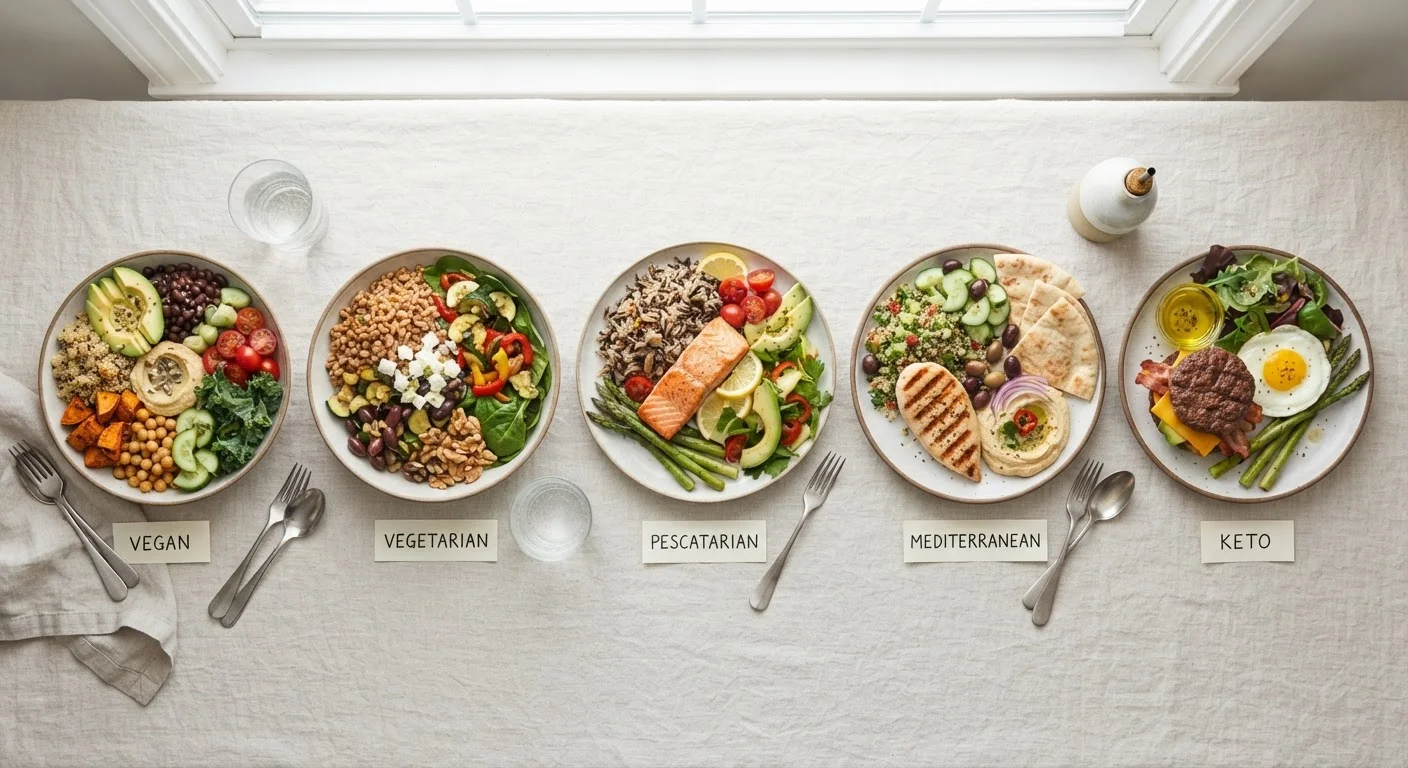
The five frameworks below — Intermittent Fasting (IF), Mediterranean, Plant-Based, DASH (Dietary Approaches to Stop Hypertension), and Low-Carb — are among the most widely researched and discussed eating patterns in current nutrition science. Each is examined across six practical dimensions: core principle, primary evidence base, key foods emphasized, common nutrient considerations, practical flexibility, and population fit.
This is general nutrition information, not medical advice. Anyone managing a health condition or considering a significant dietary change should consult a registered dietitian or qualified healthcare provider before proceeding. For a deeper look at how these patterns compare in practice, see an honest assessment of structured eating pattern trade-offs.
| Intermittent Fasting | Mediterranean | Plant-Based | DASH | Low-Carb | |
|---|---|---|---|---|---|
| Core principle | Time-restricted eating windows | Whole foods, healthy fats, variety | Center plants, minimize animal products | Reduce sodium, support heart health | Restrict carbohydrates, prioritize fat/protein |
| Primary evidence base | Weight, metabolic markers (mixed long-term) | Cardiovascular outcomes (robust) | Cardiometabolic, environmental (growing) | Blood pressure reduction (strong clinical) | Short-term weight, blood sugar (moderate) |
| Foods emphasized | No restriction on type, only timing | Olive oil, fish, legumes, vegetables | Vegetables, fruits, legumes, whole grains | Fruits, vegetables, low-fat dairy, grains | Meat, fish, eggs, non-starchy vegetables |
| Foods limited | None specified by framework | Red meat, processed foods, added sugar | Animal products (varies by approach) | Sodium, saturated fat, added sugars | Bread, rice, pasta, most fruits, legumes |
| Key nutrient considerations | Food quality still critical within window | Generally nutritionally complete | B12, iron, omega-3s may need attention | Generally nutritionally complete | Fiber, certain micronutrients may be low |
| Practical flexibility | Moderate — timing structure required | High — broad food variety allowed | Variable — depends on restriction level | High — no foods fully eliminated | Low to moderate — carb limits are strict |
| Population fit notes | Caution: history of disordered eating, diabetes | Broad applicability, culturally adaptable | Suitable for most; planning required | Designed for hypertension; broadly healthy | Caution: kidney disease, pregnancy, diabetes |
What Each Framework Actually Prioritizes
Understanding the organizing principle behind each framework clarifies why they differ so substantially in practice.
Intermittent Fasting
IF structures eating around time windows rather than specific food groups. Common protocols include 16:8 (16 hours fasting, 8-hour eating window) and 5:2 (normal eating five days, significant calorie restriction two days). Notably, IF says nothing about what to eat — only when. Skipping breakfast is not the same as following a fasting protocol, and the distinction matters for outcomes.
Mediterranean Pattern
Modeled on traditional eating habits of countries bordering the Mediterranean Sea, this pattern emphasizes olive oil, vegetables, legumes, whole grains, fish, and moderate amounts of dairy and red wine. It does not ban food categories outright, making it relatively flexible. It carries some of the strongest long-term cardiovascular outcome data of any dietary pattern studied to date.
Plant-Based Eating
This is a spectrum, not a single diet. It ranges from fully vegan (no animal products) to flexitarian (mostly plants, occasional animal foods). The unifying principle is centering whole plant foods. How the term 'whole food' is applied across plant-based and other frameworks is worth understanding before adopting this approach.
DASH
Developed specifically to reduce elevated blood pressure, DASH emphasizes fruits, vegetables, low-fat dairy, whole grains, and lean proteins while setting explicit limits on sodium, saturated fat, and added sugars. It has strong clinical support for blood pressure management and cardiovascular risk reduction.
Low-Carb
Low-carb patterns restrict carbohydrate intake — typically replacing those calories with fat and protein. Ketogenic diets represent the most restrictive end of this spectrum. Evidence supports short-term benefits for blood sugar management and weight loss in some populations, though long-term data remain more limited. Evidence-based nutrition science principles can help contextualize how macronutrient shifts affect metabolism.
Start With Evidence, Then Personalize
Reviewing the research on any framework is a useful starting point, but the most effective eating pattern is one you can sustain. Consider trialing an approach for four to six weeks while tracking how you feel, your energy levels, and whether the structure fits your schedule. Working with a registered dietitian can help you tailor whichever framework interests you to your specific nutritional needs.
Practical Considerations Before Choosing a Framework
No framework succeeds in isolation from real life. Research consistently shows that adherence — the ability to sustain a pattern over time — is one of the strongest predictors of dietary outcomes, often outweighing the specific approach chosen.
Several factors deserve honest reflection before committing to a structured eating pattern:
- Health status: Certain frameworks are contraindicated for specific conditions. Low-carb and IF patterns, for example, require particular caution for people managing diabetes, eating disorder history, or pregnancy. Always consult a healthcare provider in these cases.
- Social and cultural context: A pattern that conflicts with family meal culture or frequent social eating is harder to sustain.
- Nutrient gaps: Plant-based diets may require attention to vitamin B12, iron, and omega-3 fatty acids. Low-carb diets may affect fiber and certain micronutrient intake. Planning matters.
- Cost and access: The Mediterranean pattern, for instance, can be cost-effective with legumes and seasonal produce as staples — but fresh fish and quality olive oil are not accessible to everyone equally.
If the goal is building a personalized approach rather than adopting a named framework wholesale, building an eating pattern that reflects your life offers evidence-informed guidance for doing exactly that.
This article is for informational and educational purposes only and does not constitute medical or dietary advice. Consult a qualified healthcare professional before making significant changes to your eating pattern, especially if you have an existing health condition.