

Key Takeaways
Mediterranean Diet
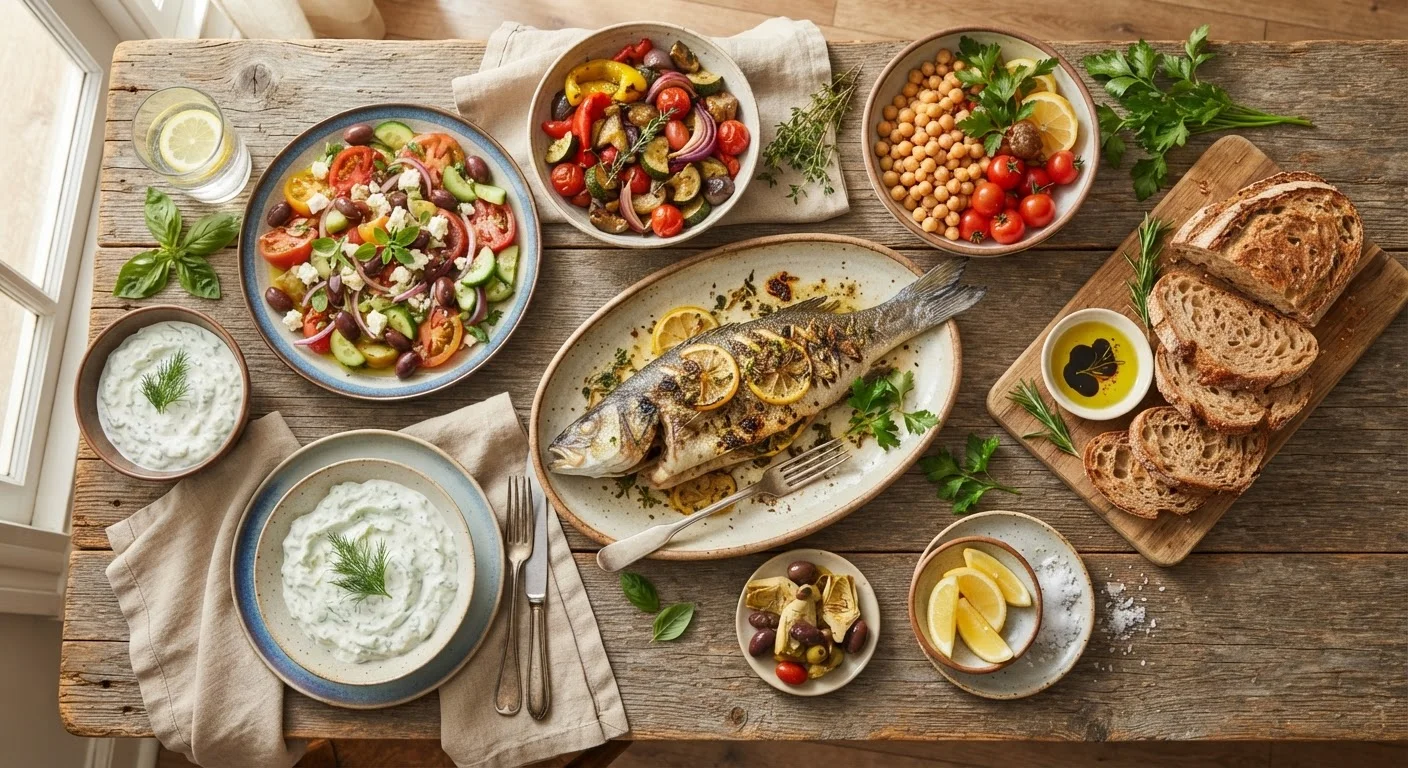
The Mediterranean diet is an eating pattern inspired by the traditional food habits of countries bordering the Mediterranean Sea. It emphasizes vegetables, fruits, whole grains, legumes, nuts, and olive oil as primary sources of fat, with moderate amounts of fish, poultry, and dairy, and limited red meat. It's less a prescribed plan and more a flexible framework of food priorities and proportions.
Much of the research on this pattern derives from the landmark PREDIMED trial, which linked Mediterranean-style eating to reduced cardiovascular risk in high-risk adults — though individual outcomes vary and research continues to evolve.
What the Mediterranean Diet Actually Is
Despite the name, the Mediterranean diet isn't a single country's cuisine — it's a pattern abstracted from the traditional eating habits of Greece, southern Italy, Spain, and neighboring regions, as documented by nutrition researchers in the mid-20th century and formalized through subsequent decades of study.
The core structure is straightforward: plant foods dominate, olive oil is the primary fat source, fish and seafood appear several times a week, and red meat is a peripheral rather than central ingredient. It imposes no calorie targets, no meal timing rules, and no banned foods. That flexibility is a feature, not a gap — it's what makes the framework durable across different households, budgets, and cultural backgrounds.
For a broader look at how this fits among other eating approaches, our side-by-side framework overview compares key dietary patterns across several dimensions.
The Building Blocks: What to Eat and How Often
Thinking in tiers helps clarify the pattern:
- Daily foundations: Vegetables, fruits, whole grains (such as farro, barley, and whole wheat), legumes (lentils, chickpeas, beans), nuts, seeds, and extra-virgin olive oil.
- Regular inclusions: Fish and seafood — especially fatty fish like sardines, mackerel, or salmon — several times per week. Moderate amounts of eggs, poultry, and fermented dairy such as yogurt and aged cheese.
- Occasional: Red meat and sweets appear infrequently — not forbidden, but not routine.
- Limited: Ultra-processed foods, refined grains, added sugars, and highly processed meats.
Water is the primary beverage. Some traditional versions include moderate wine consumption with meals, though this remains a contested area of nutrition research and is not a recommended addition for those who don't already drink.
~7,400
Participants in the landmark PREDIMED trial
The PREDIMED trial enrolled high-risk adults across Spain to study cardiovascular outcomes under a Mediterranean diet intervention, making it one of the largest dietary randomized trials conducted.
30%
Reduced major cardiovascular events (PREDIMED finding)
The re-analyzed PREDIMED data indicated roughly a 30% relative reduction in major cardiovascular events among those following a Mediterranean diet supplemented with olive oil or nuts, compared to a low-fat control diet.
60%+
Of calories from plant sources in traditional Mediterranean diets
Dietary analyses of traditional Mediterranean populations suggest that plant-derived foods — grains, legumes, vegetables, fruits, and nuts — historically provided the majority of daily energy intake.
What the Research Shows — and Where It's Nuanced
The Mediterranean diet has one of the stronger evidence bases among named dietary frameworks. Associations with reduced risk of cardiovascular disease, type 2 diabetes, and certain metabolic conditions have appeared consistently across observational studies and some clinical trials.
The PREDIMED trial — a large Spanish randomized trial — is frequently cited as demonstrating cardiovascular benefit in high-risk adults following a Mediterranean-style diet supplemented with olive oil or nuts. It remains influential, though it has also been subject to methodological scrutiny and re-analysis, and results apply specifically to high-risk populations rather than all adults universally.
“No single food or nutrient explains the Mediterranean diet's apparent benefits. What matters is the overall pattern — the combination of foods eaten habitually over time, not any one ingredient.”
— Walter Willett, Professor of Epidemiology and Nutrition, Harvard T.H. Chan School of Public Health
It's worth noting that most landmark studies have been conducted in European populations, and applying findings broadly requires some caution. That said, the underlying principles — more vegetables, healthier fats, less processed food — are consistent with mainstream nutritional guidance regardless of the label. This article is for general informational purposes and does not constitute medical advice. Speak with a qualified healthcare professional before making significant changes to your diet, especially if you have an existing health condition.
How This Pattern Fits Into Everyday Life
The Mediterranean diet's practical advantage is that it scales to real life without dramatic overhaul. A person who replaces processed snacks with a handful of walnuts, uses olive oil instead of butter, adds a can of chickpeas to a soup, and eats fish twice a week is meaningfully moving in this direction — without following a meal plan or tracking macros.
Our guide to balanced eating covers how to build these kinds of sustainable habits from the ground up. For those wondering whether structured frameworks like this one come with real trade-offs, our honest assessment of eating pattern trade-offs is worth reading alongside this explainer.
If the pattern ultimately doesn't fit your life as described, the principles behind it — food quality, variety, plant prominence, minimal ultra-processing — can be adapted. Building an eating pattern that reflects your life explores how to do exactly that.