

Key Takeaways
Why the Calorie Count Is the Least Useful Number
Calories matter in the context of overall energy balance, but a calorie count stripped of context tells you very little about whether a food serves your health. Two foods can share an identical calorie count while differing dramatically in sodium, fiber, protein, added sugars, and micronutrients. Learning to read the full Nutrition Facts label — updated by the FDA in 2020 to reflect current dietary science — gives you a far more useful picture.
This guide walks through each major section of a standard U.S. Nutrition Facts label in the order that makes the most logical sense for evaluation. Use it as a practical framework when you're standing in the grocery aisle or comparing products at home.
What you will need
Step-by-Step: Decoding Every Section of the Label
Follow these steps in order — each one builds on the last. Skipping serving size, for example, makes every other number meaningless.
Start with Serving Size and Servings Per Container
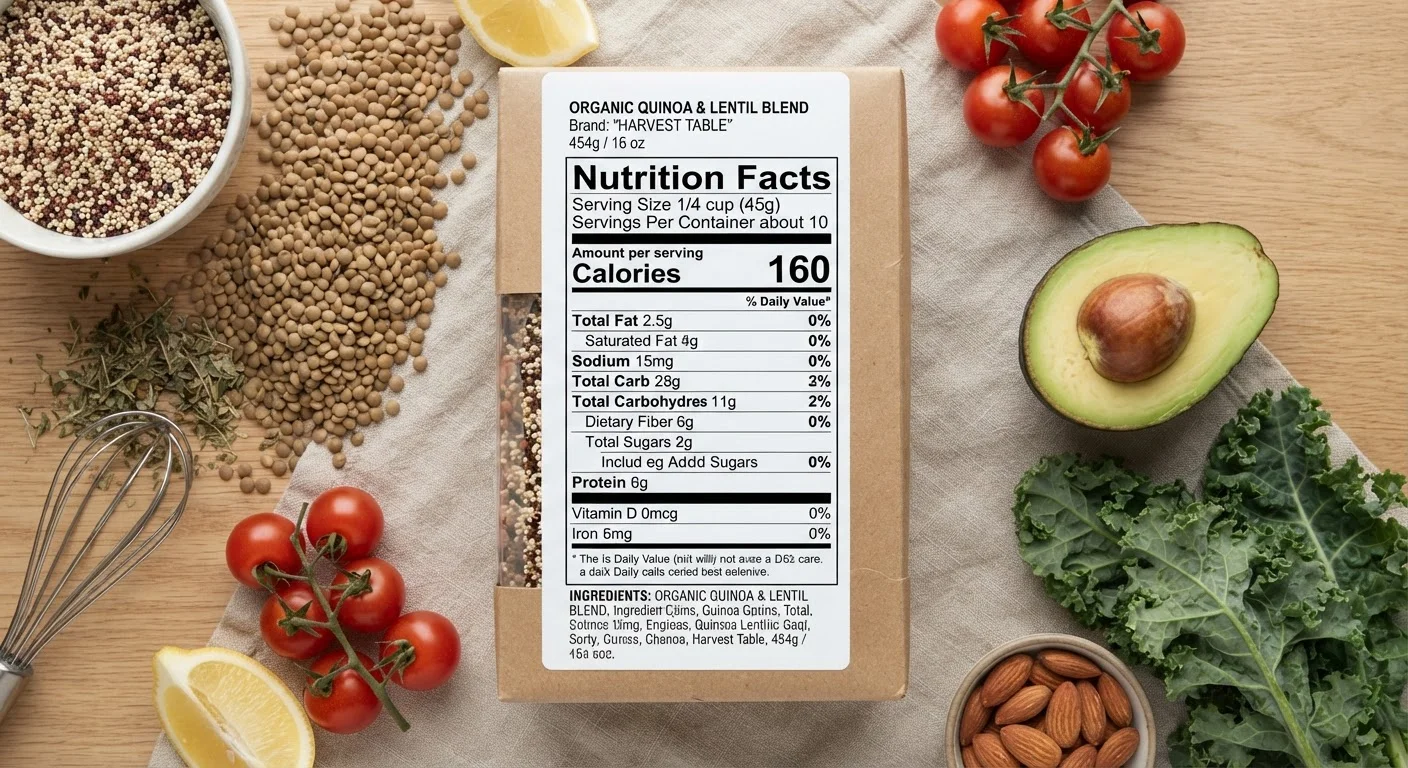
Every number on the label is calculated per serving — not per package. Find the serving size (listed in common household measures and grams) at the very top of the panel, then note how many servings the container holds. If a bag lists 3 servings and you typically eat the whole bag, multiply all values by 3. This single step corrects the most common label-reading mistake.
Evaluate Calories in Context
With the correct serving size established, note the calorie count — but immediately pair it with what else you're getting for those calories. A high-calorie food rich in protein, fiber, and micronutrients may serve your goals better than a low-calorie product composed mainly of refined starch and sodium. Calories are a starting point, not a verdict.
Identify Nutrients to Limit
Scan the label for three key nutrients to moderate:
- Saturated fat — most dietary guidelines recommend keeping this low relative to total fat intake.
- Sodium — strongly linked to blood pressure; relevant to understanding your cardiovascular screening numbers.
- Added sugars — now listed separately from total sugars on updated labels, making it easier to distinguish naturally occurring sugars (in fruit or dairy) from those added during processing.
Seek Out Beneficial Nutrients
Look for nutrients that many adults fall short on:
- Dietary fiber — supports digestive health, satiety, and blood sugar regulation.
- Potassium — now required on updated labels; plays a role in blood pressure management.
- Vitamin D and calcium — included because deficiency is common across U.S. adult populations.
- Iron — particularly relevant for certain population groups.
Higher amounts of these nutrients are generally favorable, though individual needs vary. For a deeper look at building genuinely balanced meals, the science behind each of these roles is covered in more detail elsewhere in this series.
Use % Daily Value as a Quick Benchmark
The % Daily Value (%DV) column shows how much of a nutrient a single serving contributes toward a reference daily intake based on a 2,000-calorie diet. Use these general rules of thumb established by the FDA: 5% DV or less is considered low; 20% DV or more is considered high. This makes cross-product comparison fast — no math required. Keep in mind that 2,000 calories is a reference point, not a universal prescription; your individual needs may differ.
Going Deeper: The Ingredient List
The Nutrition Facts panel deals in quantities; the ingredient list deals in identity. Ingredients are listed in descending order by weight, meaning the first few ingredients make up the bulk of the product. If a refined grain or added sugar appears in the top three, that product is primarily built around those components regardless of what the front-of-package marketing claims.
Watch for added sugars under multiple names — corn syrup, dextrose, maltose, fruit juice concentrate, and cane sugar all count toward your added sugar intake. Similarly, sodium can appear as sodium chloride, monosodium glutamate (MSG), sodium bicarbonate, or sodium nitrate, among others. If several sodium-containing compounds appear across the list, the cumulative effect adds up even when no single one appears high on the list.
Short Ingredient Lists Aren't Always Better
A minimal ingredient list is often a positive sign, but it isn't automatically a quality guarantee. Plain white bread may have only a few ingredients while still being low in fiber and micronutrients. Use ingredient order and nutrient values together — neither alone tells the complete story. For context on how to evaluate nutrition claims critically, reading nutrition research without being misled is a useful companion.
For a broader look at how these label-reading habits fit into daily meal planning, see the Daily Eating Audit — a structured checklist for evaluating whether your everyday meals hit key nutritional targets. And for the science behind why fiber deserves special attention, including its role in blood sugar regulation and gut health, that companion piece goes much further than a label line item can.
This article is for general informational and educational purposes only and does not constitute medical or dietary advice. Consult a qualified healthcare professional or registered dietitian for guidance tailored to your individual health needs.