

Key Takeaways
Dietary Fibre
Dietary fibre is the portion of plant-based food that the human body cannot fully digest or absorb. Unlike carbohydrates that are broken down into sugar, fibre passes relatively intact through the stomach and intestines. It plays important roles in digestive health, blood sugar control, and feeding beneficial gut bacteria.
Fibre is classified as a non-digestible carbohydrate and is broadly divided into soluble fibre (which dissolves in water to form a gel) and insoluble fibre (which does not dissolve and adds bulk to stool).
What Fibre Actually Is — and What It Isn't
Fibre is a carbohydrate, but one that sets itself apart from the rest of the category. While the body breaks down sugars and starches into glucose for energy, fibre resists this process and travels largely intact through the digestive tract. That resistance is precisely what makes it so useful. To understand where fibre fits in the broader picture of macronutrients, see our guide to what carbs, protein, and fat actually do.
There are two main categories:
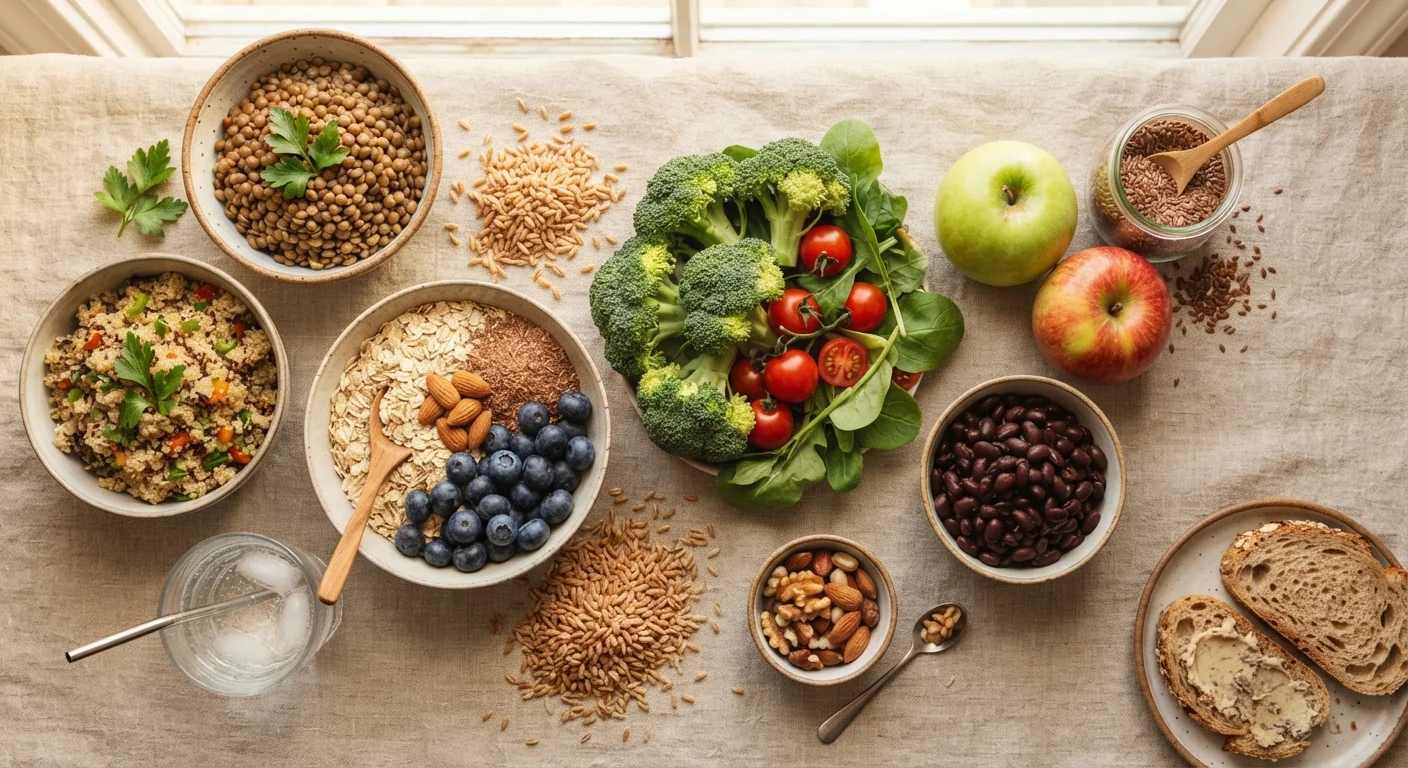
- Soluble fibre dissolves in water to form a viscous gel in the gut. This gel slows digestion, moderates the rate at which glucose enters the bloodstream, and can bind to cholesterol particles, helping carry them out of the body. Oats, barley, legumes, and many fruits are rich sources.
- Insoluble fibre does not dissolve and instead adds physical bulk to stool, speeding transit through the colon. Whole wheat, bran, and most vegetables are good examples.
Most whole plant foods contain both types in varying ratios, which is one reason food-based sources are generally preferable to isolated supplements. For a closer look at why fibre is categorised alongside sugar and starch despite acting so differently, our article on why fibre is classified as a carbohydrate explains the science behind the distinction.
The Gut Microbiome Connection
One of the most significant roles fibre plays is feeding the trillions of bacteria that reside in the large intestine. Specific fibres — particularly those found in garlic, onions, oats, and legumes — act as prebiotics, selectively fuelling beneficial microbial species. When gut bacteria ferment these fibres, they produce short-chain fatty acids (SCFAs) such as butyrate, propionate, and acetate.
SCFAs are not metabolic by-products to be dismissed. Research indicates they help maintain the integrity of the gut lining, modulate immune function, and may influence inflammation throughout the body. A diet consistently low in fibre limits microbial diversity — a pattern that some research associates with less favourable health outcomes, though the causal picture is still being mapped.
Fibre Supplements vs. Food Sources
Isolated fibre supplements such as psyllium or inulin can help fill gaps, but they typically deliver only one type of fibre and lack the vitamins, minerals, and phytonutrients found in whole plant foods. Most nutrition guidance prioritises food-first approaches, with supplements considered secondary options. Speak with a healthcare professional if you are considering a supplement.
Understanding how nutrients like fibre interact with digestive processes is part of a broader picture. Our article on how the body absorbs nutrients covers how gut health itself affects what your body ultimately gets from food.
Blood Sugar, Cholesterol, and Satiety
The cardiovascular and metabolic benefits of adequate fibre intake are among the most consistently supported findings in nutrition science.
~5%
US adults meeting daily fibre recommendations
Research published in the American Journal of Lifestyle Medicine estimates that only about 5% of Americans meet the Adequate Intake for dietary fibre.
25–38g
Recommended daily fibre intake for adults
The Dietary Guidelines for Americans set Adequate Intake at 25g/day for women and 38g/day for men, with actual average intake around 15–17g.
~10–15%
LDL reduction linked to soluble fibre
Meta-analyses of randomised controlled trials suggest that regular consumption of viscous soluble fibre (e.g., beta-glucan) can reduce LDL cholesterol by roughly 10–15% in some individuals.
Blood sugar regulation: Soluble fibre slows the absorption of glucose from the small intestine, blunting the post-meal spike in blood sugar and the subsequent insulin response. This effect is particularly well-documented for beta-glucan, the soluble fibre found in oats and barley.
LDL cholesterol: Soluble fibre — especially from sources like oat bran and psyllium — binds to bile acids in the gut. Because the body uses cholesterol to produce bile acids, this binding prompts the liver to draw more cholesterol from circulation, reducing LDL levels over time.
Satiety: High-fibre meals slow gastric emptying and promote the release of satiety hormones, helping people feel fuller for longer. This effect makes fibre-rich diets a practical tool for managing energy intake without deliberate calorie restriction — though outcomes vary between individuals.
These mechanisms help explain why dietary patterns consistently high in fibre — such as traditional Mediterranean and plant-forward diets — are associated with lower rates of type 2 diabetes and cardiovascular disease in large observational studies. It is worth noting that observational data shows association, not direct causation, as researchers including nutrition scientists are careful to acknowledge.
“Dietary fibre is one of the most under-appreciated components of the human diet. Its benefits extend well beyond regularity — it shapes the entire metabolic environment of the gut.”
— Dr. David Katz, Preventive medicine physician and nutrition researcher, founding director of the Yale-Griffin Prevention Research Center
Practical Ways to Eat More Fibre Daily
The gap between recommended and actual fibre intake among US adults is substantial. Bridging it does not require dramatic dietary overhauls — incremental shifts add up meaningfully over time.
- Swap refined grains for whole grains. Choosing whole-wheat bread, brown rice, or rolled oats over white flour equivalents adds fibre at the same meal.
- Add legumes regularly. Lentils, chickpeas, and black beans are among the most fibre-dense foods available and are inexpensive and shelf-stable.
- Eat fruit and vegetables with their skins where edible. The skin of an apple, potato, or cucumber contains a meaningful share of the food's fibre.
- Use seeds as toppers. A tablespoon of chia or ground flaxseed added to yogurt, oatmeal, or a smoothie contributes several grams of fibre with minimal effort.
Increase Fibre Gradually to Avoid Discomfort
Adding large amounts of fibre too quickly is a common cause of bloating and gas. Increase intake by a few grams per week rather than all at once, and drink plenty of water throughout the day. Fibre absorbs water as it moves through the digestive tract, so hydration matters significantly.
When reading packaged foods, checking the nutrition label for grams of dietary fibre per serving helps identify genuinely fibre-rich options. Our guide to reading nutrition labels explains exactly how to interpret those figures in context.
This article is for informational purposes only and does not constitute medical or dietary advice. Consult a qualified healthcare professional or registered dietitian before making significant changes to your diet, especially if you have an existing health condition.