
How the Body Absorbs Nutrients: Digestion, Bioavailability, and What Affects Both

Key Takeaways
Nutrient Bioavailability
Bioavailability refers to the proportion of a nutrient you consume that your body actually absorbs and uses. Eating a food rich in iron, calcium, or vitamin C doesn't guarantee your body will capture all of it — the amount that reaches your bloodstream and tissues depends on a range of biological and dietary factors.
Bioavailability is influenced by the nutrient's chemical form (e.g., heme vs. non-heme iron), the food matrix surrounding it, and individual physiological variables like gut microbiome composition and digestive enzyme activity.
The Journey from Plate to Cell
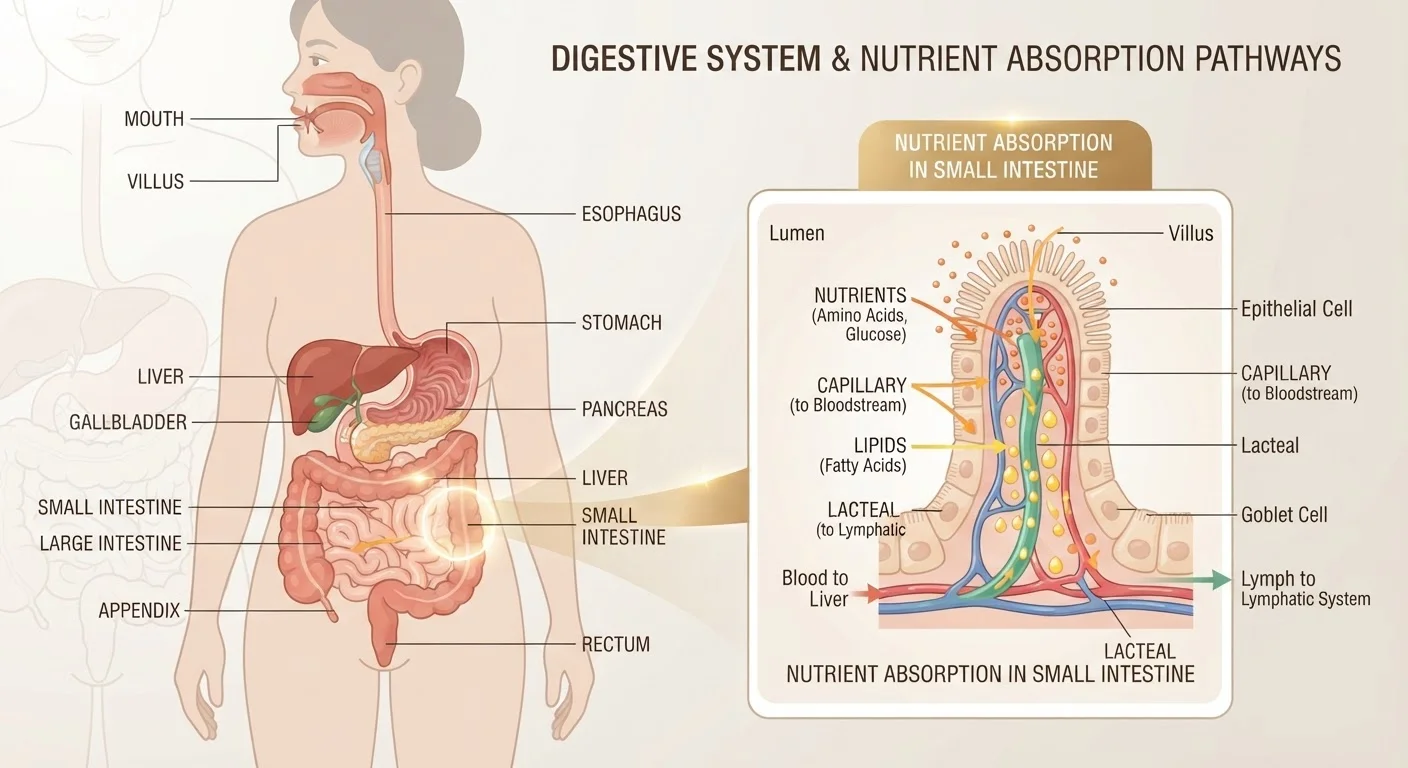
Before any nutrient can fuel your body, it must survive a complex journey through the digestive tract. Digestion begins in the mouth, where chewing physically breaks down food and salivary enzymes begin acting on carbohydrates. The stomach then uses acid and enzymes to further dismantle proteins and prepare nutrients for the critical next stage.
The small intestine is where the majority of nutrient absorption takes place. Its inner surface is lined with finger-like projections called villi and even tinier microvilli, which dramatically increase the surface area available to capture nutrients. Here, fats, amino acids, sugars, vitamins, and minerals cross into the bloodstream or lymphatic system.
The large intestine handles what wasn't absorbed upstream — including certain types of dietary fibre. Gut bacteria ferment this fibre, producing short-chain fatty acids that support colon health and influence metabolic function. Understanding this entire system helps explain why dietary fibre's role extends far beyond simple regularity.
What Bioavailability Really Means
Bioavailability is the measure of how much of an ingested nutrient actually enters circulation and reaches its target tissues. This figure is rarely 100%, and it varies dramatically between nutrients and even between different forms of the same nutrient.
2–35%
Range of iron absorption depending on source and meal context
Non-heme iron (plant-based) absorbs at the lower end of this range, while heme iron (animal-based) sits at the higher end, according to general nutritional biochemistry references.
~70%
Proportion of immune cells located in the gut
The gut-associated lymphoid tissue (GALT) accounts for a large share of the body's immune activity, illustrating how closely digestion and systemic health are linked.
Up to 3x
Increase in lycopene absorption from cooked vs. raw tomatoes
Research published in nutritional science literature has shown that heating tomatoes breaks down cell walls, significantly increasing lycopene bioavailability compared to eating them raw.
Iron offers a clear illustration. Heme iron — found in meat and seafood — is absorbed at roughly 15–35% efficiency. Non-heme iron, the form found in plant foods like lentils and spinach, is absorbed at only 2–20%, and that range shifts based on what else you eat at the same meal. Pairing a plant-based iron source with vitamin C can meaningfully raise non-heme iron absorption, while calcium consumed at the same time may reduce it.
Fat-soluble vitamins (A, D, E, and K) present another example: they require dietary fat present in the same meal to be properly absorbed. Eating a salad with a fat-free dressing may leave much of the fat-soluble carotenoids from your vegetables unabsorbed. Choosing a dressing with olive oil isn't just a flavour decision — it's a nutrition one.
As you review food labels for nutrient content, keep in mind that the listed amounts reflect what's in the food, not what your body will ultimately absorb.
Key Factors That Influence Absorption
Several overlapping factors determine how efficiently your body captures nutrients from any given meal:
- Food matrix: Nutrients exist within complex food structures. Raw carrots, for instance, release less beta-carotene than lightly cooked ones because heat softens the cell walls holding the compound.
- Antinutrients: Compounds like phytates (in whole grains and legumes) and oxalates (in spinach and rhubarb) can bind to minerals like zinc, iron, and calcium, reducing their absorption. Soaking, sprouting, or fermenting these foods can reduce antinutrient levels.
- Digestive enzyme activity: Individual differences in enzyme production — whether due to genetics, age, or health status — affect how thoroughly food is broken down before absorption.
- Gut microbiome: A diverse microbiome assists in synthesising certain vitamins (such as vitamin K and some B vitamins) and influences the integrity of the gut lining through which nutrients pass.
- Age and health status: Older adults often produce less stomach acid, which impairs absorption of vitamin B12 and certain minerals. Gastrointestinal conditions can compromise the gut lining, reducing absorption across multiple nutrient categories.
Simple Pairing Strategies to Improve Absorption
Add a squeeze of lemon or a small portion of bell pepper to plant-based iron sources like lentils or tofu. Consume fat-soluble vitamins (A, D, E, K) alongside a healthy fat source such as avocado, olive oil, or nuts. For calcium-rich foods or supplements, spacing them away from high-iron meals can help prevent competitive absorption.
Timing also plays a role. Research into when nutrients are consumed suggests that meal spacing and post-exercise eating windows can affect how efficiently the body uses protein and carbohydrates in particular.
This article is for general informational and educational purposes only and does not constitute medical or dietary advice. Speak with a qualified healthcare professional or registered dietitian for guidance tailored to your individual health needs.