

Key Takeaways
Why Label Literacy Matters for Everyday Eating
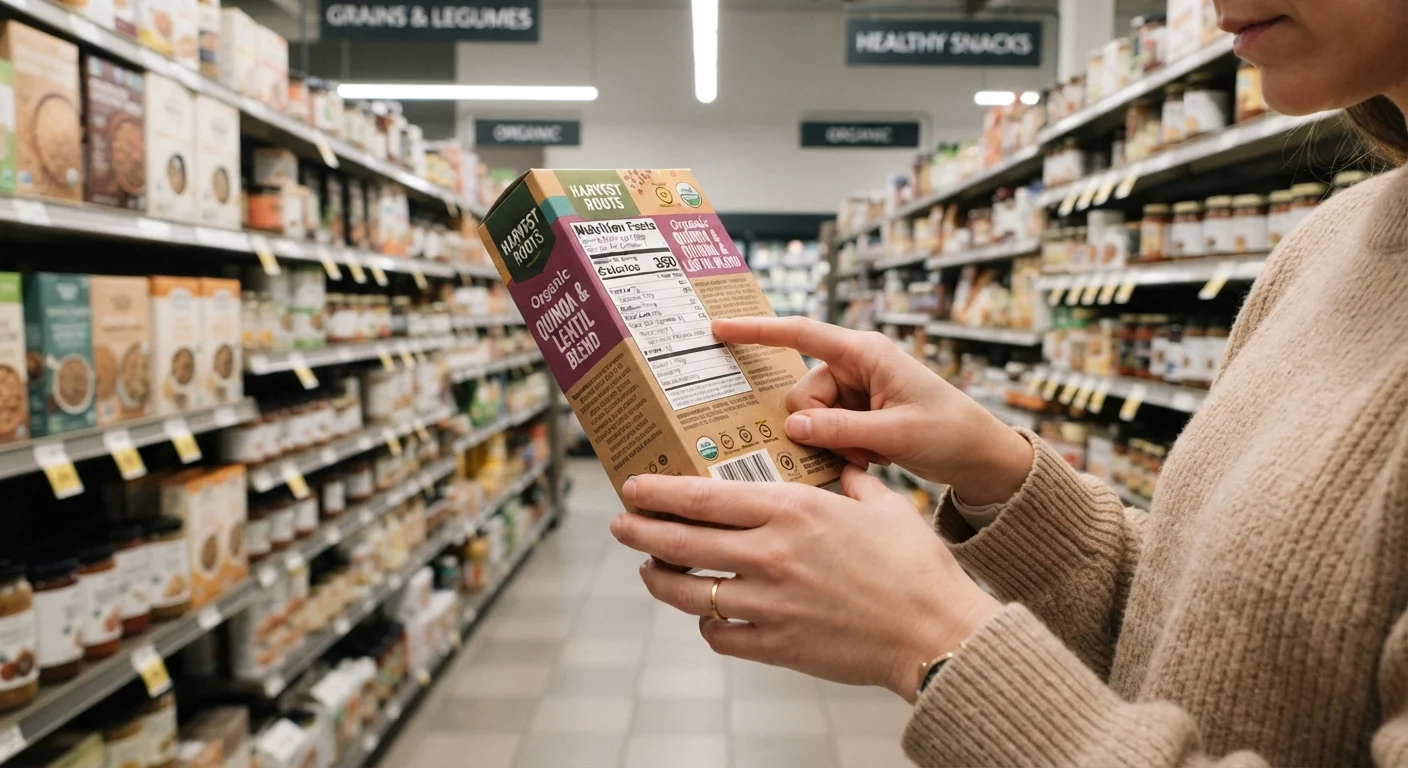
Nutrition labels exist to give consumers objective, standardized information about what they're eating. Yet for many shoppers, the panel of numbers triggers more confusion than clarity. This guide walks through each section of a standard U.S. Nutrition Facts panel — the format regulated by the FDA — so you can shop and eat with greater confidence.
Understanding labels is one practical tool within the broader skill set of building balanced, sustainable eating habits. It's not about scrutinizing every gram obsessively — it's about knowing which numbers actually matter and what they mean in the context of your overall diet.
Build the Habit Gradually
You don't need to read every line of every label on every shopping trip. Start by focusing on one or two nutrients — such as sodium or added sugars — until checking them becomes automatic. Expanding your label-reading routine incrementally is more sustainable than trying to analyze everything at once.
What You Need Before You Start
No special tools are required — just the food package in front of you. It helps to have a general sense of your personal nutrition goals, since %DV figures are calculated against a standard 2,000-calorie daily reference. If your energy needs differ significantly, the percentages serve as a directional guide rather than an exact personal prescription.
What you will need
Step-by-Step: Decoding the Nutrition Facts Panel
Work through the label from top to bottom — that sequence mirrors the FDA's intended reading order and helps build a complete picture before drawing conclusions.
Start with the serving size
The serving size is the foundation of every other number on the label. It's listed at the top in a familiar household measure (e.g., 2/3 cup) alongside the gram weight. All calories, macronutrients, and %DV figures apply to one serving — not necessarily the whole package.
Check how many servings are in the container. A bag labeled 3 servings that you consume entirely means tripling every number on the panel.
Note the calorie count
Calories represent the total energy provided per serving. The updated label displays this number prominently. Calories alone don't tell you whether a food is nutritious, but they're useful context — especially when comparing similar products or managing overall energy intake.
Review the key nutrients to limit
Look at saturated fat, sodium, and added sugars. Current dietary guidance from the Dietary Guidelines for Americans recommends most adults limit these three. Saturated fat is listed in grams; sodium in milligrams; added sugars in grams with a %DV. High intake of these nutrients is associated in research with increased risk of certain chronic conditions — though individual context always matters.
Identify nutrients to get enough of
Dietary fiber, vitamin D, calcium, iron, and potassium are nutrients many Americans fall short on. The label lists these because higher intake — within typical dietary ranges — is associated with health benefits for most people. A %DV of 20% or more for these is generally considered a good source.
Use %DV as a quick guide
Percent Daily Value (%DV) tells you how much of a nutrient one serving contributes toward a daily reference intake based on a 2,000-calorie diet. A general rule of thumb: 5% DV or less is low; 20% DV or more is high. This scale works in both directions — useful for nutrients you want more of (fiber) and those you want less of (sodium).
For more on how individual macronutrients function in the body and why balance across them matters, see Macronutrients at a Glance.
Front-of-Package Claims and Ingredient Lists
The front of the package is prime marketing real estate. Terms like natural, wholesome, or artisan have no standardized FDA definition and communicate little about nutritional quality. Regulated terms carry more weight: low sodium means 140 mg or less per serving; reduced fat means at least 25% less fat than the reference food; light can refer to calories, fat, or even color depending on context.
The ingredient list, required on most packaged foods, is arranged in descending order by weight. This means the first ingredient is the most abundant by mass. Scanning the first three to five ingredients gives a quick read of what the product is primarily composed of. If a refined grain or added sugar appears near the top, that product leans heavily on that ingredient.
Added sugars can appear under many names: dextrose, evaporated cane juice, high-fructose corn syrup, malt syrup, and others. The updated Nutrition Facts label (fully rolled out across most products) now separates Added Sugars from total sugars as a distinct line item, making this easier to track. For a broader look at how fat type and quality appear in ingredient contexts, see our field guide to dietary fats.
Front-of-Package Claims Can Mislead
Health halos are real: products branded as 'organic,' 'natural,' or 'made with whole grains' can still be high in added sugars or sodium. Always flip to the Nutrition Facts panel and ingredient list to verify what the front-of-package language actually corresponds to. Marketing language and nutritional quality don't always align.
Putting It Into Practice
Label reading is most useful as a comparative skill. Rather than memorizing arbitrary targets, use labels to compare two similar products side by side — the differences in sodium, added sugars, or fiber often become immediately apparent. Over time, this builds an intuitive sense of what a nutrient-dense option looks like versus a heavily processed one.
Connecting label data to your broader health picture can also be valuable. If you're monitoring blood pressure, cholesterol, or blood sugar numbers, labels for sodium and saturated fat become especially relevant reference points — though any specific dietary adjustments based on health conditions should be discussed with a qualified healthcare professional.
For deeper context on what macronutrients actually do once you've identified them on a label, see Macronutrients Decoded. And when nutrition claims in media leave you uncertain about what the evidence actually shows, Popular Nutrition Claims vs. What Peer-Reviewed Research Actually Says offers a useful fact-check framework.
This article is for general informational and educational purposes only and is not a substitute for personalized medical or dietary advice. Consult a registered dietitian or qualified healthcare professional for guidance specific to your health needs.