

Key Takeaways
Type 2 Diabetes
Type 2 diabetes is a chronic condition in which the body either doesn't produce enough insulin or doesn't use insulin effectively, causing blood sugar levels to remain persistently elevated. Unlike type 1 diabetes, which involves an autoimmune attack on insulin-producing cells, type 2 develops gradually and is closely linked to lifestyle and genetic factors. It is the most common form of diabetes among adults in the United States.
The condition is characterized by progressive beta-cell dysfunction combined with peripheral insulin resistance, typically affecting skeletal muscle, liver, and adipose tissue.
How Insulin Normally Works
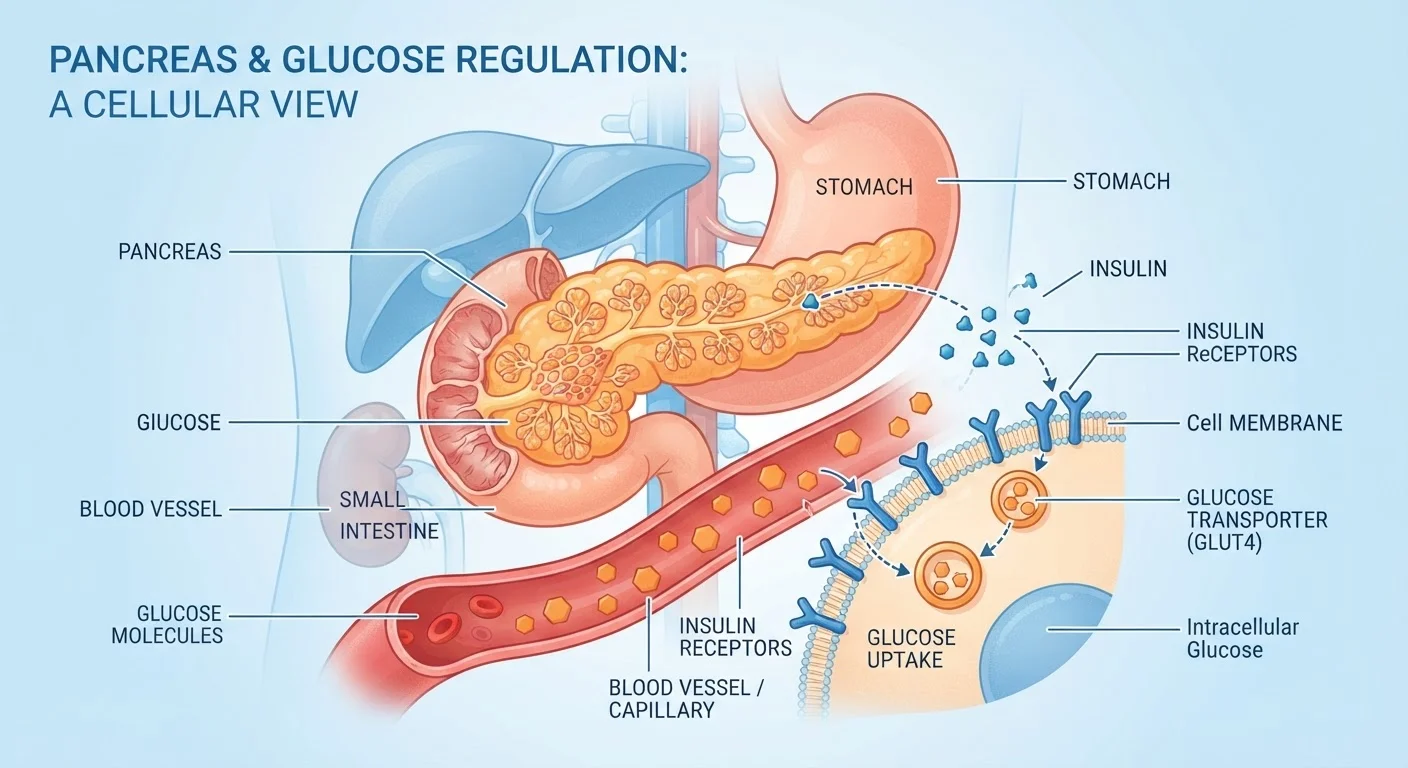
To understand type 2 diabetes, it helps to first understand insulin's job. After you eat, carbohydrates are broken down into glucose, which enters your bloodstream. Rising blood sugar signals your pancreas to release insulin — a hormone that acts like a key, unlocking cells so they can absorb glucose and use it for energy.
When this system works properly, blood sugar rises modestly after meals and then returns to a stable baseline within a couple of hours. The liver also plays a role, storing excess glucose as glycogen and releasing it between meals to keep energy supply steady. This elegantly coordinated process happens automatically, dozens of times a day.
For people curious about how meal timing and fasting influence this system, our article on what happens between meals during intermittent fasting offers a complementary look at the biology involved.
What Goes Wrong: Insulin Resistance Explained
In type 2 diabetes, cells — particularly in muscle, fat, and the liver — gradually lose sensitivity to insulin's signal. Think of it as a lock that's become stiff: the key (insulin) is present, but the door won't open easily. To compensate, the pancreas produces more and more insulin to force glucose into cells.
For a period — sometimes years — this compensation works well enough to keep blood sugar within normal ranges. This stage is often called prediabetes. But the pancreas has limits. Over time, the insulin-producing beta cells become exhausted or damaged, insulin output declines, and blood glucose begins to stay elevated persistently. That persistent elevation is type 2 diabetes.
38 million
Americans living with diabetes
According to the CDC's National Diabetes Statistics Report, approximately 38 million Americans have diabetes, with type 2 accounting for the vast majority of cases.
~96 million
US adults with prediabetes
The CDC estimates that roughly 96 million American adults — more than 1 in 3 — have prediabetes, and the majority are unaware of it.
80%
Of prediabetes cases go undiagnosed
The CDC reports that approximately 80% of people with prediabetes do not know they have it, underscoring the importance of routine screening.
The liver contributes to the problem as well. In insulin-resistant individuals, the liver often continues releasing glucose into the bloodstream even when blood sugar is already high — a process that would normally be suppressed by adequate insulin signaling. This adds to the glucose load the body must manage.
Why Blood Sugar Elevation Causes Damage
Chronically elevated blood sugar is harmful because glucose, in high concentrations, is chemically reactive. It can bind to proteins in blood vessel walls through a process called glycation, making them stiffer and more prone to damage. This affects both small vessels (capillaries supplying the eyes, kidneys, and nerves) and large vessels (arteries supplying the heart and brain).
This is why the long-term complications of poorly managed type 2 diabetes span multiple organ systems: diabetic retinopathy (eye damage), nephropathy (kidney disease), peripheral neuropathy (nerve damage causing numbness or pain, often in the feet), and significantly elevated cardiovascular risk. The good news is that keeping blood sugar within a healthy range substantially reduces complication risk.
Understanding your blood sugar numbers is a foundational skill. Our plain-language guide to decoding your blood sugar, blood pressure, and cholesterol results can help you interpret what your lab values actually mean.
Know Your Numbers Early
Many people live with insulin resistance for years before receiving a type 2 diabetes diagnosis. Routine fasting blood glucose and HbA1c tests can detect problems well before symptoms appear. Ask your healthcare provider whether you're due for a diabetes screening, especially if you have family history or other risk factors.
Risk Factors and Who Is Affected
Type 2 diabetes has a strong genetic component — family history meaningfully increases risk. However, it is not determined by genetics alone. Several modifiable factors influence whether and when the condition develops, including body weight, physical activity level, sleep quality, and dietary patterns over time.
Certain populations face higher rates of type 2 diabetes, including Black, Hispanic, Native American, and Asian American adults, reflecting a complex interplay of genetic susceptibility, social determinants of health, and access to care. Age is also a factor — risk rises substantially after 35, though rates in younger adults have increased in recent decades.
Type 2 diabetes frequently coexists with other conditions. Hypertension is a common companion — learn more in our article on high blood pressure, its risks, and what influences it. Routine screenings matter because type 2 diabetes often develops without obvious symptoms for years. The Prevention & Screenings hub outlines what tests adults should consider and when.
This article is for general informational and educational purposes only and does not constitute medical advice. Always consult a qualified healthcare provider for guidance on your personal health, symptoms, or treatment decisions.