

| Most common GI complaint | Abdominal pain / bloating (American College of Gastroenterology) |
| IBS estimated US prevalence | 10–15% of adults (American College of Gastroenterology) |
| Acute diarrhea: typical duration | Under 14 days (General clinical consensus) |
| GERD weekly symptom frequency | At least once per week (Diagnostic threshold, clinical guidelines) |
| Normal bowel movement range | 3 per day to 3 per week (National Institute of Diabetes and Digestive and Kidney Diseases) |
| Colorectal cancer screening start age (average risk) | Age 45 (US Preventive Services Task Force recommendation) |
How to Use This Reference Guide
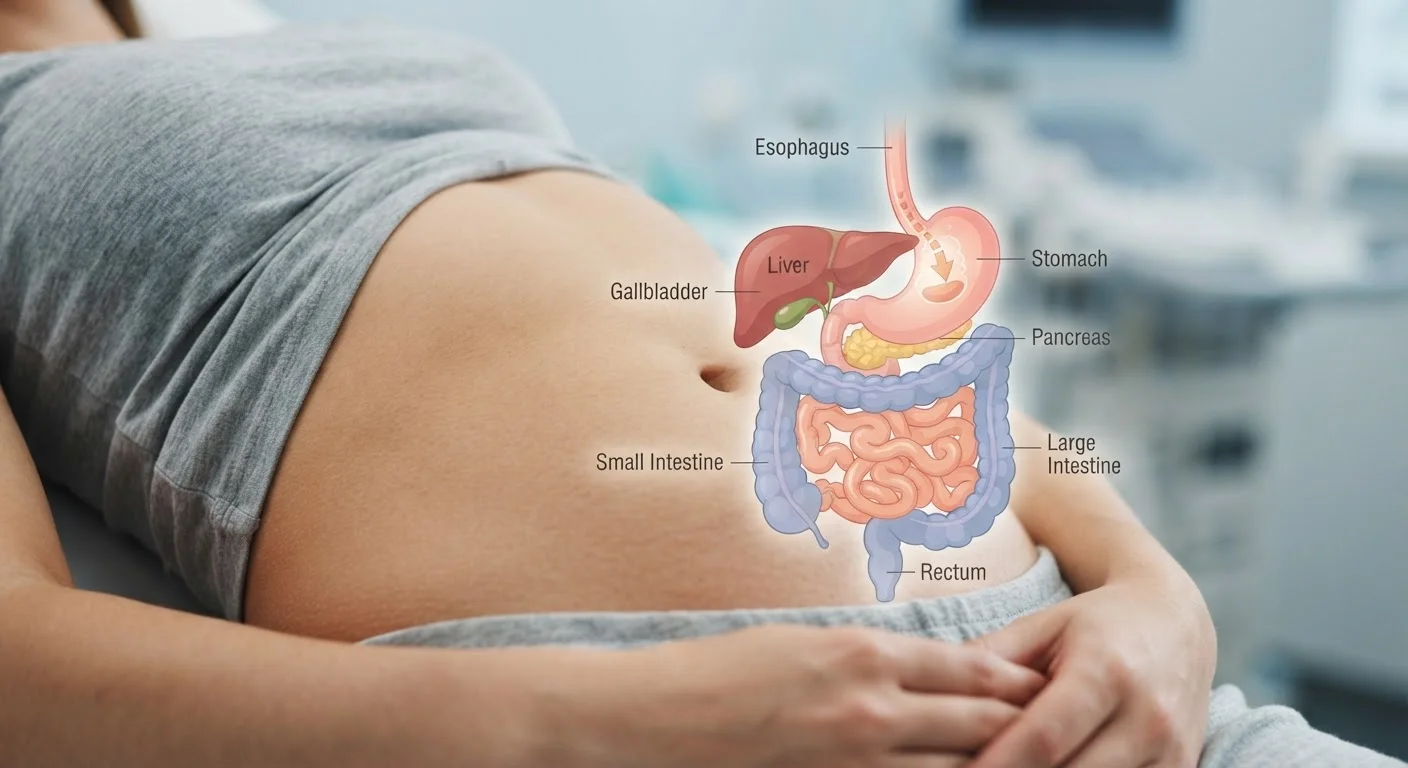
Digestive symptoms are among the most common reasons adults seek medical attention — yet they are also among the easiest to dismiss or misinterpret. This guide is designed as a quick-reference resource: each major symptom is explained, its common causes are outlined, and red-flag patterns that generally warrant a clinician's evaluation are identified.
This content is general health information, not medical advice. It is not a diagnostic tool. If you are experiencing persistent, severe, or worsening symptoms, consult a qualified healthcare provider. For a broader framework on reading your body's signals, see our primer on symptom awareness.
GERD
Gastroesophageal reflux disease — a chronic condition in which stomach acid frequently flows back into the esophagus, causing irritation and symptoms such as heartburn. It is diagnosed when reflux occurs regularly and affects quality of life or causes tissue damage.
IBS
Irritable bowel syndrome — a common functional GI disorder characterized by recurring abdominal pain and changes in bowel habits (diarrhea, constipation, or both) without structural damage to the bowel.
IBD
Inflammatory bowel disease — an umbrella term for chronic inflammatory conditions of the GI tract, primarily Crohn's disease and ulcerative colitis. Unlike IBS, IBD involves measurable inflammation and tissue changes.
Malabsorption
A condition in which the small intestine cannot adequately absorb nutrients from food. It can present as fatty or floating stools, diarrhea, weight loss, and nutritional deficiencies.
Gastric Emptying
The process by which the stomach moves digested food into the small intestine. When this process is delayed (gastroparesis), it can cause bloating, nausea, and early satiety.
Dyspepsia
A medical term for recurrent or persistent upper abdominal discomfort, often described as indigestion. It can include feelings of fullness, burning, or pain after eating, and has many possible causes.
Symptom-by-Symptom Breakdown
Bloating and Abdominal Distension
What it typically means: A sense of fullness or visible swelling in the abdomen is most often related to excess gas, swallowed air, or delayed gastric emptying. Common contributors include high-fiber foods, carbonated beverages, lactose or fructose intolerance, and irritable bowel syndrome (IBS).
When to seek care: Bloating that is persistent, accompanied by unintentional weight loss, blood in stool, or new onset after age 50 warrants evaluation to rule out structural causes.
Heartburn and Acid Reflux
What it typically means: A burning sensation behind the breastbone often reflects stomach acid moving back into the esophagus (gastroesophageal reflux). Occasional reflux is common; frequent episodes may indicate gastroesophageal reflux disease (GERD).
When to seek care: Difficulty swallowing, persistent chest discomfort, or symptoms unresponsive to lifestyle changes should be assessed. For guidance on distinguishing reflux from cardiac symptoms, see separating everyday chest discomfort from cardiac warning signs.
Nausea
What it typically means: Nausea has a wide differential — from food intolerance and viral gastroenteritis to medication side effects and anxiety. It is rarely diagnostic on its own.
When to seek care: Nausea lasting more than 48 hours, accompanied by fever, severe abdominal pain, jaundice, or inability to keep fluids down should prompt prompt medical contact.
Diarrhea
What it typically means: Loose or watery stools occurring more than three times per day. Acute diarrhea (under two weeks) is most commonly infectious or dietary. Chronic diarrhea may suggest IBS, inflammatory bowel disease (IBD), malabsorption, or other conditions.
When to seek care: Blood or mucus in stool, signs of dehydration, fever above 102°F, or symptoms persisting beyond two weeks require evaluation.
Constipation
What it typically means: Fewer than three bowel movements per week, or stools that are hard, dry, or difficult to pass. Causes range from low fiber intake and dehydration to medications (including opioids and some antacids) and thyroid dysfunction.
When to seek care: New-onset constipation in adults over 50, constipation alternating with diarrhea, rectal bleeding, or unexplained weight loss should be investigated.
Changes in Stool Color or Consistency
What it typically means: Pale or clay-colored stools can reflect bile duct obstruction; black, tarry stools may indicate upper GI bleeding; bright red blood generally points to a lower GI source such as hemorrhoids or a fissure — though all require clinical confirmation.
When to seek care: Any unexplained blood in stool, persistent pale stools, or greasy/floating stools (suggesting fat malabsorption) warrants prompt medical review.
| Most common GI complaint | Abdominal pain / bloating (American College of Gastroenterology) |
| IBS estimated US prevalence | 10–15% of adults (American College of Gastroenterology) |
| Acute diarrhea: typical duration | Under 14 days (General clinical consensus) |
| GERD weekly symptom frequency | At least once per week (Diagnostic threshold, clinical guidelines) |
| Normal bowel movement range | 3 per day to 3 per week (National Institute of Diabetes and Digestive and Kidney Diseases) |
| Colorectal cancer screening start age (average risk) | Age 45 (US Preventive Services Task Force recommendation) |
Tracking Symptoms and Knowing When to Act
Most digestive symptoms are transient and benign, but the context — duration, severity, triggers, and accompanying signs — matters enormously. Building a habit of noting when symptoms occur, what you ate, and how long they last gives a clinician much more to work with than a vague recollection.
Certain combinations of symptoms are more clinically significant than any single symptom alone. Unintentional weight loss, persistent fatigue alongside GI changes, or a family history of colorectal cancer or IBD shifts the calculus toward earlier evaluation.
For travelers, it is worth noting that circadian disruption and dietary changes can meaningfully affect gut function. How time zones affect gut health explores this connection in more detail.
For ongoing symptom patterns, building simple symptom-tracking habits before your next appointment can make the visit considerably more productive. And if you are unsure which symptoms deserve attention, body signals adults often dismiss is a useful companion read.
This article is for general informational purposes only and does not constitute medical advice, diagnosis, or treatment. Always consult a qualified healthcare professional with questions about your health or symptoms.