

Key Takeaways
The Gut-Clock Connection
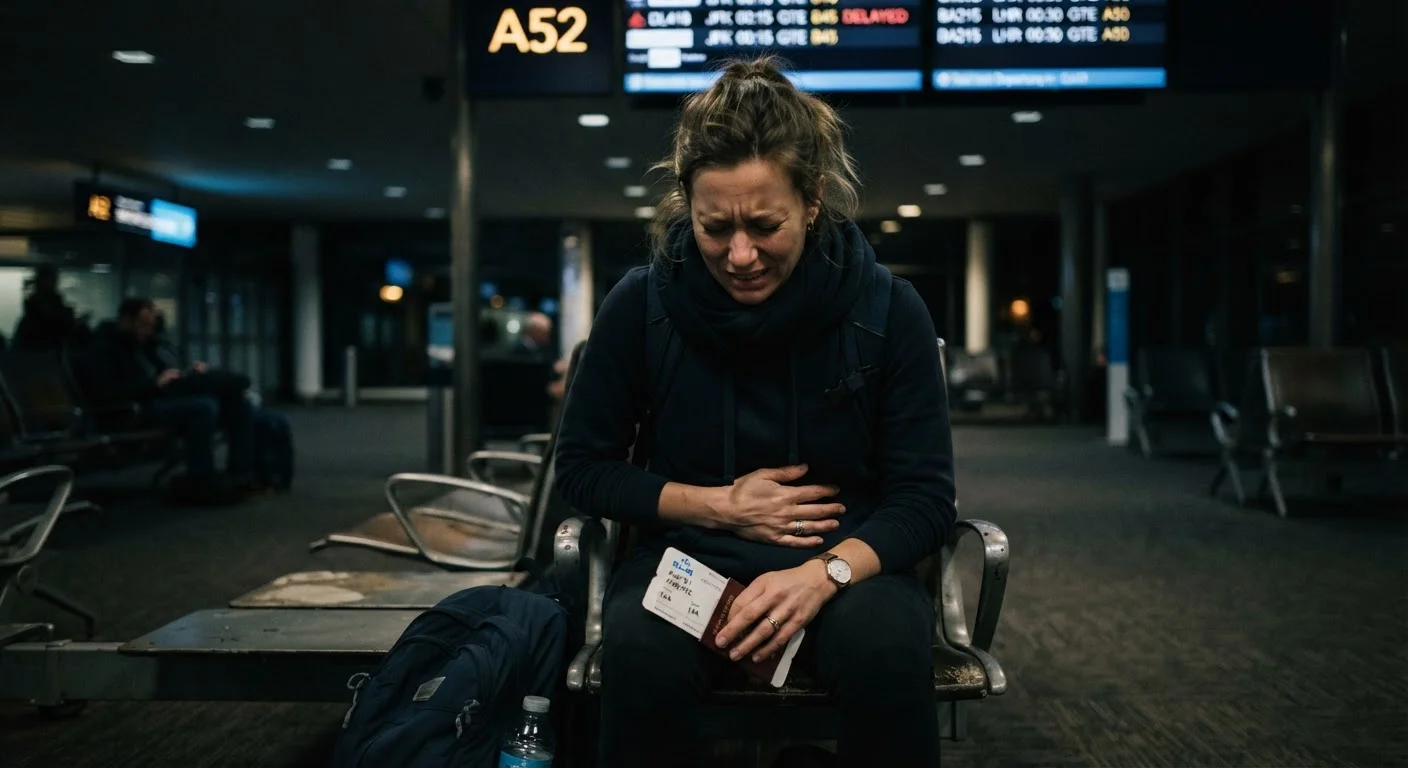
Your digestive system runs on its own internal clock — a biological rhythm that governs when enzymes are released, when gut motility peaks, and when the microbiome is most active. When you cross multiple time zones rapidly, this clock falls out of sync with your new environment, producing digestive symptoms that can feel puzzling and persistent. The effect is sometimes called 'gut jet lag,' and it's distinct from — though related to — the sleep disruption most travelers already know about.
The gastrointestinal tract contains its own network of circadian clock genes (including CLOCK and BMAL1) that operate semi-independently from the brain's master pacemaker in the suprachiasmatic nucleus. These peripheral clocks are entrained by meal timing, light exposure, and physical activity — all of which shift unpredictably during frequent travel.
Your Gut Has Its Own Clock — And It Doesn't Update Automatically
Most travelers are familiar with the brain-based effects of jet lag: difficulty falling asleep, daytime grogginess, impaired concentration. Less discussed is the fact that the gastrointestinal tract runs its own version of the same biological machinery. Circadian clock genes embedded throughout the gut regulate everything from how quickly food moves through the intestines to when digestive enzymes peak in activity.
Unlike the brain's master pacemaker — which takes cues primarily from light — the gut's peripheral clocks are driven largely by when you eat. This distinction matters enormously for travelers. Even if you successfully reset your sleep schedule by exposing yourself to morning light at your destination, your gut may remain anchored to your home time zone for days, following a meal schedule that no longer matches reality.
The result is a digestive system operating on yesterday's rhythm in today's environment. For travelers who are unfamiliar with circadian biology, these symptoms can appear random and confusing.
~4 days
Estimated gut-clock re-entrainment time per major zone shift
Research on peripheral circadian clocks suggests gastrointestinal rhythms may lag behind the brain's master clock reset by several days after transmeridian travel.
Up to 70%
Travelers reporting GI symptoms on long-haul trips
Studies on international travelers consistently find gastrointestinal complaints — including constipation, bloating, and irregular bowel habits — among the most commonly reported health issues.
30–40%
Of gut microbiome composition showing circadian fluctuation
Research published in peer-reviewed journals indicates a substantial proportion of the gut microbiome oscillates on a roughly 24-hour cycle, making it sensitive to circadian disruption.
What Gut Jet Lag Actually Feels Like
The symptoms of gut-clock misalignment overlap with several other travel-related complaints, which is part of why the concept isn't more widely recognized. Common presentations include:
- Constipation — slowed gut motility when the gut's internal schedule expects rest, not digestion
- Loose stools or diarrhea — accelerated motility at times the gut isn't prepared for a full digestive cycle
- Bloating and gas — disrupted enzyme timing leading to incomplete breakdown of food
- Reduced appetite at mealtimes — the gut simply isn't ready to eat when local time says it should be
- Unexpected hunger at night — the gut expecting a meal that, back home, it would normally receive
These symptoms can overlap with those caused by unfamiliar food, dehydration, or pathogen exposure, making self-diagnosis unreliable. Our digestive symptoms reference guide can help distinguish which signs generally warrant a visit to a doctor. When in doubt, consult a qualified healthcare professional rather than attempting to manage symptoms independently.
Anchor Meals to Local Time Immediately
On your first full day at your destination, resist the urge to eat according to your home-time hunger cues. Instead, sit down for meals at the times locals typically eat, even if your appetite is muted. This sends a strong recalibration signal to the gut's peripheral clocks and may help shorten the duration of gut jet lag. Pairing this with outdoor morning activity gives your body two circadian cues at once.
The Role of Meal Timing, Hydration, and Light
Because the gut clock is strongly entrained by food intake, shifting meal timing to align with your destination as quickly as possible is one of the most evidence-informed strategies available. This doesn't mean forcing yourself to eat when you have no appetite, but rather gradually anchoring larger meals to local mealtimes rather than grazing continuously or eating by your origin-time instincts.
Hydration compounds the challenge. Cabin pressure during long-haul flights accelerates fluid loss, and dehydration on its own can slow gut motility and worsen constipation. Staying well hydrated throughout travel — not just during flights — supports baseline gut function during the recalibration period. The traveler's hydration guide covers practical strategies for maintaining fluid balance from departure to arrival.
Light exposure also plays an indirect role. Morning light at your destination supports master-clock resetting, which in turn begins to pull peripheral clocks — including those in the gut — toward local time. Physical activity, another zeitgeber (time-giver), reinforces this process. Even moderate movement after arrival supports gut motility and circadian entrainment simultaneously.
Frequent Travelers and Cumulative Gut Disruption
For those who cross multiple time zones repeatedly — travel professionals, global consultants, flight crew — the picture becomes more complex. Research on shift workers, whose schedules create similar circadian disruption, suggests that chronic misalignment may alter gut microbiome composition over time, reducing microbial diversity and shifting the balance of bacterial species. Whether the same magnitude of effect applies to frequent travelers is not yet fully established, but the mechanistic overlap is significant enough to take seriously.
The psychological dimension also deserves attention. Chronic digestive discomfort contributes meaningfully to travel fatigue and emotional strain, reinforcing the feedback loop explored in our article on the hidden mental health toll of frequent travel. A gut that is chronically out of rhythm is not merely inconvenient — it may affect mood, energy regulation, and cognitive performance through the well-documented gut-brain axis.
Frequent travelers who notice persistent digestive changes — not just occasional disruption — should discuss their travel patterns with a gastroenterologist rather than normalizing symptoms as an unavoidable cost of a mobile lifestyle. Wellness routines that account for this dimension of circadian health are also covered in our guide to common wellness mistakes travelers make.
This article is for general informational and educational purposes only and does not constitute medical advice. Always consult a qualified healthcare professional regarding personal digestive health concerns, symptoms, or treatment decisions.