

Key Takeaways
Why Travel Dehydrates You Faster Than You Expect
Commercial aircraft cabins are pressurized to replicate conditions at roughly 6,000 to 8,000 feet of altitude, and humidity levels inside the cabin frequently fall below 20% — far drier than most indoor environments on the ground. At that level of aridity, your body loses moisture through normal respiration and skin evaporation at a faster rate than usual, even when you are seated and at rest.
Add to that the disrupted sleep schedule, increased physical movement through terminals, and the environmental shift that comes with crossing multiple time zones, and it becomes clear why so many travelers arrive feeling foggy, fatigued, and off-balance. Many of these symptoms overlap with jet lag, making it harder to distinguish fluid deficit from circadian disruption. Research suggests the two conditions can compound each other — dehydration appears to worsen cognitive performance and mood, both of which are already strained by time-zone shifts. For a closer look at how circadian changes affect the body, see how time zones affect gut health and digestion.
Understanding the mechanism helps travelers take the right actions. This is not about drinking as much as possible — it is about maintaining a reasonable, consistent intake throughout the journey so that your body systems arrive in reasonable working order.
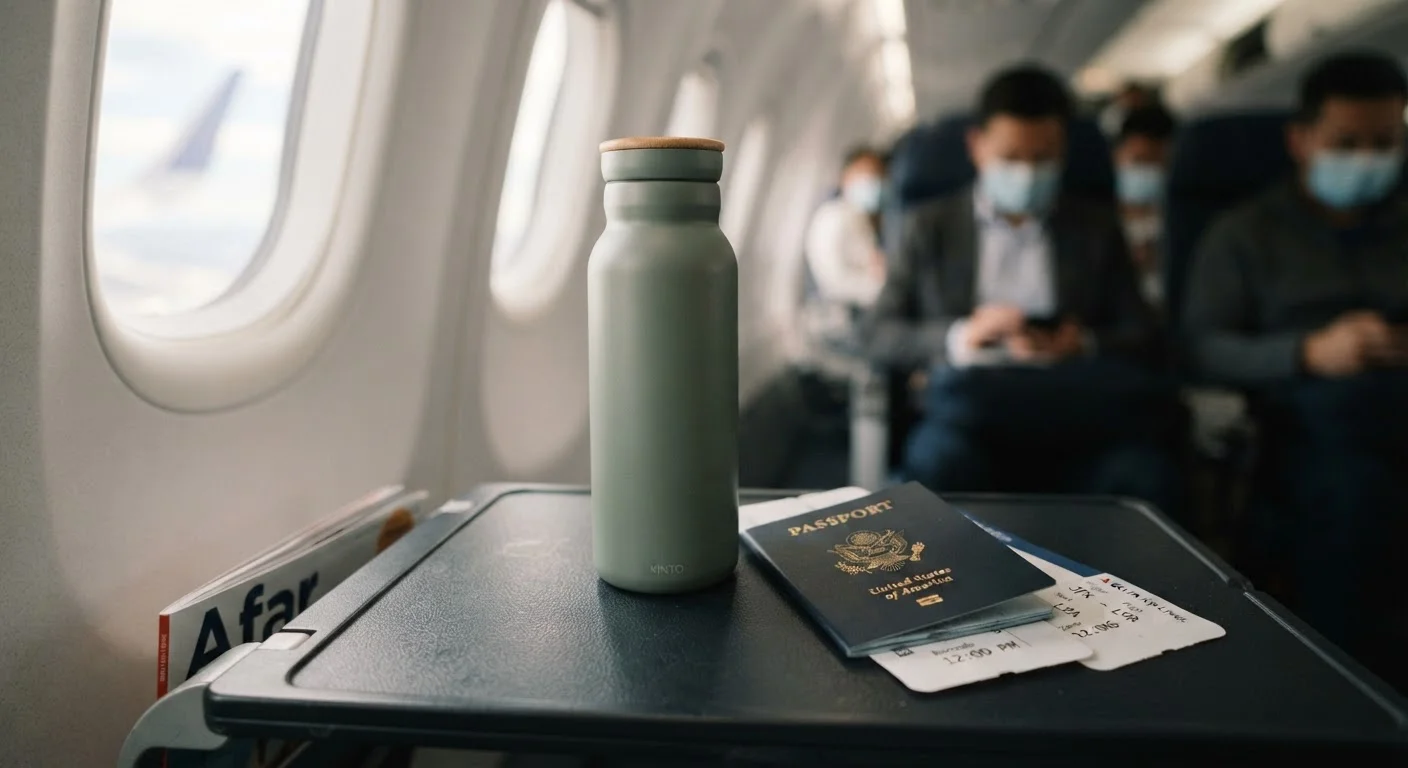
Reusable insulated water bottle
Keeps water at a consistent temperature throughout long journeys and reduces reliance on single-use plastic cups.
Electrolyte packets or tablets
Help restore sodium, potassium, and other minerals lost through perspiration and respiration during travel.
Hydration reminder app or watch alarm
Provides timed prompts to drink water, which is especially useful when distracted by screens or sleep.
Your Step-by-Step Hydration Plan for Travel Days
The following steps are designed for adults in good general health traveling across one or more time zones. They work equally well for short-haul flights and long international journeys, though the emphasis on scheduling becomes more important the longer your travel day runs. Hydration is also a meaningful part of the broader wellness toolkit travelers can maintain on the road — for a fuller picture, see which wellness habits actually transfer to travel.
What you will need
Front-load your hydration before departure
Begin increasing your fluid intake the day before a long-haul flight. Arriving at the airport already well-hydrated gives you a meaningful buffer against the dry cabin environment you are about to enter. Aim to drink water steadily throughout that pre-travel day rather than drinking large amounts right before you leave.
Fill your bottle before boarding
Most major airports have filtered water refill stations after security. Empty your bottle before passing through the security checkpoint, then refill it before you board. This simple habit ensures you start the flight with a full supply and reduces dependence on the limited beverage service schedule.
Drink on a schedule, not just when thirsty
Thirst is a reliable signal under normal conditions, but the combination of pressurized air, distraction, and disrupted sleep can suppress your awareness of it during flights. Set a recurring alarm on your phone or watch to prompt a few sips every 45 to 60 minutes throughout the journey. This is particularly important on overnight or multi-leg itineraries where you may doze for extended periods.
Limit alcohol, caffeine, and high-sodium snacks in transit
Alcohol is a diuretic — it increases urine output and can noticeably worsen both dehydration and jet lag symptoms. Caffeinated drinks contribute to fluid loss at higher doses, though moderate consumption is unlikely to cause significant dehydration on its own. Salty airport and airline snacks increase thirst while adding sodium that draws water from cells. If you choose to consume any of these, pair each serving with an extra glass of water.
Rehydrate strategically on arrival
The first few hours after landing are critical. Continue drinking water consistently and consider adding an electrolyte tablet or lightly salted food to help your body retain what you are taking in. Avoid the temptation to compensate with large volumes of sugary or caffeinated drinks. If you are arriving in a hot or humid climate, your sweat losses will be higher than usual, so adjust accordingly.
Moisturize Your Airways Too
Cabin air does not just dry out your skin — it dries the mucous membranes in your nose and throat, which play a role in your immune defense. A saline nasal spray used mid-flight can provide relief and support respiratory comfort. This is general guidance; consult a healthcare professional if you have chronic sinus or respiratory conditions.
Overhydration Is Also a Risk
Drinking excessive volumes of plain water in a short period can dilute sodium levels in the blood, a condition called hyponatremia. This is rare in otherwise healthy travelers following general hydration guidance, but it is worth knowing. Drinking to thirst — supplemented by the scheduled reminders above — is sufficient for most people. If you have kidney, heart, or other conditions affecting fluid balance, discuss your travel hydration plan with your doctor.
Sustaining Good Hydration Beyond the Flight
Once you have landed and settled, the conditions driving accelerated fluid loss shift but do not disappear. A new climate — whether drier, hotter, or more humid than home — changes your baseline needs. Physical activity also increases them. If you are keeping up a fitness routine while away, staying active on the road requires pairing movement with proportionally higher fluid intake to replace sweat losses.
Build a sustainable daily habit: keep your water bottle visible, note how your energy and concentration track with your intake, and use meals as natural hydration anchors. Most adults can self-regulate effectively once they remove the barriers — distraction, inconvenience, and forgetting — that make drinking enough water harder on travel days than it is at home. Consistent hydration supports not just physical comfort but also the mental clarity and mood stability that make navigating unfamiliar environments easier. See our related content on grounding techniques for any time zone for complementary strategies.
This Is General Wellness Information
The guidance in this article is intended for general educational purposes and does not constitute medical advice. Individual fluid needs vary based on body size, health status, climate, activity level, and other factors. If you have a medical condition that affects your hydration needs — including heart, kidney, or metabolic conditions — consult a qualified healthcare professional before adjusting your fluid intake for travel.
This article is for informational purposes only and does not constitute medical advice. Always consult a qualified healthcare professional for guidance specific to your health needs, particularly if you have a condition affecting fluid or electrolyte balance.