

Key Takeaways
Why Travel Disrupts Fitness (And Why It Doesn't Have To)
Travel collapses your routine. The gym you rely on isn't there. Your sleep schedule shifts. Meals arrive at odd hours. Even highly motivated exercisers often experience a significant dip in physical activity during trips — not from lack of desire, but from the structural removal of the cues and environments that normally support their habits.
The good news is that fitness during travel is genuinely achievable with some forethought. Research into habit formation consistently shows that behavior is highly context-dependent — meaning that when you deliberately recreate the relevant cues (time, trigger, intention), the behavior follows even in new settings. Understanding this dynamic is the foundation of the entire guide. For a detailed look at how extended travel breaks affect your conditioning, see Muscle Loss, Deconditioning, and the Traveling Athlete.
Travel Fitness Is General Information, Not Medical Advice
The strategies in this guide are intended for generally healthy adults. If you have a cardiovascular condition, musculoskeletal injury, chronic illness, or are pregnant, exercise recommendations change significantly. Always consult a qualified healthcare professional before modifying your physical activity, especially in high-altitude destinations, extreme climates, or after recent illness.
Building Your Travel Fitness Mindset
The biggest obstacle most travelers face isn't logistical — it's the all-or-nothing thinking that writes off a workout because it won't be a full gym session. Reframing travel fitness as maintenance and movement, rather than performance, removes that psychological barrier.
Before any trip, identify two things: your non-negotiables (the minimum movement that keeps you feeling good) and your stretch goals (what you'd do if conditions are ideal). This two-tier approach means you always have a realistic target. For a deeper dive into which elements of your home routine are most worth protecting, Packing Your Wellness Routine offers a practical audit framework.
Pack one resistance band in every bag you check or carry on — it weighs almost nothing and can replace a significant portion of a gym session when used with intention.
Resistance bands allow variable-load training for both upper and lower body movements, making them one of the highest-value-to-weight items a traveling exerciser can carry.
Before you check into any hotel, look up whether there's a gym, what hours it operates, and whether it requires a key or reservation — do this the night before, not the morning of your planned workout.
Friction at the decision point is one of the primary reasons travel workouts get skipped; removing uncertainty the evening before dramatically increases follow-through.
If you're new to exercising while traveling and aren't sure where to start, Your First Time Exercising While Traveling walks through gear, scheduling, and realistic expectations without overwhelm.
Workout Options for Every Travel Environment
One of the most durable travel fitness strategies is environment-matching: knowing which workout type fits which setting before you arrive.
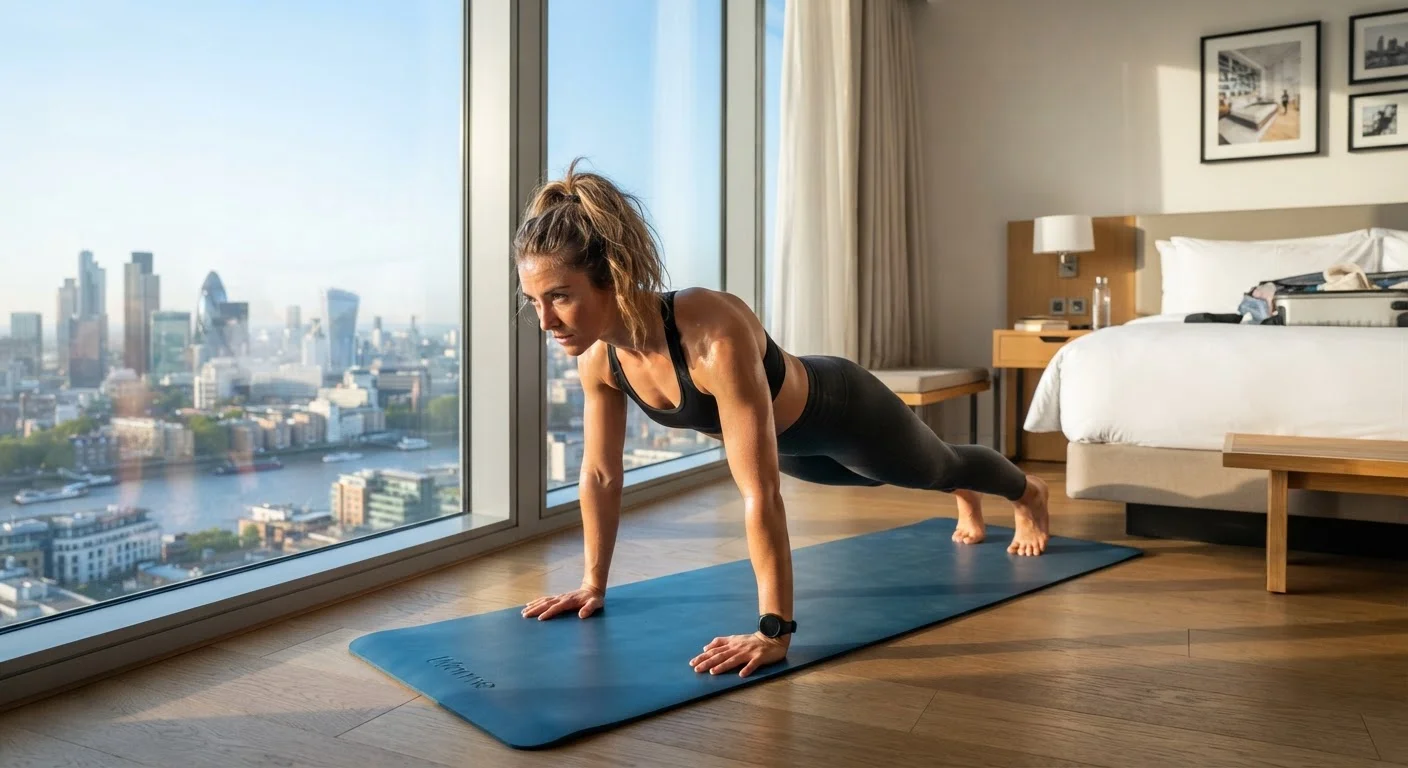
- Hotel room: Bodyweight circuits — push-ups, squats, lunges, planks, and mountain climbers — require zero equipment and can be highly effective. A resistance band (small enough to fit in any bag) expands options significantly.
- Hotel gym: These vary wildly, but most have enough for a solid session. Prioritize compound movements that cover the most muscle groups in the least time.
- Outdoors: Running routes, park benches for step-ups and dips, and stadium stairs are all fair game. Apps that map running routes in unfamiliar cities can double as mini-exploration tools.
- Airport or transit: Walking between terminals, standing rather than sitting at gates, and simple stretching routines in quieter corners all count as meaningful movement during long travel days.
The question of whether a 15-minute hotel room circuit is truly as effective as a full session is worth examining honestly. Short Workouts vs. Full Sessions While Traveling gives a research-grounded answer.
30 min
Minimum effective daily movement for health maintenance
Public health guidelines from organizations such as the CDC and WHO consistently recommend at least 150 minutes of moderate activity per week, which averages to around 30 minutes most days.
~48–72 hrs
Time before noticeable deconditioning begins
Exercise physiology research suggests that measurable reductions in cardiovascular efficiency can begin appearing within two to three days of complete inactivity, underscoring why even short travel workouts matter.
Scheduling Workouts Around Travel Logistics
Time is the most contested resource on any trip. The most effective approach is to treat workouts as fixed appointments — blocked in your calendar before the day fills with meetings, excursions, or transit. Morning sessions have a particular advantage: decision fatigue is lowest, scheduling conflicts are fewest, and the workout is done before the day's unpredictability kicks in.
Match workout timing to your jet lag reality. Exercising at local morning time can actively help anchor your circadian rhythm when crossing time zones, while intense evening sessions may make sleep harder. Lighter movement — walking, stretching, yoga — is generally better in the late evening regardless of time zone.
For days when travel is genuinely all-consuming, reframe movement goals entirely: steps walked, stairs taken, and time spent standing all contribute to overall daily activity. Active Commuting vs. Desk-Bound Travel explores the measurable health difference that accumulated movement makes.
Recovery, Sleep, and the Bigger Picture
Fitness gains happen during recovery, not during the workout itself. On the road, recovery is frequently compromised by poor sleep, dehydration, alcohol at client dinners, and the low-grade stress of navigating unfamiliar environments. Protecting recovery is therefore as important as the workouts themselves.
Prioritize sleep hygiene in hotel rooms: blackout curtains, a consistent wind-down routine, and keeping the room cool all support better sleep quality. Hydration deserves particular attention — cabin pressure on flights accelerates fluid loss, and many travelers arrive already dehydrated before their first activity. Staying Hydrated Across Time Zones covers this in detail.
Nutrition is the other major lever. Eating well while traveling requires its own strategy — Eating Well on the Road provides an environment-by-environment breakdown. Mental health is also part of the picture: travel stress and isolation affect motivation. Mental Wellness Abroad addresses the emotional and psychological dimensions of staying well on the road.
Finally, remember that travel fitness exists within the continuum of your overall training. Healthy Travel Habits brings together the nutrition, movement, and recovery principles that make sustained wellness on the road realistic rather than aspirational.
This article is for general informational and educational purposes only and is not a substitute for professional medical or fitness advice. Consult a qualified healthcare or fitness professional before starting any new exercise program, particularly if you have an existing health condition.