

Key Takeaways
Why Eating Well While Traveling Is Harder Than It Looks
Most people don't fall off their nutrition habits because they stop caring — they fall off because the environment changes and the usual system no longer works. At home, you know where the grocery store is, how to read the labels, and roughly how many vegetables are in tonight's dinner. On the road, all of that context disappears.
Disrupted schedules, time zone shifts, limited kitchen access, unfamiliar portion norms, and the social pressure of business dinners or group travel all conspire to make default choices — convenience food, large restaurant portions, skipped meals — the path of least resistance. Research consistently shows that food choices are more environment-driven than willpower-driven, which means the solution is redesigning your environment, not gritting your teeth harder.
This guide approaches eating well during travel as a practical, environment-by-environment problem. Whether you're in a hotel room in a business district, browsing a morning market in Southeast Asia, or stuck in a terminal at 6 a.m., there are reliable strategies that don't require heroic self-discipline. For a broader look at keeping your whole wellness routine intact while away, see our guide to auditing your routine for travel.
This article is for general informational purposes only and is not a substitute for personalized nutrition or medical advice. Consult a registered dietitian or qualified healthcare professional for guidance specific to your health needs.
Making the Most of Your Hotel Room
A hotel room isn't a kitchen — but it's also not a nutrition dead end. Most mid-range and above hotels provide at minimum a mini-fridge, an electric kettle, and sometimes a microwave. Even a mini-fridge alone opens up substantial options.
What to Pack From Home
A small selection of shelf-stable items can transform your in-room eating options. Consider: individual nut butter packets, unsalted mixed nuts, oats (instant varieties work with hot water from the kettle), dried fruit, whole grain crackers, protein powder if you use it regularly, and herbal teas. These take up minimal bag space and provide reliable fallback nutrition when nothing suitable is open or affordable nearby.
Using the Fridge Strategically
Pick up perishables on arrival — hard-boiled eggs from a deli, pre-washed fruit, yogurt, hummus, or sliced vegetables — and store them immediately. This gives you a real breakfast option that doesn't depend on the hotel buffet or a 45-minute café queue.
Reframe the Hotel Buffet
Hotel breakfast buffets can actually be a useful tool if you approach them with a plan. Focus on the elements with staying power: eggs, plain yogurt, fresh fruit, and whole grain toast. Skipping the pastry table isn't about restriction — it's about avoiding an energy crash two hours into your morning and arriving at your first commitment of the day actually fueled.
Hotel breakfast buffets can actually be a useful tool. Focus on the elements with staying power: eggs, plain yogurt, fresh fruit, and whole grain toast. Skipping the pastry table isn't about restriction — it's about avoiding an energy crash two hours into your morning.
Navigating Local Markets Like a Pro
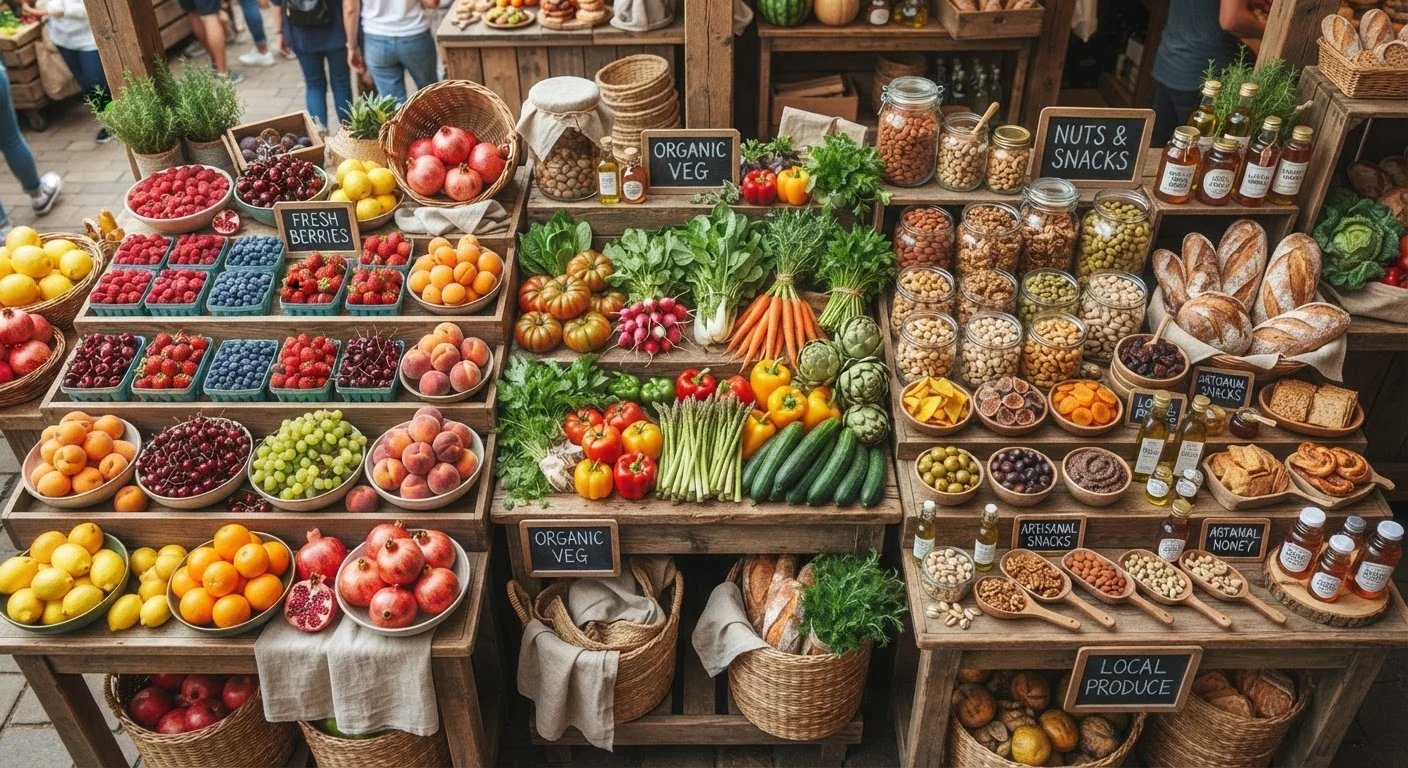
Local food markets — whether a permanent covered market, a weekly farmers market, or a street-side produce stall — are often the single best nutrition resource available to travelers. Prices tend to be lower than supermarkets, variety is high, and the produce is frequently fresher than what's been sitting in a hotel minibar.
Arrive at a local market within the first hour of it opening. Produce is freshest, vendors are less rushed, and you're more likely to get recommendations on what's in season or particularly good that day.
Early market visits capture peak freshness and create low-pressure opportunities to ask local vendors about preparation and sourcing — information that improves both nutrition and cultural experience.
Keep a small, running mental list of three 'reliable fallbacks' for each destination — foods you know you can find, afford, and that will sustain you. This removes decision fatigue when you're tired or pressed for time.
Decision fatigue is a well-documented phenomenon that degrades food choices under stress. Having pre-decided fallbacks bypasses this entirely and keeps nutrition consistent even on difficult travel days.
What to Look For
- Whole, recognizable foods: Fruit, vegetables, nuts, seeds, and local grain-based snacks are usually straightforward choices regardless of whether you can read the label.
- Protein sources: Hard-boiled eggs, legume-based dishes, dried beans, and local cheeses are common in markets worldwide and provide solid satiety.
- Ready-to-eat options: Many markets have stalls selling freshly prepared local dishes. These are often nutritionally preferable to fast-food alternatives, and exploring them is part of travel itself.
For a deeper look at balancing culinary adventure with nutritional consistency, our piece on local versus familiar food while traveling offers a balanced perspective.
Food Safety Basics
In destinations where food safety standards differ from what you're used to, apply general precautions: prefer cooked foods served hot, be cautious with raw produce that can't be peeled, and use bottled or treated water for drinking. Always verify current travel health guidance through official government sources before your trip, as recommendations vary by destination and can change.
Eating Out Without Derailing Your Routine
Restaurant eating while traveling doesn't have to be a nutritional free-for-all — but it also doesn't need to be an anxious exercise in menu negotiation. A few structural habits make a meaningful difference.
Scan Before You Sit
When possible, look at a restaurant's menu online before arriving. This removes the in-the-moment pressure that often leads to defaulting to the most familiar or most indulgent option. Having a rough idea of what you'll order before you're hungry and surrounded by sensory stimulation is a genuinely useful cognitive shortcut.
Build Your Plate by Structure, Not Rules
Rather than tracking macros or calories — impractical while traveling — think in terms of plate composition: aim for a meaningful protein source, a vegetable component, and a grain or starch. This loose structure tends to produce satisfying, balanced meals without requiring meticulous planning.
Alcohol and Hydration
Social dining often involves alcohol, which can disrupt sleep, hydration, and next-day appetite regulation. There's no need to abstain, but alternating alcoholic drinks with water is a practical way to stay hydrated and moderate intake without drawing attention to yourself at a group dinner.
Smart Snacking and Airport Survival
Airports and transit hubs are nutritional obstacle courses — highly processed food at elevated prices, minimal fresh options, and long gaps between real meals. The most effective strategy is reducing your dependence on what's available by bringing your own.
Most countries allow solid snacks through security: nuts, protein bars (check ingredients if traveling internationally with strict biosecurity rules), dried fruit, whole grain crackers, and nut butters in solid form. A small reusable container is worth packing. After security, a water bottle filled at a fountain or café ensures you stay hydrated without paying $5 for a small plastic bottle.
If you do need to buy food in a terminal, most airport food courts now include at least one option with a salad, grain bowl, or protein-forward wrap. Skipping the newsstand snack wall and walking the full terminal before buying is often worth the extra few minutes — options vary widely by gate area.
For more on building consistent habits across the full arc of a trip, our primer on staying healthy abroad covers the broader picture.
Building a Flexible Nutrition Mindset for the Road
The travelers who eat consistently well aren't the ones with the strictest rules — they're the ones with the most adaptable frameworks. Rigidity tends to collapse under the pressure of delayed flights, unexpected itineraries, and unfamiliar menus. Flexibility, by contrast, expands to fit almost any situation.
That means accepting that some meals will be suboptimal and not treating those moments as failures. It means prioritizing hydration, sleep, and movement alongside food — because nutrition doesn't operate in isolation from the rest of your wellness routine. See our complete guide to fitness while traveling for strategies that complement good nutrition on the road.
It also means recognizing that eating locally and adventurously is itself a form of wellness — connecting with a place through its food is one of travel's genuine pleasures, and that has value beyond macronutrients. The goal isn't to replicate your home routine perfectly. It's to return from a trip feeling nourished rather than depleted — and that's an entirely achievable standard.
This article is for general informational purposes only and does not constitute medical or nutritional advice. Consult a qualified healthcare professional or registered dietitian for personalized guidance.