

Key Takeaways
Start here
Before You Leave: Health Prep That Actually Matters
Next
Sleep, Jet Lag, and Your Body Clock
Then
Food, Water, and Digestive Health on the Road
Round it out
Keeping Movement and Mental Wellness in Your Routine
Before You Leave: Health Prep That Actually Matters
The most effective travel health strategy starts well before you pack your bag. For new travelers, the single highest-value action is scheduling an appointment with a travel health clinic or your primary care provider — ideally four to six weeks before departure. At that visit, a clinician can review destination-specific risks, vaccination status, and whether any preventive medications are appropriate for your itinerary. Do not rely on general internet searches for vaccination requirements; entry rules and health advisories change, and only official government and health authority sources carry current, binding information.
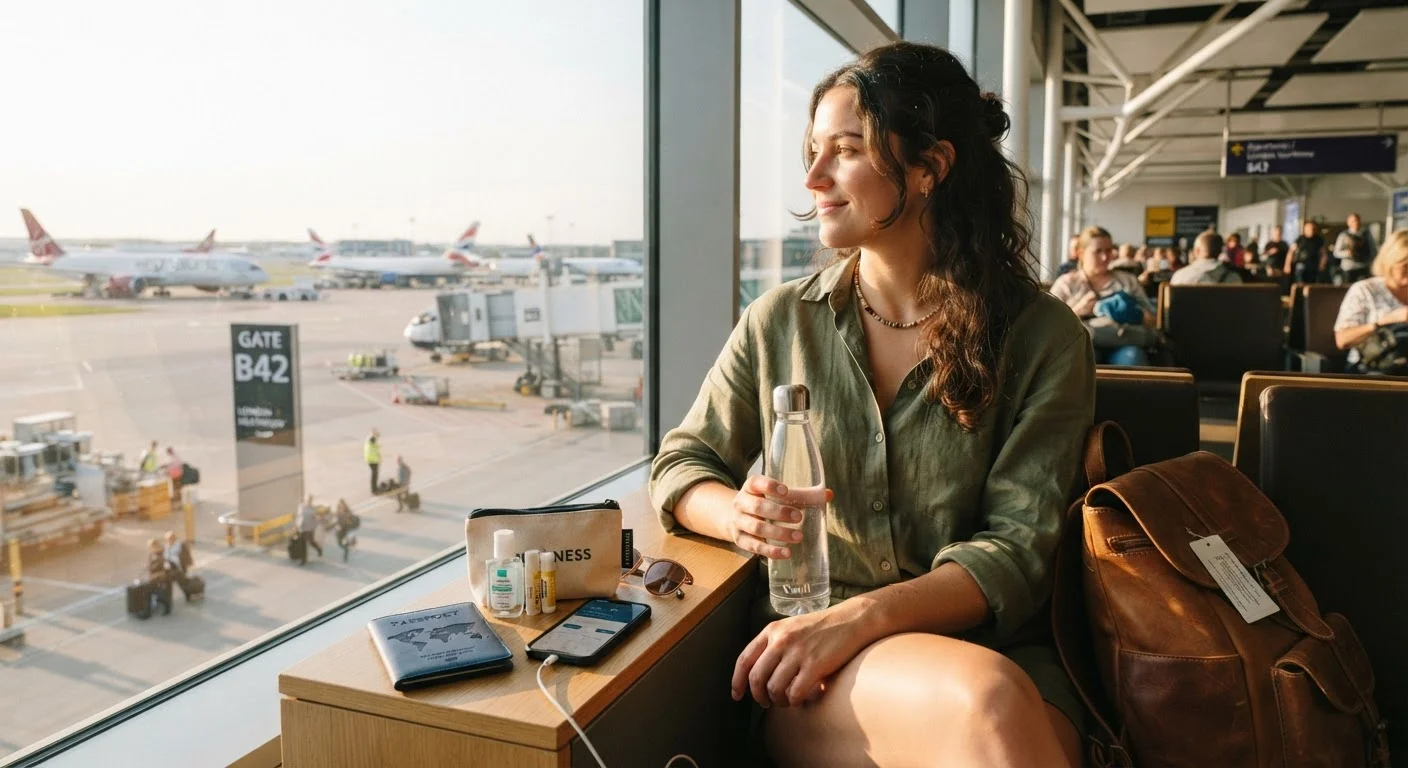
Beyond medical preparation, assembling a compact wellness kit for your carry-on pays dividends. Essentials typically include any personal prescription medications in original labeled containers, oral rehydration salts (useful if you encounter digestive upset), hand sanitizer, a broad-spectrum sunscreen suited to your destination's climate, adhesive bandages, and a digital thermometer. Familiarity with key health concepts every traveler should know — from circadian rhythm to traveler's diarrhea — will help you make sense of advice you receive and act on it confidently.
Pack Your Routine, Not Just Your Bags
Not every home wellness habit will transfer seamlessly to travel, but many more than you'd expect can survive with minor adjustments. Before you leave, take a few minutes to identify which daily habits — hydration, stretching, a consistent bedtime — are non-negotiable anchors for how you feel. See what actually transfers to travel for a practical audit framework.
Sleep, Jet Lag, and Your Body Clock
Crossing multiple time zones disrupts your circadian rhythm — the internal biological clock that regulates sleep, digestion, and hormone release. The result, jet lag, is a genuine physiological condition, not simply tiredness. Symptoms can include daytime fatigue, difficulty concentrating, digestive irregularity, and disrupted nighttime sleep.
Evidence suggests a few approaches help accelerate adaptation. In the days before departure, gradually shifting your bedtime by 30 to 60 minutes toward the destination's time zone can soften the transition. On arrival, exposure to natural morning light helps anchor your body clock to local time. Resist the urge to nap heavily on arrival day if you are traveling eastward — staying awake until a local bedtime typically speeds adjustment. Avoid alcohol and excess caffeine during the first 48 hours; both fragment sleep architecture even when they seem to provide short-term relief.
Jet Lag Varies by Direction
Traveling eastward (e.g., US to Europe) is generally harder on the body than westward travel because you are asked to fall asleep earlier than your body clock expects. Westward trips extend your day, which tends to feel more natural. Knowing your direction of travel helps you plan your sleep-shifting strategy accordingly.
Food, Water, and Digestive Health on the Road
Traveler's diarrhea — the most common illness affecting international travelers — is usually caused by consuming food or water contaminated with bacteria, viruses, or parasites that your gut hasn't encountered before. It is not a sign of weakness; local populations often carry immunity built up over years of exposure that visitors simply do not have.
Safe eating habits significantly reduce your risk. Prioritize foods that are thoroughly cooked and served hot. Street food is not categorically unsafe — visibly busy stalls with high turnover and food cooked in front of you are generally lower risk than buffets where food sits at room temperature. Peel fruit yourself, and be cautious with raw salads in destinations with limited food safety infrastructure. For water, verify whether tap water is safe at your specific destination before drinking it; when uncertain, opt for sealed bottled water or a certified portable filter. Ice made from tap water carries the same risk as the water itself.
For practical, environment-specific guidance on nourishing yourself well without relying on willpower, see our guide to eating well on the road.
Keeping Movement and Mental Wellness in Your Routine
Physical activity and mental equilibrium are the first casualties of a packed travel itinerary — but they are also two of the most powerful tools for keeping you functional and resilient throughout a trip. The good news is that both can be maintained with surprisingly modest investments of time.
For movement, set a low bar: 20 minutes of bodyweight exercise in your room, or simply choosing to walk rather than taxi for shorter distances, preserves cardiovascular conditioning and supports sleep quality. You do not need a gym membership or running shoes. Your first time exercising while traveling can feel uncertain — our companion guide walks through realistic expectations and practical starting points.
Mental wellness deserves equal attention. Unfamiliar environments, schedule disruptions, and social isolation — even when travel is exciting — can create low-grade stress that accumulates over days. Simple anchors help: maintaining a rough sleep schedule, checking in briefly with people at home, stepping outside for natural light each morning, and building at least one unhurried hour into busy days. For a more structured approach, our starter framework for mental wellness abroad covers what to expect emotionally on early trips and how to build resilience before problems arise.
This article provides general health and wellness information for educational purposes only. It is not a substitute for personalized medical advice. Consult a qualified healthcare professional before making any decisions related to your health, medications, or vaccinations.