

Key Takeaways
Start here
Why Exercise Feels Different When You Travel
Next
What Gear Do You Actually Need?
Then
How to Schedule Workouts Into a Travel Day
Keep going
Realistic Expectations for Your First Trip Workout
Level up
Building Consistency Without a Home Routine
Why Exercise Feels Different When You Travel
First-time travelers who try to maintain a workout routine often share the same surprise: everything feels harder. A pace that feels easy at home leaves you breathless in a different city. A familiar exercise feels awkward in an unfamiliar space. This isn't a sign of failure — it's biology and environment working together.
Disrupted sleep from time zone shifts, changes in what and when you eat, dehydration from flying, and even subtle differences in altitude or heat all affect how your body performs. See our guide to why workouts feel harder in a new place for a detailed breakdown of what's happening physically. Understanding this going in helps you set expectations rather than give up after one difficult session.
Give Yourself an Adjustment Day
If you've crossed multiple time zones or taken a long flight, consider giving your body 24 hours before attempting your first workout. Light walking and stretching are fine, but a full session while significantly sleep-deprived or dehydrated adds stress without proportionate benefit. Listen to your body rather than sticking rigidly to a plan.
What Gear Do You Actually Need?
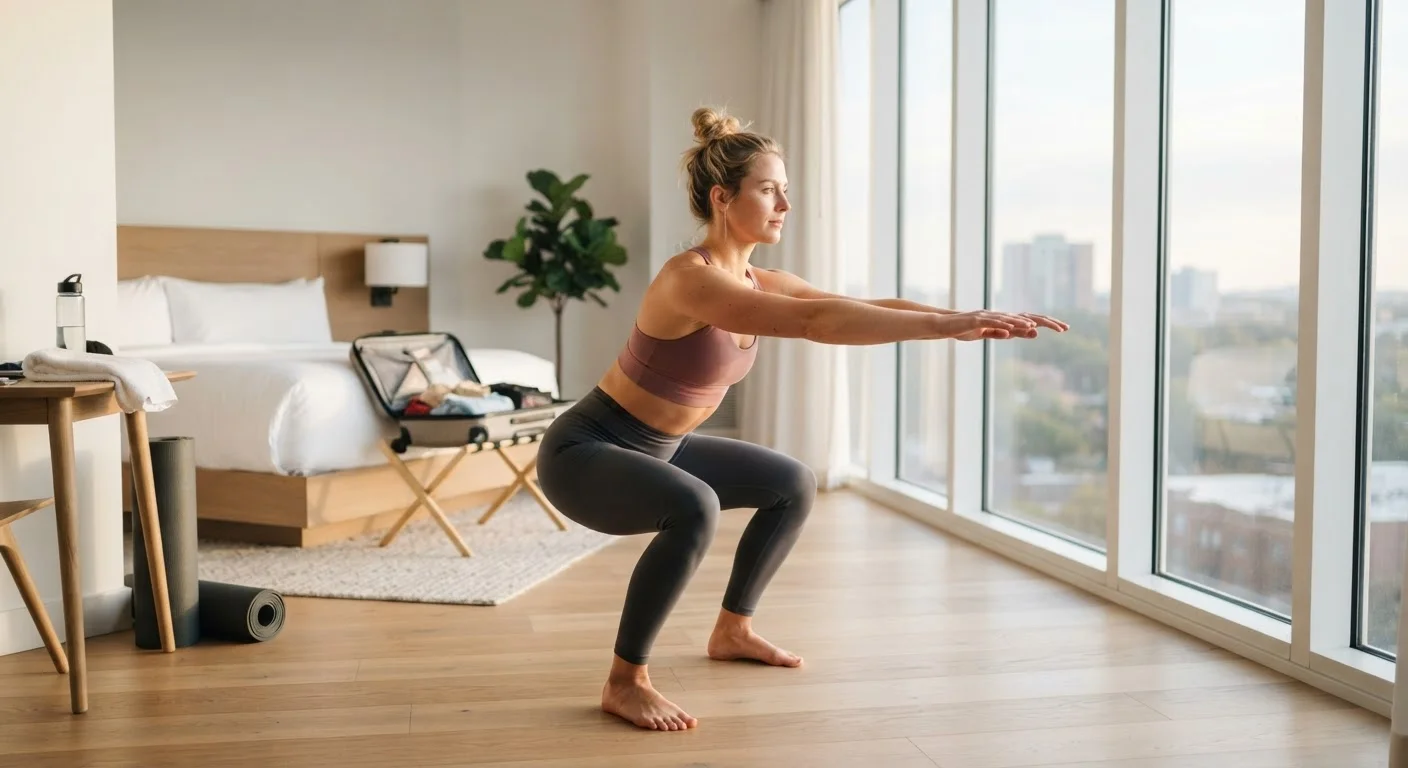
The honest answer: less than you think. A pair of supportive athletic shoes and moisture-wicking clothing are the genuine essentials. From there, you can do a substantial amount with nothing else — bodyweight squats, push-ups, lunges, planks, and step-ups onto a chair or bed frame cover most major muscle groups.
If you want to add one piece of kit, lightweight resistance bands are worth considering. They pack flat, weigh almost nothing, and add enough resistance to make bodyweight routines more challenging. Our article on bodyweight training versus resistance bands walks through how each approach holds up in a hotel room or small space.
Before your next trip, use the pre-trip fitness checklist to make sure you've covered the basics without overpacking.
Pack Light, Train Smart
Resist the urge to overpack fitness gear. A single pair of athletic shoes, two sets of workout clothes, and an optional resistance band cover nearly every scenario. More gear often means more reasons to feel like you're not doing it 'properly' — which can discourage you from exercising at all.
How to Schedule Workouts Into a Travel Day
Waiting for a free hour that spontaneously appears rarely works. Travel days are unpredictable — flights get delayed, meetings run long, and energy fluctuates. The more reliable approach is to treat your workout like a confirmed appointment.
Morning sessions tend to work best for most travelers because they're completed before the day's chaos takes over. Even 20 minutes before breakfast can make the difference. If mornings don't suit your schedule, identify a consistent anchor point — before dinner, after check-in — and plan around it.
If you're managing business travel with back-to-back commitments, our complete guide to staying active on the road covers strategies for fitting movement into dense itineraries. For active sightseeing environments, exercising in a strange city shows how to turn local infrastructure into your gym.
Realistic Expectations for Your First Trip Workout
Your first travel workout is not the time to attempt a personal best. Treat it as a recalibration: get moving, notice how your body responds to the new environment, and stop before you've pushed into discomfort you'll regret the next day.
A practical structure for beginners: five minutes of light movement to warm up (walking, arm circles, leg swings), fifteen to twenty minutes of compound bodyweight exercises, and five minutes of stretching or slow breathing to finish. That's a complete, effective session that respects both your limited time and your body's adjusted state.
If you're newer to exercise overall and want to understand what to expect from a fitness program in general, starting strength training as an adult provides grounded context for early progress timelines. Unfamiliar fitness terminology can also slow you down — common exercise terms explained is a useful quick reference.
Building Consistency Without a Home Routine
Consistency while traveling doesn't mean replicating your home routine exactly — it means building a flexible habit that survives changing conditions. The travelers who maintain fitness most effectively tend to prioritize movement frequency over session length, adapt their format to available space and time, and let go of the idea that a shorter or simpler workout is a wasted one.
If you're curious how a short hotel room circuit compares to a full gym session in terms of actual effectiveness, short workouts versus full sessions offers an honest assessment. For longer trips, understanding the timeline of deconditioning can help you plan smarter — muscle loss and the traveling athlete explains what the research actually shows.
Exercise also supports mental health while you're away. Consistent movement can reduce travel-related stress and improve sleep quality. The Mental Wellness Abroad hub covers the broader picture of staying balanced on the road.
This article is for general informational purposes only and is not a substitute for professional medical or fitness advice. Consult a qualified healthcare provider before beginning any new exercise program, particularly if you have existing health conditions.