

Key Takeaways
Exercise Performance Adaptation
Exercise performance adaptation refers to the temporary drop in workout capacity that occurs when your body encounters unfamiliar environmental conditions — such as higher altitude, increased heat, or disrupted sleep. Your body hasn't yet adjusted its physiology to the new demands, so efforts that felt manageable at home may feel significantly harder. This is a normal biological response, not a sign of fitness loss.
Physiologically, the effect often involves reduced oxygen availability, altered cardiovascular demand, or suppressed hormonal recovery — each of which can independently degrade strength, endurance, and perceived effort.
The Four Forces Working Against You
When a familiar run suddenly leaves you gasping or a standard strength session feels twice as hard, the instinct is to blame poor sleep or skipped meals — and sometimes that's right. But the full picture usually involves four overlapping factors: altitude, heat and humidity, disrupted sleep, and changes to nutrition. Understanding each one separately helps you make smarter decisions about how hard to push and when to back off.
If you're new to training outside your home environment, our guide for first-time travelers covers the basics of managing expectations before you even pack your shoes.
~5,000 ft
Altitude where aerobic performance may begin to drop
Research in exercise physiology suggests measurable aerobic capacity reductions can begin around 1,500 meters (approximately 5,000 feet) above sea level for many individuals.
2%
Fluid loss that noticeably impairs endurance
Exercise science literature consistently identifies a body-weight fluid loss of roughly 2% as a threshold where endurance performance begins to measurably decline.
3–7 days
Typical early acclimatization window at moderate altitude
Most healthy adults experience meaningful improvement in exercise tolerance within this window when arriving at moderate elevations, according to altitude physiology research.
Altitude: Less Oxygen, More Effort
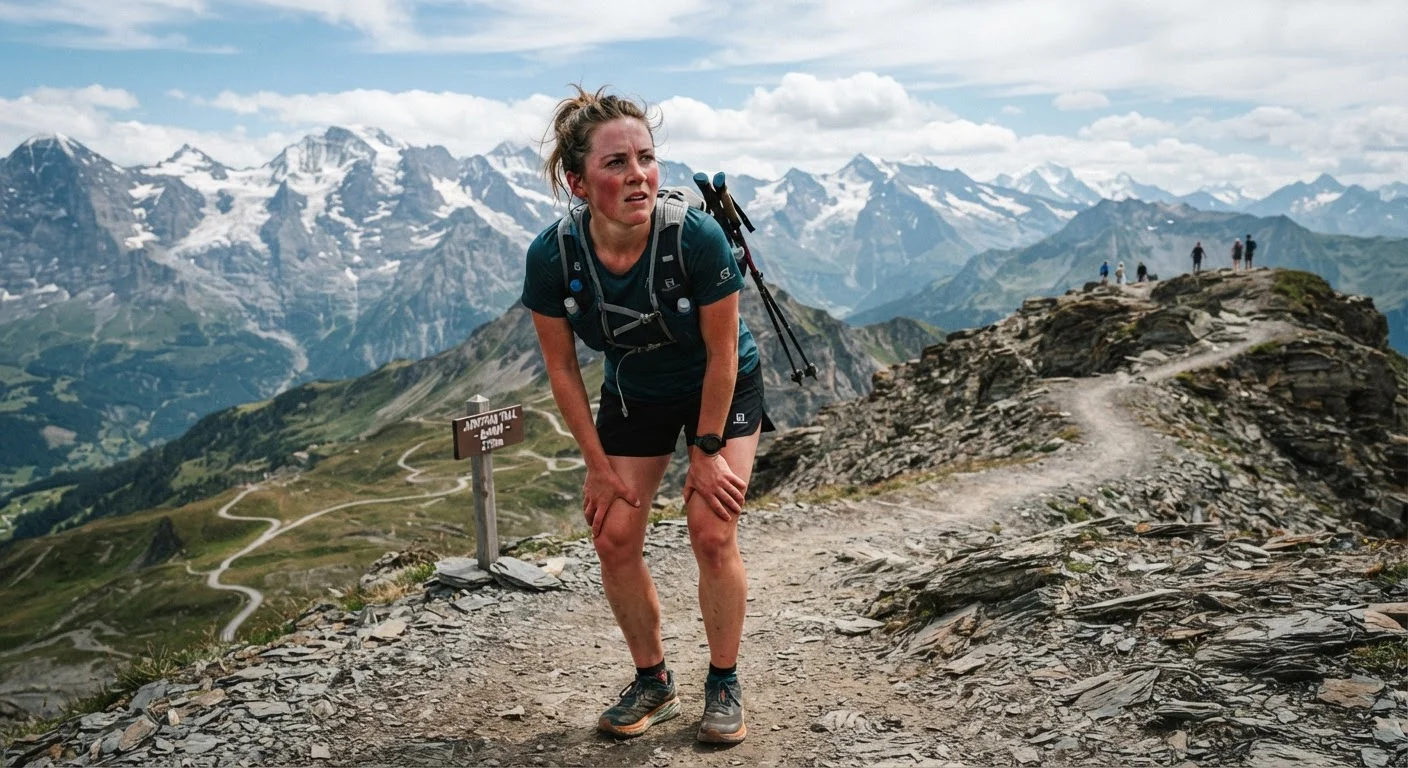
At higher elevations, air pressure is lower, which means each breath delivers less oxygen to your bloodstream. Your aerobic system depends on oxygen to sustain effort, so when supply drops, your heart rate climbs faster, your muscles fatigue sooner, and your perceived exertion spikes — all at paces or loads that would have felt routine at sea level.
This effect can begin at elevations as modest as 5,000 feet above sea level for some people, and it's especially pronounced during endurance activity. The good news is that the body begins adapting quickly: your breathing rate increases, your kidneys produce more of a hormone that stimulates red blood cell production, and blood plasma volume shifts. Significant improvements are typically noticeable within a week, though full adaptation takes longer.
Scale Back Intensity on Arrival
When arriving at a new elevation or climate, plan to reduce your workout intensity by 20–30% for the first two to three days. Use perceived effort — how hard something feels — rather than your usual pace or weight targets as your guide. This approach protects recovery and lets your body acclimatize without accumulated fatigue. Think of it as a built-in deload, not a step backward.
Heat, Humidity, and Your Cardiovascular Budget
Exercising in hot or humid conditions imposes an extra burden on your cardiovascular system that has nothing to do with the workout itself. To cool your core, your body redirects blood toward the skin — blood that would otherwise be powering your muscles. Meanwhile, high humidity limits how efficiently sweat can evaporate, reducing the cooling effect you'd normally count on. The result is a higher heart rate at lower effort levels, earlier fatigue, and a harder-than-expected session even on flat terrain.
Hydration becomes measurably more important in these conditions. Even mild dehydration — around 2% of body weight in fluid loss — can impair endurance performance noticeably. When working out in heat, prioritize hydration before and during activity rather than trying to catch up afterward.
Sleep Disruption and What It Does to Performance
Jet lag and unfamiliar sleeping environments are underestimated performance factors. During sleep, the body repairs muscle tissue, consolidates motor learning, and regulates hormones involved in recovery and energy metabolism. When sleep is cut short or shifted by time-zone changes, all of that repair work is interrupted.
Studies in sleep science consistently show that even one night of poor sleep reduces strength output, aerobic capacity, and motivation. Crucially, it also increases perceived effort — the same workout genuinely feels harder, not just mentally but measurably so in heart rate and output. Giving yourself a day or two of lighter activity after a long-haul flight isn't laziness; it's a physiologically sound strategy.
For context on how progressive load management works closer to home, our article on workout plateaus explains why managing stimulus and recovery is always central to consistent progress.
Nutrition and the Disrupted Routine
Travel changes when, what, and how much you eat — often in ways that subtly undermine performance. Flights and time-zone shifts throw off hunger cues. Local food availability may mean fewer carbohydrates to fuel training or less protein for recovery. Restaurant meals are harder to gauge for macronutrient content than food you've prepared yourself.
None of this means you need to obsess over every meal. But if you're noticing unusual fatigue or flat performance, examining recent eating patterns is worth doing before concluding your fitness has declined. Prioritizing reliable protein sources and adequate carbohydrates around training sessions helps preserve the fuel your muscles need.
Once you've accounted for these factors, adapting your workouts to what's actually available — rather than what you'd normally do — is the practical next step. Exercising in a new city looks at how to use parks, stairs, and local infrastructure when your usual setup isn't an option.
This article is for general informational purposes only and does not constitute medical advice. If you have a health condition or are experiencing unusual symptoms during exercise, consult a qualified healthcare professional before continuing activity.