

Travel & Wellness

Before You Pack Your Trainers: A Pre-Trip Fitness Checklist

Share
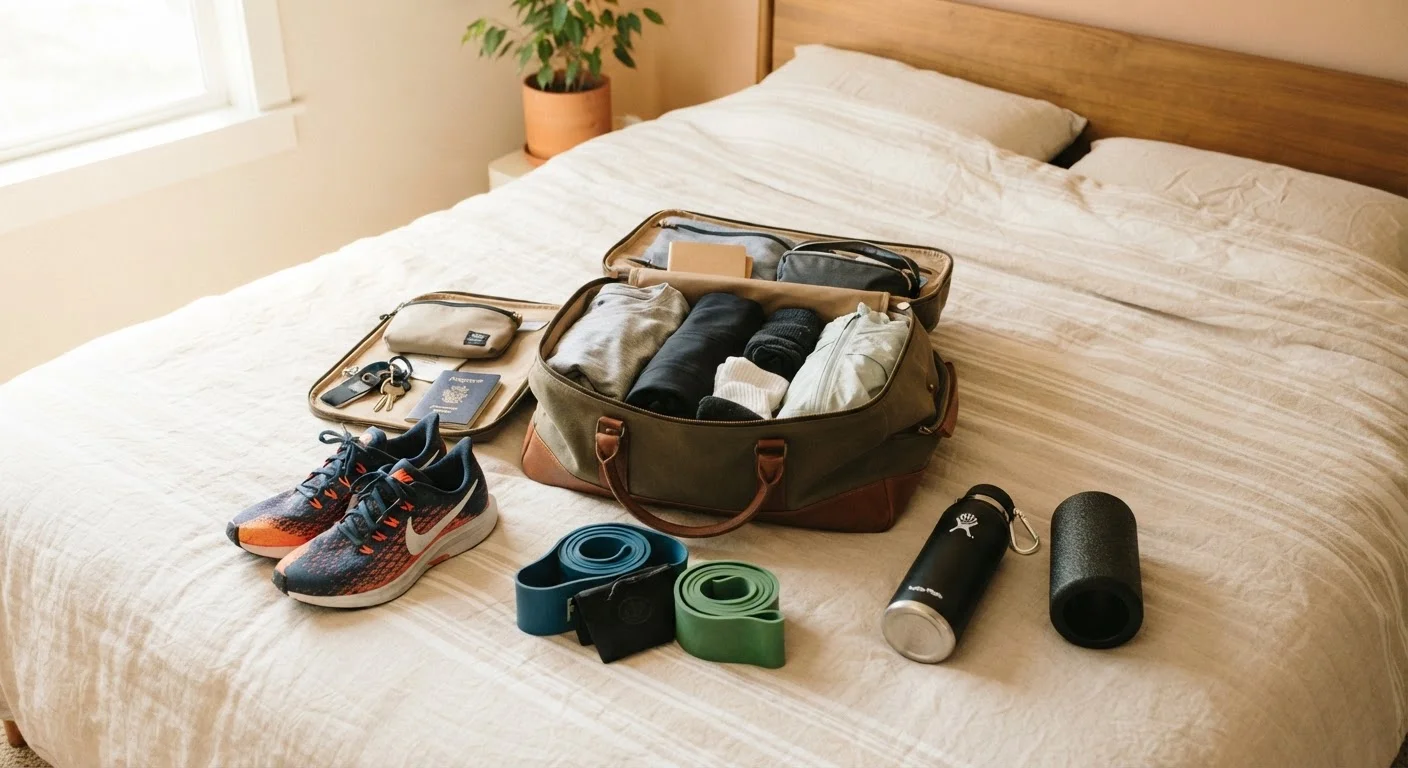
Open travel bag with running shoes, resistance bands, water bottle, and foam roller laid out on a bed

Key Takeaways

Auditing your gear before departure prevents arriving without essentials you actually need to train.
Researching your destination's facilities lets you plan workouts that match available space and equipment.
Setting realistic, trip-specific fitness goals reduces frustration and keeps consistency achievable.
Building movement into your travel schedule in advance is more effective than leaving it to chance.
A short pre-trip mobility check can help you identify any physical concerns before you're far from home.
20–40 min

Summary

22 items · 20–40 minutes

Why a Pre-Trip Fitness Check Matters

Most fitness disruptions during travel aren't caused by lack of willpower — they're caused by lack of preparation. Arriving at a hotel without your resistance bands, realizing your workout clothes are in checked luggage you won't see until midnight, or discovering the building has no gym and no nearby park are all problems that a ten-minute planning session could have solved.

This checklist is designed for active adults who already have a fitness routine at home and want to protect it on the road. It won't tell you what to do once you're there — that's covered in depth in our complete guide to fitness while traveling. What it will do is make sure you're set up to follow through before you leave your front door.

Work through each section in the days leading up to your departure. The whole process should take well under an hour.

Gear and Packing

Pack at least two full sets of workout clothes so a slow laundry turnaround doesn't derail a session. Must
Include one pair of versatile athletic shoes suitable for both cardio and light strength work. Must
Add a set of mini resistance bands — they weigh almost nothing and substitute for a surprising range of gym equipment. Should
Pack a jump rope if your trip involves hotels or spaces with adequate ceiling height and hard flooring. Nice to have
Include a reusable water bottle large enough to keep you hydrated through a full workout without refilling mid-session. Must
Store all workout gear in your carry-on or a designated section of your main bag so it's easy to locate on arrival. Should

Destination Research

Check whether your accommodation has a gym, pool, or fitness studio — and confirm the hours before you book your first session. Must
Identify at least one outdoor running or walking route near your accommodation using satellite maps or a local running app. Should
Research the climate and air quality at your destination so you can plan indoor versus outdoor sessions appropriately. Should
Note the neighbourhood safety profile for early-morning or evening outdoor exercise — check official travel advisories if unfamiliar with the area. Must
Look up any nearby public parks, walking trails, or recreation centres as backup options if hotel facilities are limited. Nice to have

Goal Setting and Scheduling

Define a realistic minimum — for example, three 30-minute sessions per week — that accounts for your actual itinerary demands. Must
Block workout windows into your travel calendar the same way you would a meeting, rather than leaving them as intentions. Must
Prepare one or two bodyweight-only workout formats you can do in a small hotel room without any equipment. Should
Decide in advance how you'll handle a missed session — a short walk or stretch routine is a useful fallback rather than skipping movement entirely. Should
Align your fitness goals for the trip with its purpose — a rest-heavy vacation warrants different expectations than a two-day business trip. Must

Physical Readiness Check

Complete a brief mobility self-check in the week before departure to flag any joint tightness or minor aches that may need management on the road. Should
If you're managing an existing injury or health condition, consult your healthcare provider about training modifications before traveling. Must
Pack any personal recovery tools you rely on regularly, such as a foam roller, massage ball, or compression sleeves. Nice to have
Review your sleep and hydration habits, as travel-related disruptions to both can significantly affect workout performance and recovery. Should

Tools and Resources to Have Ready

You don't need a fully equipped gym bag to stay active while traveling — but having the right items on hand removes the most common friction points. Use the list below to decide what's worth packing for your specific trip type and duration.

Required

Mini resistance bands

Provide adjustable resistance for a wide range of strength exercises without adding meaningful weight or bulk to your luggage.

Required

Reusable water bottle

Supports adequate hydration during workouts in unfamiliar climates where purchasing water frequently isn't practical.

Optional

Fitness or workout app (downloaded offline)

Gives you access to guided sessions or saved workout plans when Wi-Fi is unreliable or unavailable.

Optional

Jump rope

Enables effective cardio in small spaces with minimal setup — ideal for hotel rooms with adequate ceiling clearance.

Optional

Foam roller or massage ball

Supports muscle recovery and reduces post-workout soreness, particularly valuable after long travel days involving sitting.

Required

Comfortable, versatile athletic shoes

A single pair that supports both cardio and strength movements reduces the packing footprint while keeping training options open.

If you're newer to exercising away from home, our guide on what to expect the first time you exercise while traveling covers the basics without overwhelm. For a broader look at which home habits are actually worth protecting on the road, see our article on packing your wellness routine.

Don't Overlook Heat, Altitude, and Air Quality

Training in a new climate without acclimatising first can place unexpected stress on your cardiovascular system. If your destination sits at significantly higher elevation than home, or involves extreme heat or humidity, reduce workout intensity for the first two to three days. Those with respiratory conditions should check air quality indexes before planning outdoor sessions. When in doubt, consult a healthcare professional before departing.

Finally, fitness is only one dimension of travel readiness. If you haven't already, consider running through the mental wellness pre-trip checklist as a companion to this one — the two work well together.

This article is for general informational purposes only and does not constitute medical advice. Consult a qualified healthcare professional before beginning or modifying any exercise program, especially if you have an existing health condition or injury.

Travel & Wellness Editorial Team is the collective byline for our editorial team and contributor network. Articles published under this byline or an editorial pen name are researched, written, and reviewed according to our editorial standards for clarity, consistency, and independence before publication.

View all articles by Travel & Wellness Editorial Team →
Disclaimer: The content on this site is for informational purposes only and is not a substitute for professional advice. Always consult a qualified professional for guidance specific to your situation.