

Key Takeaways
Evening Wind-Down
An evening wind-down is a deliberate pre-sleep transition period — typically 30 to 90 minutes — during which you reduce physical, cognitive, and emotional stimulation so your nervous system can shift from an alert, active state to one primed for sleep. It works by reinforcing the biological signals your brain already uses to regulate the sleep-wake cycle.
The transition involves a handoff between the sympathetic (fight-or-flight) and parasympathetic (rest-and-digest) branches of the autonomic nervous system, alongside the timed release of melatonin from the pineal gland as light exposure decreases.
What Your Brain Is Actually Waiting For
Sleep doesn't switch on like a light — it phases in. Your brain is constantly scanning the environment for cues that signal safety, darkness, and a drop in demand. When those cues are present, the pineal gland ramps up melatonin production, core body temperature begins to fall, and the prefrontal cortex gradually reduces its grip on executive function. When those cues are absent — or when you're sending their opposite — the transition stalls.
Most people think of wind-down as something they do after they decide to sleep. Neurologically, it's more accurate to think of it as something you do in order to make sleep possible. The two most reliable biological levers are light and thermoregulation. Everything else — journaling, breathing, stretching — works by reducing the autonomic arousal that keeps those primary systems suppressed.
Circadian Rhythm vs. Sleep Pressure
Two distinct systems govern when you sleep: your circadian rhythm (a roughly 24-hour internal clock driven largely by light) and sleep pressure (adenosine buildup in the brain that increases the longer you're awake). An effective wind-down works with both — reducing arousal so circadian timing can do its job, while not disrupting the sleep pressure you've built through the day. Napping too late in the afternoon, for instance, can relieve sleep pressure prematurely and make the evening transition harder.
Light: The Signal You're Probably Ignoring
Light is your circadian system's primary timekeeper. The suprachiasmatic nucleus (SCN) — your brain's internal clock — uses light input from the eyes to synchronize your body's rhythms with the external day. When bright, blue-spectrum light hits the retina in the evening, it directly suppresses melatonin and sends a "midday" signal to your physiology, regardless of what time the clock says.
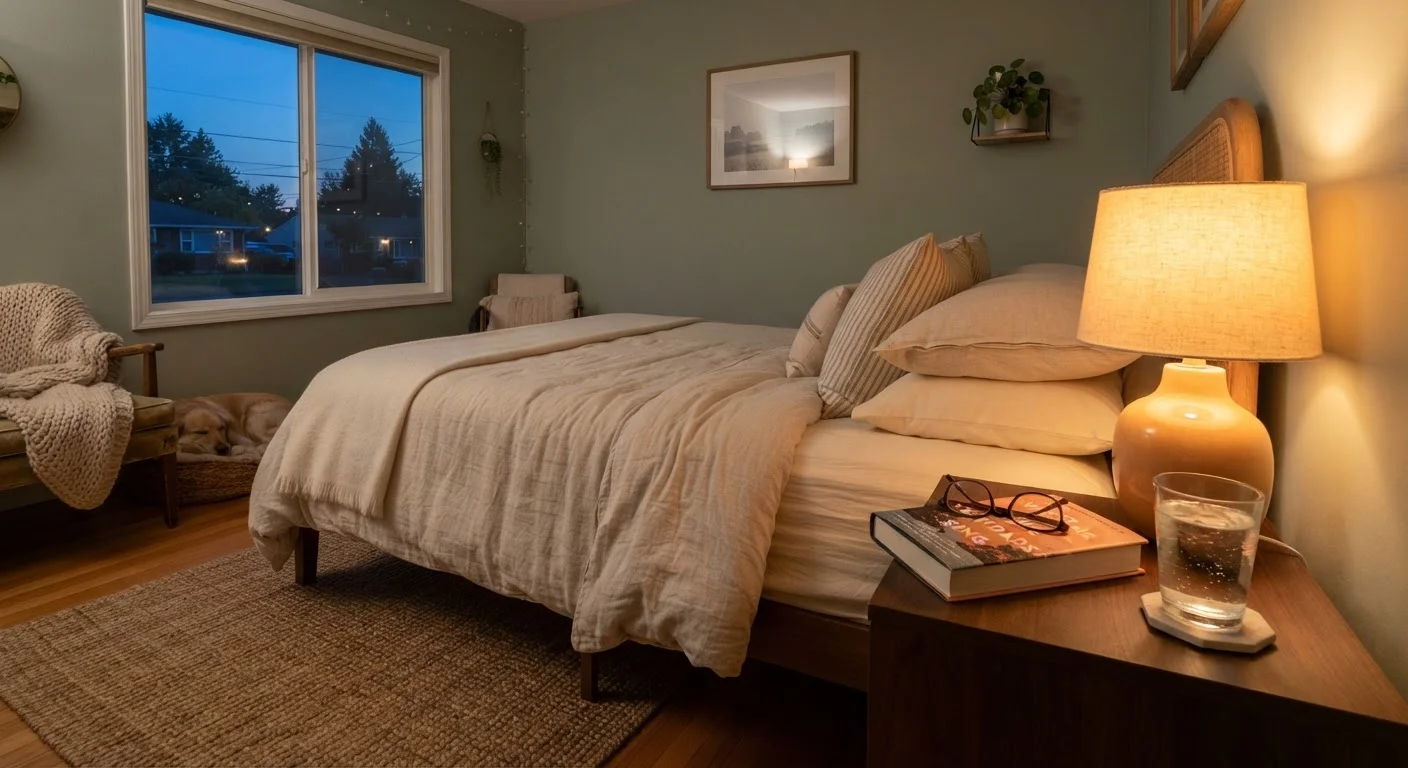
The fix is not complicated, but it does require intention. Dimming overhead lights and switching to warm, low-level sources (lamps, candlelight, warmer-toned bulbs) in the 60–90 minutes before bed removes the conflicting input. If you use screens, the more impactful change is reducing their emotional stimulation — but physically dimming them and enabling warm color filters does reduce blue-light exposure on top of that.
~90 min
Melatonin onset delay from bright evening light
Research published in sleep science literature suggests that exposure to bright light in the 2–3 hours before habitual bedtime can delay melatonin onset by up to 90 minutes.
1–2°F
Core body temperature drop linked to sleep onset
Sleep researchers have documented that the body's core temperature typically drops by approximately 1–2°F during the transition into sleep, a process the evening wind-down can support.
~1 hour
Optimal pre-bed window for a warm bath or shower
A meta-analysis published in Sleep Medicine Reviews found that bathing in warm water 1–2 hours before bed improved both sleep onset and quality in study participants.
Temperature, Breathing, and the Nervous System Handoff
Core body temperature naturally dips as part of the biological sleep transition. You can support that drop actively: a warm shower or bath about an hour before bed causes vasodilation (blood vessels near the skin dilate to release heat), which accelerates the core temperature decrease. Keeping the bedroom cool — generally thought to be in the mid-to-upper 60s Fahrenheit for most adults — reinforces the same process.
On the nervous system side, what you're aiming for is a shift from sympathetic dominance (elevated heart rate, cortisol, heightened alertness) to parasympathetic activation. Slow, extended exhalations — where the exhale is longer than the inhale — directly stimulate the vagus nerve and lower heart rate. Even five minutes of deliberate breathing can shift this balance measurably. That's the mechanism behind why practices like progressive muscle relaxation, gentle stretching, and meditation work: they're not just psychological comfort, they're physiological resets.
For a structured approach to building this into a routine, see Building an Evening Wind-Down Routine That You'll Actually Keep.
Start Your Wind-Down Before You Feel Tired
Waiting until you feel sleepy to begin winding down often means the biological signals are already delayed. Start dimming lights, lowering cognitive load, and cooling the room 60–90 minutes before your target sleep time — before the urge to sleep arrives, not after. Consistency across nights is more important than any single technique.
What Actually Undermines It
The most common saboteurs aren't obvious. Finishing a work email at 10 p.m. doesn't just create a task — it reactivates problem-solving neural circuits that take time to quiet. An emotionally charged conversation, a news cycle with high stakes, or even a gripping podcast keeps the prefrontal cortex engaged past the point where sleep can begin. The common thread is cognitive and emotional load, not screen time alone.
Late eating complicates the picture differently: digestion requires metabolic activity that keeps core temperature elevated and keeps the gut-brain axis busy. While individual tolerance varies, heavy meals close to bedtime are associated with longer sleep onset and more fragmented rest in general research findings.
End-of-Day Rituals: A Self-Audit for Genuine Mental Shutdown can help you identify which of your specific habits are keeping you physiologically wired after hours. And if travel is part of your life, the same principles apply in hotel rooms — though with additional complications covered in Sleep on the Road: What Actually Disrupts It and What Helps.
This article is for general informational purposes only and does not constitute medical advice. If you have persistent sleep difficulties, consult a qualified healthcare provider.