

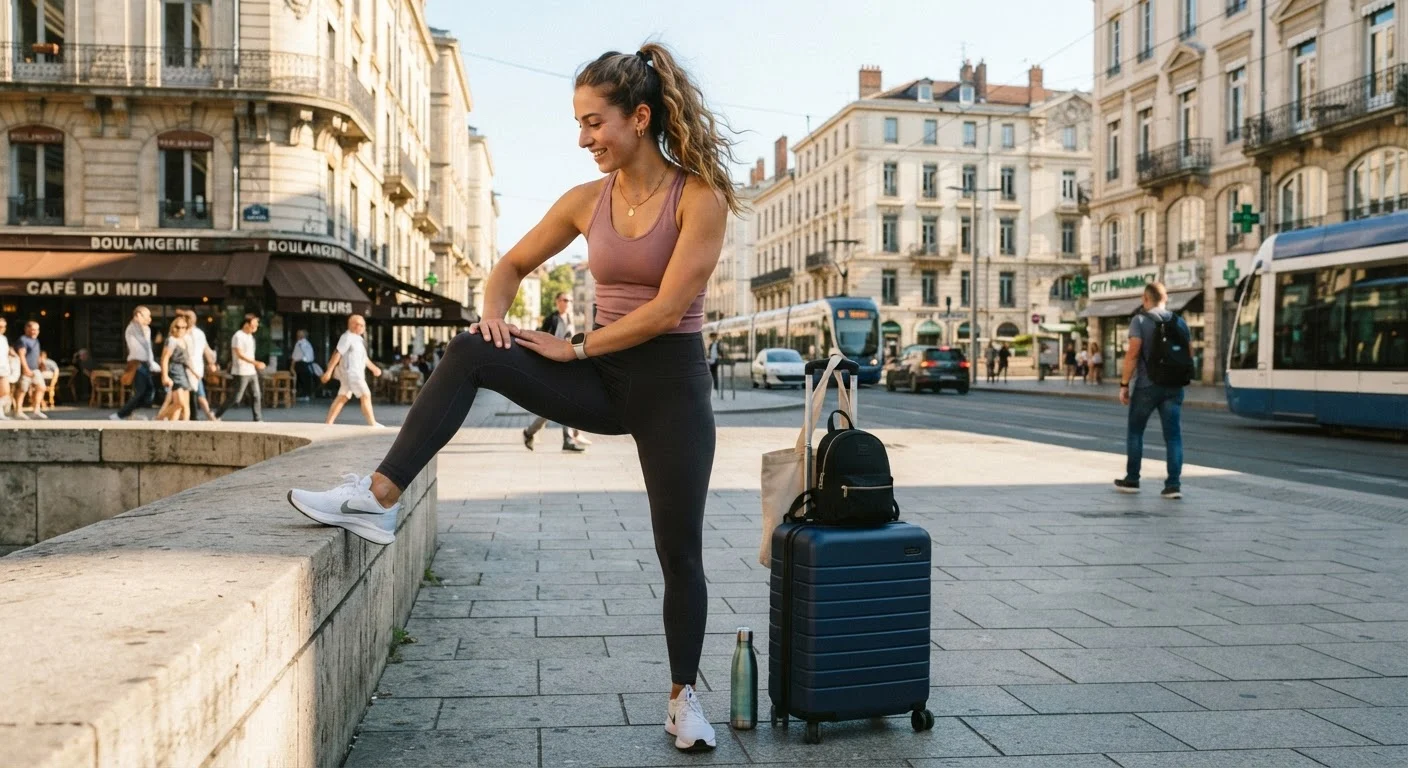
Key Takeaways
Why Travel Disrupts Movement — and Why It Doesn't Have To
Busy travel days are genuinely difficult for maintaining fitness. Back-to-back commitments, unfamiliar environments, disrupted sleep, and the cognitive load of navigation all compete with the mental bandwidth needed to sustain good habits. Most active adults don't skip movement on trips out of laziness — they skip it because the usual environmental cues (a nearby gym, a regular class time, a walking commute) simply aren't there.
The solution isn't to replicate your home routine in a foreign setting. It's to build movement-rich days without dedicated workout infrastructure — using the environment you're actually in. That shift in approach is what makes consistent travel movement realistic rather than aspirational.
The steps below give you a repeatable system for doing exactly that, regardless of your destination, itinerary type, or available equipment.
Movement Is General Wellness, Not Medical Advice
The strategies in this article are general fitness suggestions for healthy, active adults. If you have an existing health condition, injury, or have been advised by a clinician to limit physical activity, consult your healthcare provider before adopting new exercise habits — at home or while traveling.
What You'll Need Before You Start
The good news: effective travel movement requires almost nothing. The essentials are planning awareness, a flexible mindset, and footwear that supports walking. Optional gear — a resistance band, a fitness app — can add variety but are never required.
What you will need
Resistance band (loop or flat)
Provides portable resistance for lower-body and upper-body exercises without adding meaningful luggage weight.
Smartphone timer or fitness app
Used to structure interval-based movement sessions and keep sessions time-bounded.
Comfortable walking shoes
Makes opportunistic walking — to meetings, sights, or transit stops — physically sustainable across a full day.
Travel yoga mat or grip socks
Provides a clean, stable surface for floor-based bodyweight exercises in hotel rooms.
Stack Movement With Existing Plans
The most sustainable travel movement habit is one that doesn't require carving out extra time. Walking to a restaurant, taking stairs at every venue, or doing a 7-minute stretch before your morning shower turns existing moments into movement without renegotiating your schedule.
Step-by-Step: How to Fit Movement Into Any Travel Day
Follow these steps in sequence before and during your trip. The first two are planning steps you complete before departure; the remaining steps are applied in the field. Each one is designed to be lightweight — no extra time blocks required.
Audit your itinerary for hidden movement windows
Before your trip, review your schedule and mark every transition — airport waits, hotel check-in queues, lunch breaks, pre-dinner gaps. These pockets of 5–15 minutes are your movement inventory. Most packed days contain 30–45 minutes of fragmented downtime that goes unused. Identifying them in advance removes the need to improvise under pressure.
Choose a default movement format for each window type
Match movement types to the time and space available. For 5-minute windows in public spaces, try brisk walking or standing calf raises. For 10-minute hotel room gaps, a bodyweight circuit — squats, push-ups, and a hip hinge — works well. For 15-minute breaks between meetings, a short walk outside accomplishes both movement and mental reset. Having a pre-assigned format means you execute rather than deliberate.
The concept of movement snacks — short bursts of activity distributed across the day — supports this approach well. Research suggests accumulated movement across the day carries real cardiovascular and metabolic benefit, even when sessions are brief.
Default to walking whenever the distance is walkable
Walking is the highest-return movement strategy for travelers. It requires no equipment, no preparation, and no dedicated block of time — it simply replaces a vehicle. Before taking a cab, rideshare, or metro, check whether the destination is within a 15–20 minute walk. For city travel especially, walking often takes comparable time to hailing a ride and navigating traffic, while adding several thousand steps to your day.
For more on building step counts into existing routines without dedicated workout time, see turning everyday routines into opportunities for more steps.
Build a 10-minute hotel room circuit you can do anywhere
A reliable bodyweight circuit removes any dependency on a gym, equipment, or extra time. A practical structure: 40 seconds of work followed by 20 seconds of rest, repeated across four to five exercises. Effective travel-friendly moves include bodyweight squats, push-ups, reverse lunges, glute bridges, and a plank hold. Two full rounds takes roughly 10 minutes and covers the major movement patterns without requiring floor space larger than a yoga mat.
This pairs naturally with the broader strategies in staying active on the road, which covers how to build sustainable fitness habits across longer trips.
Use transit time for low-intensity mobility work
Flights, trains, and car journeys are not dead time for movement. Seated ankle circles, neck rolls, shoulder shrugs, and thoracic rotations maintain circulation and reduce stiffness without disturbing other passengers. On longer flights, standing and walking the aisle every 60–90 minutes is particularly important — prolonged sitting can affect circulation, especially at altitude. For a structured approach to in-flight movement, movement snacks for long-haul flights provides a practical sequence.
Protect one consistent anchor habit across every travel day
Consistency is easier to maintain when anchored to a single habit that doesn't change regardless of the destination. This could be a 10-minute morning stretch, a post-dinner walk, or a brief bodyweight session before showering. Anchor habits are resistant to schedule disruption because they attach to something already fixed in your day — waking up or going to bed — rather than relying on free time that may not materialize.
For guidance on which wellness habits are worth protecting during travel and which can flex, packing your wellness routine offers a useful audit framework.
Don't Push Through Pain or Exhaustion
Travel already places physical stress on the body through disrupted sleep, time zone changes, and long transit times. If you feel genuinely fatigued or unwell, rest is the more productive choice. Forcing intense exercise when your body is depleted can increase injury risk and slow recovery.
For a broader look at how movement fits into the full scope of healthy travel habits, or how to integrate these strategies into your daily movement practice beyond travel, both hubs offer additional context and related guides.
This article provides general wellness information for healthy adults and is not a substitute for personalised medical or fitness advice. Consult a qualified healthcare professional before beginning any new exercise programme, particularly if you have existing health conditions or physical limitations.