

Key Takeaways
Why Airport Food Myths Persist
Airport nutrition occupies a strange place in the traveler's mind — simultaneously dreaded and inevitable. The assumption that eating at airports means surrendering to overpriced junk has calcified into conventional wisdom, passed between frequent flyers like carry-on luggage. But many of these beliefs were formed years ago, when terminal dining genuinely was limited to fast food chains and vending machines. The landscape has shifted, and so should the thinking.
Understanding what's actually true about airport food helps you make smarter, lower-stress decisions — rather than arriving at your destination already running a nutritional deficit. For a broader look at how food choices fit into the full travel wellness picture, see eating well on the road.
Myth
All airport food is nutritionally poor, so there's no point trying to eat well in transit.
Fact
Many major airports now offer a genuine range of options, including whole-grain dishes, fresh produce, lean proteins, and plant-based meals.
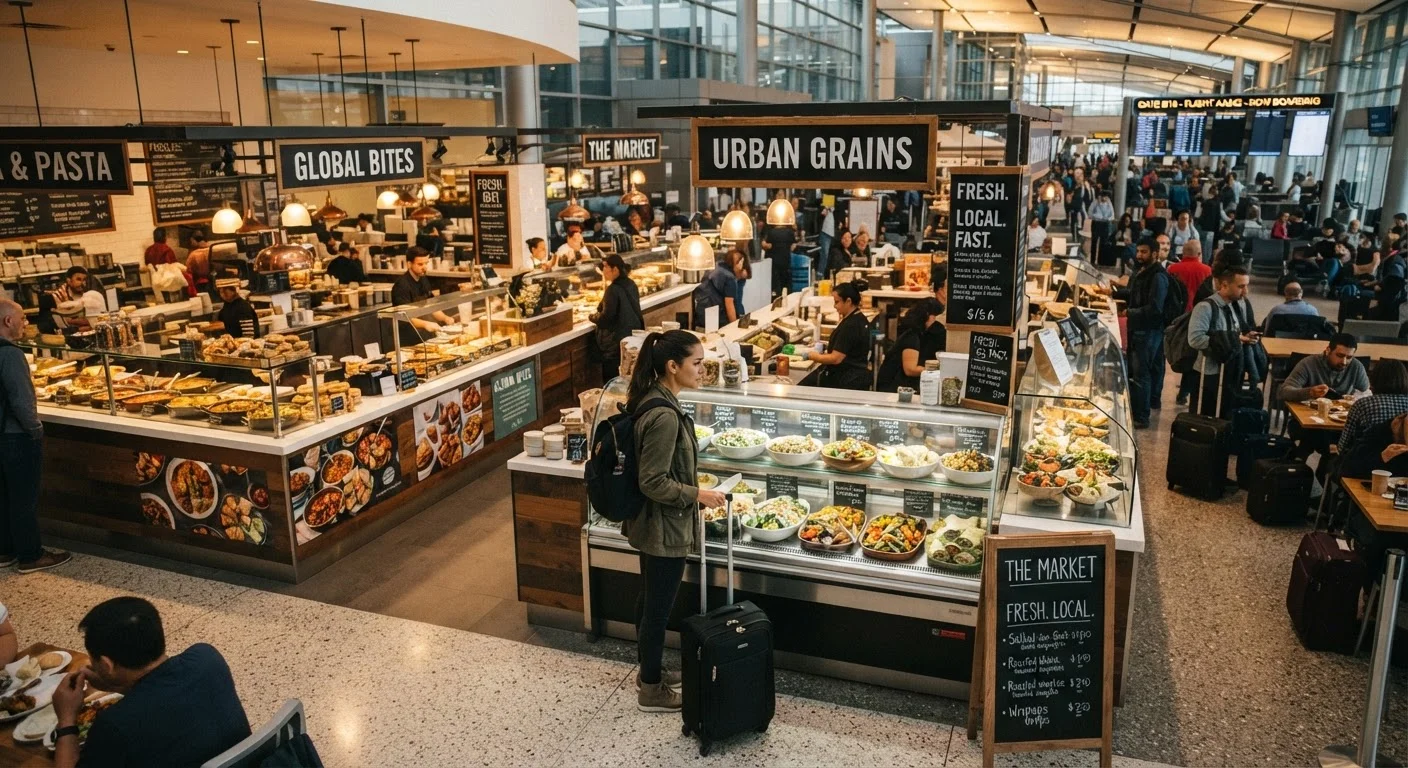
The assumption that airports offer nothing worth eating was more defensible a decade ago. Today, larger hubs — particularly in North America and Europe — have responded to traveler demand with menus that include items like grain bowls, salads with full nutritional labeling, and freshly made options. The quality varies enormously by airport and terminal, but a blanket dismissal causes travelers to stop looking, which is when the vending machine wins by default.
Myth
It's better to eat nothing at the airport and wait until you land.
Fact
Skipping meals in transit often intensifies hunger and stress, making impulsive, less nutritious choices more likely upon arrival.
Waiting it out sounds disciplined, but prolonged food restriction during a physiologically demanding experience — disrupted sleep, low humidity, time-zone shifts — tends to increase cortisol and appetite simultaneously. Many travelers who arrive depleted are more prone to overeating or gravitating toward high-fat, high-sugar meals. A modest, balanced meal or snack before or during a flight can smooth out those swings without requiring willpower at your lowest point.
Myth
Food tastes the same on the ground and in the air, so airport meals should be judged by normal standards.
Fact
Cabin pressure and low humidity measurably reduce the ability to perceive sweet and salty flavors, altering the experience of the same food.
Research — including a well-cited study by Fraunhofer Institute for Building Physics, conducted in partnership with Lufthansa — found that sensitivity to sweet and salty tastes can drop by around 20–30% at altitude. This is partly why airline meals are often seasoned more aggressively, and why foods that seem bland on the ground taste even more so at 35,000 feet. Understanding this can help travelers avoid the trap of seeking intensely salty or sugary foods to compensate. For more on how carbohydrate perception fits into this, see the persistent myths about carbohydrates.
Myth
Bringing your own food from home is the only reliable way to eat healthily at an airport.
Fact
While packing snacks is a useful strategy, it's not the only one — and it isn't always feasible across international borders where customs rules restrict certain foods.
Homemade food is genuinely a good option when practical, but international travelers frequently face customs restrictions on fresh produce, meats, and dairy. Relying solely on this strategy can leave you empty-handed in the terminal. Learning to identify better choices at concessions — looking for items with visible ingredients, shorter processing, and available nutrition data — is a transferable skill that works regardless of what's in your carry-on.
Myth
The most expensive airport meals are automatically the healthiest.
Fact
Price at airport dining reflects real-estate costs and demand, not nutritional quality — cheap options can be nutritious and premium items can be highly processed.
Airport margins are driven by overhead, not ingredients. A premium-priced smoothie may be packed with added sugar, while a modest bowl of oatmeal from a chain café may be among the most nutritionally sound choices in the terminal. Applying the same label-reading habits you'd use at a grocery store — checking for fiber, added sugars, and sodium — is more reliable than using price as a proxy for quality.
What the Evidence Actually Suggests
Nutrition research doesn't exist in a vacuum, and applying it to the specific conditions of air travel requires some nuance. Cabin pressure, disrupted sleep, and the stress of transit all influence appetite, digestion, and food choices in ways that compound each other. That means eating well at an airport isn't just about choosing a salad over a burger — it's about understanding the physiological context you're eating in.
10–20%
Typical cabin humidity during flight
Aircraft cabins commonly maintain relative humidity well below indoor comfort norms, according to aviation health researchers, increasing dehydration risk during travel.
~30%
Reduction in sweet/salty taste sensitivity at altitude
A study conducted by the Fraunhofer Institute found that pressurized cabin conditions can noticeably dull perception of sweet and salty flavors in passengers.
Hydration, for instance, tends to drop significantly during air travel because cabin humidity levels are low, often between 10–20%. Dehydration can mimic hunger signals, which partly explains why travelers frequently reach for snacks when water would serve them better. These are the kinds of mechanics that reframe what "eating well while traveling" actually means in practice. You can also explore common wellness mistakes travelers make to see how these patterns often show up together.
Hydration Matters More Than Food Choices
Many travelers focus exclusively on what they eat in transit and overlook fluid intake. Low cabin humidity accelerates dehydration, which can manifest as fatigue, headaches, or increased food cravings. Prioritizing water consumption throughout a journey — especially on longer flights — may do more for in-flight wellbeing than any single meal decision. Consult a healthcare professional if you have conditions affected by fluid intake, such as kidney issues or heart conditions.
This article is for general informational purposes only and does not constitute medical or nutritional advice. For personalized dietary guidance, consult a registered dietitian or qualified healthcare professional.