

Key Takeaways
Why Some Coping Habits Backfire on the Road
Travel anxiety is common and understandable — unfamiliar environments, disrupted routines, and logistical uncertainty are genuine stressors. What's less obvious is how frequently the strategies travellers use to manage that anxiety actually sustain or worsen it. Many of these habits feel logical in the moment, which is precisely why they persist.
Understanding the difference between relief that addresses the source of anxiety and relief that merely suppresses symptoms temporarily is a key first step. For a deeper look at how travel stress differs mechanically from everyday anxiety, see our piece on how chronic travel stress differs from everyday anxiety.
The mistakes below are among the most common — and the most quietly damaging.
Over-planning every detail of a trip to eliminate uncertainty.
Why it happens: Control feels like a solution to anxiety. Detailed itineraries create an illusion of safety, which provides short-term relief.
Using alcohol to take the edge off before or during flights.
Why it happens: Alcohol has immediate sedative effects that reduce acute feelings of nervousness, making it feel like an effective coping tool.
Skipping meals or eating irregularly due to schedule disruption.
Why it happens: Irregular transit schedules, unfamiliar food environments, and diminished appetite under stress all make consistent eating feel difficult or low priority.
Abandoning regular movement and exercise routines entirely while travelling.
Why it happens: Gym access, space, and time feel unpredictable. Travellers often default to an all-or-nothing mindset — if the usual routine isn't possible, nothing happens.
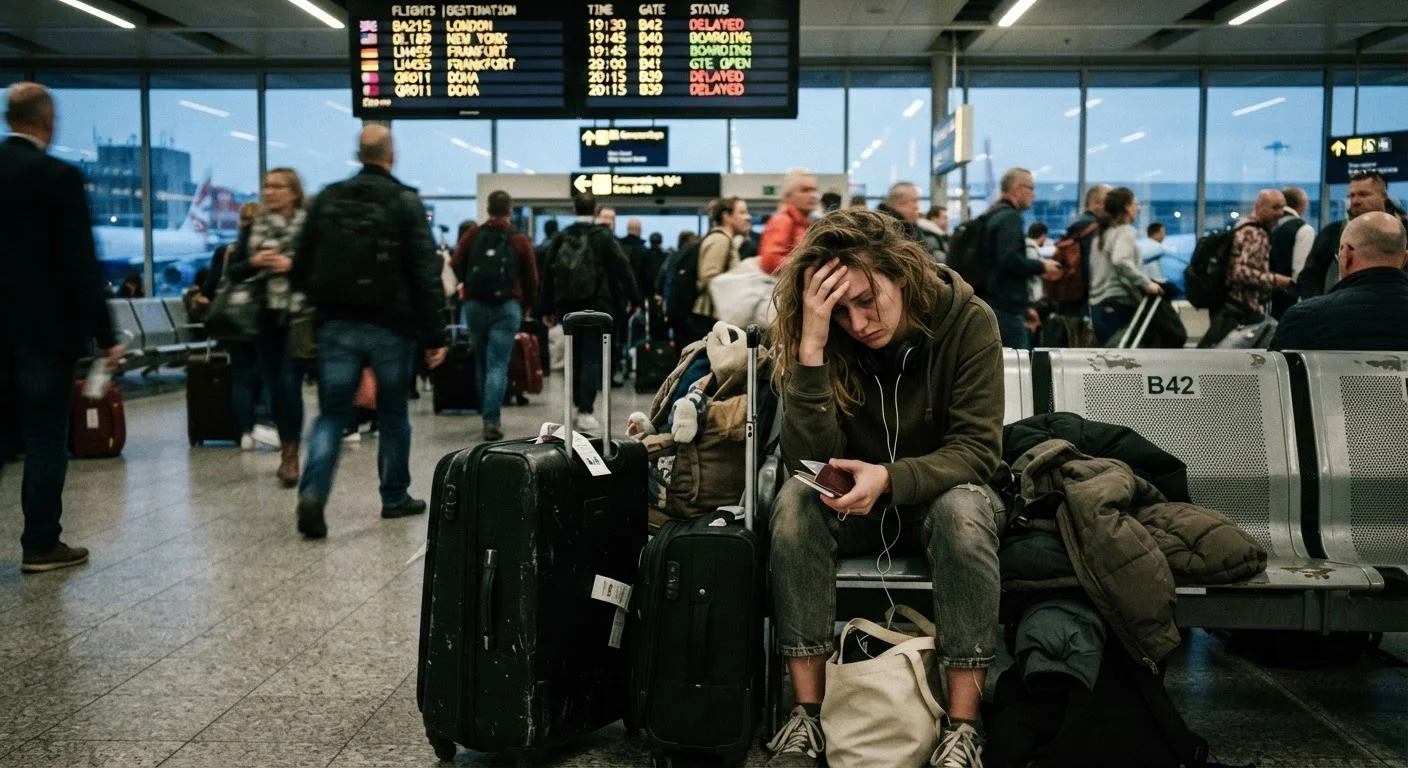
Constantly monitoring departure boards, news, and notifications for potential disruptions.
Why it happens: Hypervigilance feels productive — staying informed seems to reduce the chance of being caught off guard by bad news.
Isolating socially during travel to avoid additional cognitive load.
Why it happens: Social interaction takes effort, and when cognitive resources feel depleted, withdrawal seems like self-protection.
Building Habits That Actually Help
Replacing counterproductive patterns requires more than willpower — it requires understanding why the original habit developed and what legitimate need it was trying to meet. Compulsive planning, for instance, is an attempt to create certainty. The more effective substitute isn't to plan less, but to practice tolerating uncertainty in smaller, low-stakes situations so it becomes less threatening over time.
Don't Rely Solely on Self-Directed Strategies
If travel anxiety is severe, persistent, or affecting your ability to function, self-help approaches have real limits. A qualified mental health professional can assess whether what you're experiencing warrants structured support such as cognitive behavioural therapy or other evidence-based interventions. General wellness content — including this article — is not a substitute for that assessment.
Similarly, cutting alcohol and caffeine gradually rather than abruptly during travel prevents the withdrawal effects that can themselves mimic anxiety symptoms. Restoring consistent sleep anchors — such as a fixed wake time regardless of time zone — can stabilise mood and stress reactivity more effectively than trying to optimise total sleep hours alone.
If anxiety while travelling is persistent or severe, it is worth speaking with a mental health professional rather than relying solely on self-directed strategies. General information about managing stress and anxiety can provide a useful foundation, but personal circumstances vary significantly. For practical in-the-moment tools, grounding techniques that work in any time zone offer structured approaches that don't require routine or familiar surroundings to deploy effectively.
This article is for general informational purposes only and does not constitute medical or psychological advice. If you experience significant anxiety that affects your daily functioning, please consult a qualified healthcare or mental health professional.