

Key Takeaways
Our Verdict
Chronic travel stress and everyday anxiety share surface symptoms but differ meaningfully in their triggers, duration, and the strategies that address them most effectively. Travel stress is context-dependent and often eases when circumstances stabilise, whereas generalised anxiety tends to persist across environments. Knowing which you're navigating helps you apply the right tools — and recognize when professional support may be warranted.
| Best for | Recommended |
|---|---|
| Frequent travelers noticing stress tied specifically to being on the road | Travel-focused stress management strategies |
| Those whose anxiety persists regardless of travel status | Professional mental health support for generalised anxiety |
| Travelers unsure whether their stress has become something more persistent | Structured self-assessment combined with professional consultation |
The Core Distinction: Context-Bound vs. Pervasive
Everyday anxiety is characterised by worry that follows you across settings — it surfaces at home, at work, in familiar environments. Travel stress, by contrast, is largely context-dependent. Its triggers are concrete and situational: missed connections, unfamiliar accommodations, language barriers, time-zone disruption, and the persistent low-grade uncertainty of operating outside your normal environment.
This distinction matters practically. When stress is tied to a specific context, addressing the context — or building skills to navigate it — is a viable strategy. When anxiety is pervasive, the environment is rarely the root cause. For a deeper look at how these two states differ clinically, see Anxiety Disorders vs. Everyday Stress: Where the Line Actually Falls.
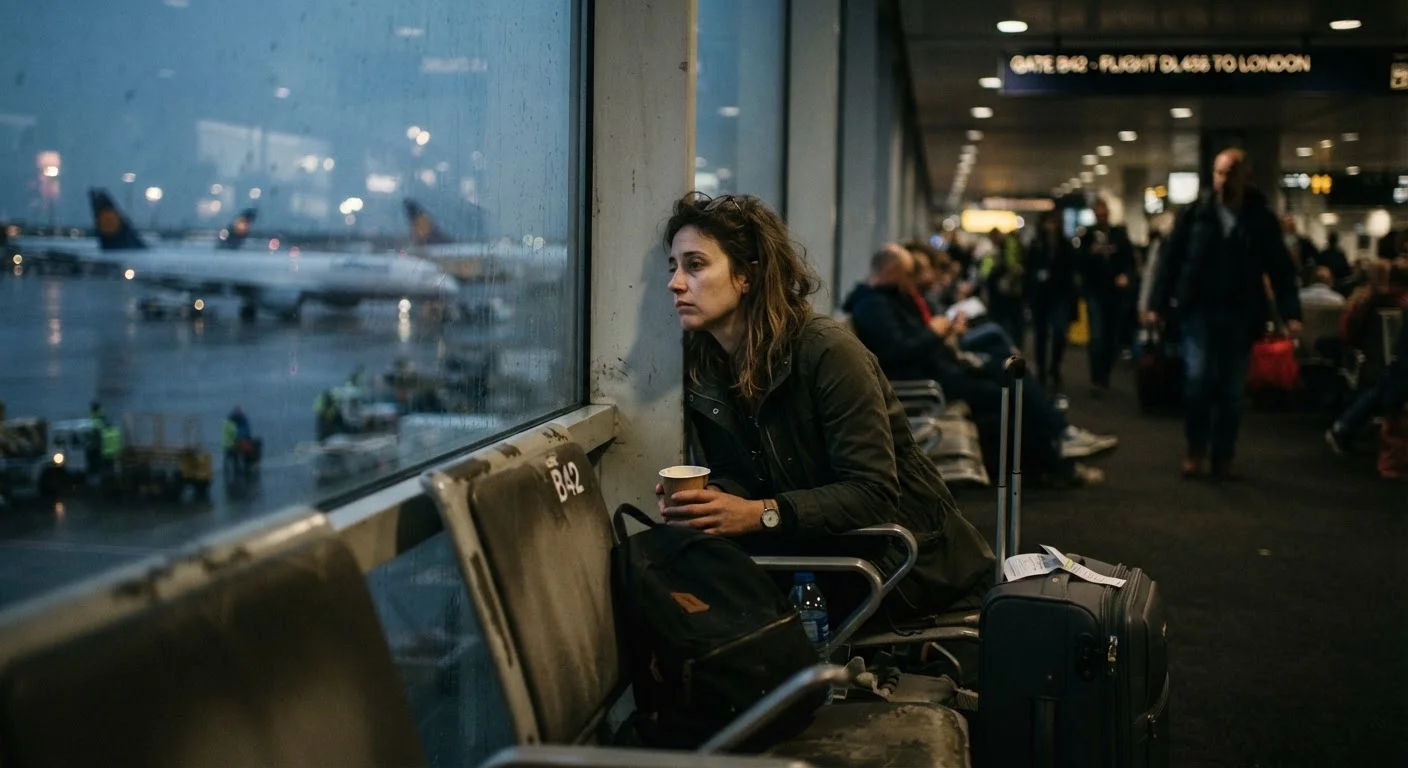
Chronic travel stress develops when the context is constantly recurring. For frequent travelers, the triggers never fully reset — each trip layers onto residual fatigue from the last, creating a cumulative load that can start to feel indistinguishable from generalised anxiety.
How Chronic Travel Stress Manifests Differently
The physical and psychological signatures of chronic travel stress tend to cluster around disruption rather than dread. Common patterns include:
- Sleep fragmentation driven by changing time zones, unfamiliar beds, and irregular schedules — distinct from the insomnia that often accompanies anxiety disorders
- Digestive sensitivity responding to diet changes, eating at irregular times, and heightened alertness
- Decision fatigue from the constant low-level cognitive load of navigating unfamiliar environments
- Social depletion, particularly for introverted travelers who must manage new social encounters continuously
These symptoms can mimic anxiety and even physical illness. How Stress Mimics Physical Illness — and How to Tell Them Apart explores this overlap in detail and helps distinguish psychological from physical causes.
| Chronic Travel Stress | Everyday Generalised Anxiety | |
|---|---|---|
| Primary trigger | Specific travel disruptions and displacement | Pervasive, often non-specific worry |
| Context dependency | Strongly tied to travel environment | Persists across all environments |
| Resolution pattern | Tends to ease when travel ends | Continues regardless of circumstances |
| Physical symptoms | Sleep disruption, digestive sensitivity, fatigue | Muscle tension, restlessness, chronic fatigue |
| Accumulation risk | Builds with trip frequency and duration | Baseline level, fluctuates with life stress |
| Recommended response | Structural travel habits, recovery periods | Professional mental health support |
The Normalisation Problem in Frequent Travelers
One of the most overlooked risks of chronic travel stress is how quickly it becomes invisible to the person experiencing it. Frequent travelers often develop a high tolerance for disruption and begin treating elevated baseline stress as normal. This normalisation can delay recognition that something has shifted.
Why Frequent Travel Takes a Hidden Toll on Mental Health outlines how constant movement erodes emotional stability in ways that aren't always obvious from the inside. The key signal to watch for: stress that no longer resolves after a trip ends, or that requires progressively longer recovery periods between travel engagements.
If you're unsure whether your stress has shifted into something more persistent, A Self-Check for Spotting When Stress Has Tipped Into Something More provides a structured way to assess your current state.
Track Recovery Time, Not Just Stress Level
A useful self-monitoring habit for frequent travelers: note how long it takes to feel genuinely rested after returning home. If recovery is taking longer than it used to, or you never quite feel recovered before the next trip, that trend is worth taking seriously. Consider discussing it with your primary care provider or a mental health professional rather than simply pushing through.
Responding Appropriately to Each Type
Because the sources differ, the responses need to differ too. Travel stress responds well to structural interventions: anchoring routines (consistent sleep and wake times, familiar foods where possible), reducing decision load through planning, and building deliberate recovery periods into travel schedules. Healthy Travel Habits covers practical approaches to maintaining wellness on the road.
It's also worth being aware that some common coping habits can backfire. Habits That Quietly Make Travel Anxiety Worse identifies patterns — like over-reliance on alcohol to sleep, or compulsive itinerary-checking — that feel helpful but amplify stress over time.
Generalised anxiety, by contrast, typically requires approaches that aren't environment-dependent: cognitive-behavioral strategies, consistent therapeutic support, and sometimes medical evaluation. If your anxiety persists regardless of whether you're traveling or home, that consistency is itself important information worth discussing with a qualified mental health professional.
This article is for general informational purposes only and does not constitute medical or mental health advice. If you are concerned about anxiety or stress symptoms, please consult a qualified healthcare or mental health professional.