

| Total essential vitamins | 13 (National Institutes of Health, Office of Dietary Supplements) |
| Total essential minerals | At least 16 recognized as essential (Dietary Reference Intakes, National Academies) |
| Fat-soluble vitamins | A, D, E, K |
| Water-soluble vitamins | C and all eight B vitamins |
| Most common global deficiency | Iron deficiency anemia (World Health Organization) |
| Vitamin produced by skin, not food | Vitamin D (via sunlight exposure) |
What Are Micronutrients — and Why Can't the Body Make Them?
Unlike macronutrients — the carbohydrates, proteins, and fats that supply energy (see our macronutrients breakdown for a full explanation) — micronutrients are needed in comparatively small amounts but are no less critical. The term covers two broad categories: vitamins (organic compounds) and minerals (inorganic elements). The defining characteristic of both is that the human body cannot synthesize adequate quantities on its own, which means food — and occasionally supplementation under medical guidance — must supply them.
Micronutrients do not provide calories. Instead, they function as cofactors for enzymatic reactions, structural components of tissue, and regulators of gene expression. When intake falls short over time, the consequences range from subtle — mild fatigue, slow wound healing — to serious, including irreversible nerve damage or bone fragility.
| Total essential vitamins | 13 (National Institutes of Health, Office of Dietary Supplements) |
| Total essential minerals | At least 16 recognized as essential (Dietary Reference Intakes, National Academies) |
| Fat-soluble vitamins | A, D, E, K |
| Water-soluble vitamins | C and all eight B vitamins |
| Most common global deficiency | Iron deficiency anemia (World Health Organization) |
| Vitamin produced by skin, not food | Vitamin D (via sunlight exposure) |
The Vitamins: Fat-Soluble vs. Water-Soluble
Vitamins are grouped by how the body stores and transports them:
Fat-Soluble Vitamins (A, D, E, K)
These dissolve in fat and accumulate in the liver and adipose tissue, meaning they do not need to be consumed every single day — but excessive intake from supplements can reach toxic levels. Key roles include:
- Vitamin A: Vision in low light, immune defense, and skin-cell turnover. Preformed vitamin A comes from animal sources (liver, dairy, eggs); provitamin A carotenoids are found in orange and leafy-green vegetables.
- Vitamin D: Calcium absorption and bone mineralization; also plays roles in immune function. The skin synthesizes vitamin D from sunlight, but many adults — particularly those in northern latitudes or who spend limited time outdoors — do not produce enough year-round.
- Vitamin E: A lipid-soluble antioxidant that protects cell membranes. Nuts, seeds, and plant oils are primary sources.
- Vitamin K: Essential for blood coagulation and bone protein synthesis. Found in leafy greens (K1) and fermented foods (K2).
Water-Soluble Vitamins (C and the B-complex)
These are not stored appreciably, so consistent daily intake matters. They are also more easily destroyed by heat and prolonged cooking.
- Vitamin C: Collagen synthesis, antioxidant activity, and enhanced absorption of non-heme iron. Citrus, bell peppers, and strawberries are excellent sources.
- B vitamins (B1, B2, B3, B5, B6, B7, B9, B12): As a group, they are central to energy metabolism, red blood cell formation, and neurological function. Folate (B9) is particularly critical during early pregnancy for neural tube development. Vitamin B12 is found almost exclusively in animal products, making it a key consideration for those following plant-based diets.
Micronutrient
A vitamin or mineral required by the body in relatively small amounts to support growth, metabolism, and overall health. Unlike macronutrients, micronutrients do not supply calories.
Fat-soluble vitamin
Vitamins A, D, E, and K, which dissolve in dietary fat and are stored in the liver and fatty tissue. Because they accumulate, excessive supplemental intake can reach toxic levels.
Water-soluble vitamin
Vitamins that dissolve in water, including vitamin C and all eight B vitamins. They are not stored significantly by the body, so regular dietary intake is important.
Trace mineral
A mineral the body requires in very small amounts — typically less than 100 mg per day — such as iron, zinc, iodine, and selenium. Despite the small quantities needed, deficiency has significant health consequences.
Bioavailability
The proportion of a nutrient consumed in food or supplements that the body actually absorbs and can use. It is influenced by factors including the food matrix, cooking method, and the presence of other nutrients.
Recommended Dietary Allowance (RDA)
The average daily intake level sufficient to meet the nutrient needs of nearly all (97–98%) healthy individuals in a specific life-stage and gender group, as established by the National Academies of Sciences, Engineering, and Medicine.
The Minerals: Macro vs. Trace
Minerals are further divided into macrominerals (required in larger amounts: calcium, phosphorus, magnesium, sodium, potassium, chloride, sulfur) and trace minerals (needed in smaller amounts: iron, zinc, iodine, selenium, copper, manganese, fluoride, chromium, molybdenum).
Several minerals are consistently under-consumed across the general adult population. Calcium supports bone density and muscle contraction; magnesium participates in over 300 enzymatic reactions; iron is the oxygen-carrying component of hemoglobin; and zinc is critical for immune competence and wound repair. Our companion article on iron, calcium, zinc, and magnesium examines each in detail, including what depletes them and which food sources help maintain adequate levels.
It is worth noting that getting nutrients from food rather than isolated supplements typically means consuming them alongside other compounds — fiber, phytochemicals, co-occurring vitamins — that influence how well they are absorbed. Understanding bioavailability is the logical next step; our guide on how the body absorbs nutrients explains the factors that determine how much your body actually uses from any given meal.
~42%
U.S. adults with vitamin D insufficiency
Analysis of NHANES data published in Nutrients (2022) estimated that approximately 42% of U.S. adults had insufficient vitamin D levels.
2 billion
People affected by micronutrient deficiencies globally
The World Health Organization estimates roughly 2 billion people worldwide suffer from at least one micronutrient deficiency, sometimes called 'hidden hunger.'
~10%
U.S. women of reproductive age with iron deficiency
CDC surveillance data indicate roughly 10% of U.S. women aged 12–49 are iron deficient, making it one of the most prevalent nutrient shortfalls domestically.
Meeting Your Needs Through Food First
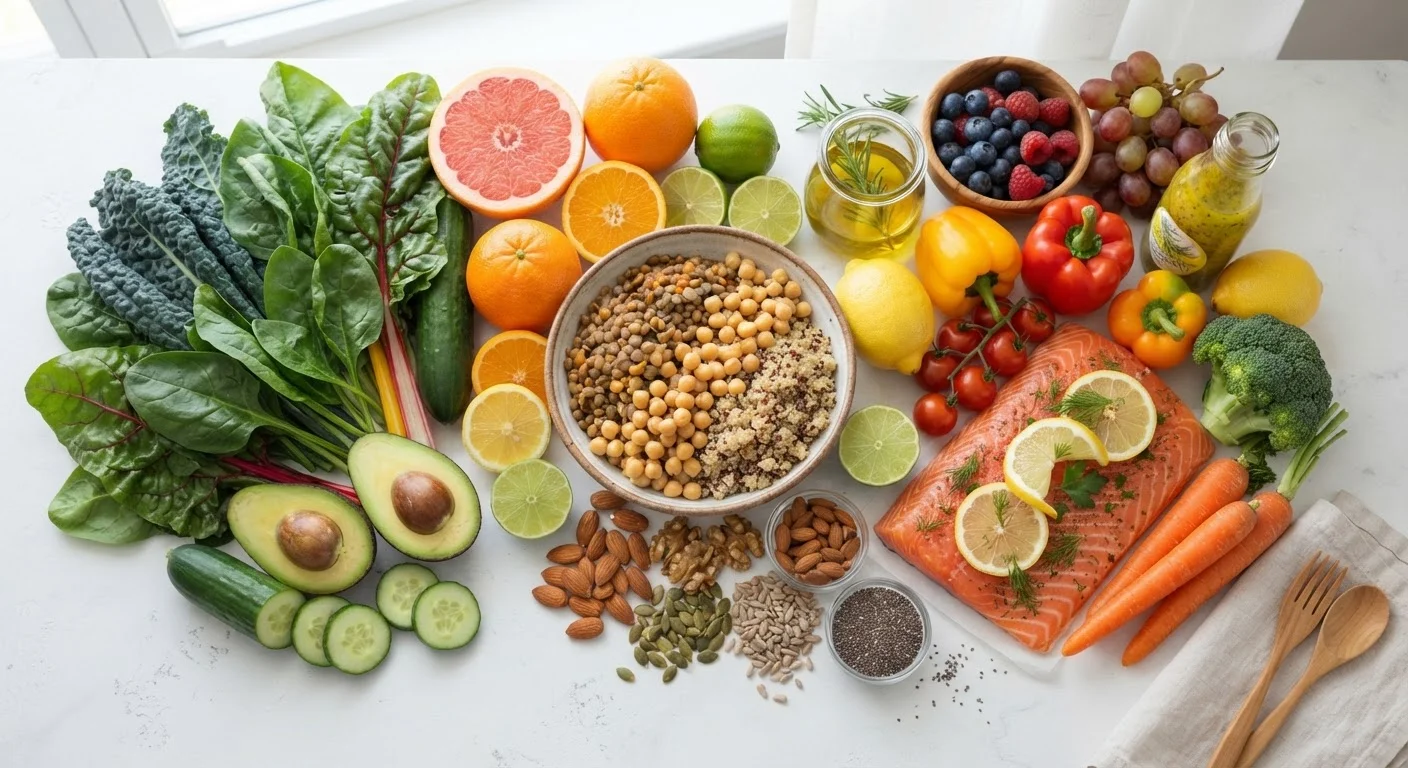
Nutrition researchers and health authorities consistently emphasize a food-first approach for micronutrient adequacy. Whole foods deliver nutrients in combinations that isolated supplements rarely replicate, and they carry a much lower risk of overdose. Practical patterns that support broad micronutrient coverage include:
- Dietary variety: Different colored vegetables and fruits signal different phytonutrients and vitamins. Rotating your choices across the week broadens coverage.
- Including both plant and animal sources: Some nutrients (B12, heme iron, preformed vitamin A) are most bioavailable from animal foods; others (vitamin C, folate, magnesium) are abundant in plants.
- Minimizing ultra-processing: Refining and processing strips many naturally occurring vitamins and minerals. Choosing minimally processed staples — whole grains, legumes, fresh produce — preserves micronutrient density.
- Strategic food pairing: Combining vitamin C-rich foods with plant-based iron sources (e.g., bell peppers and lentils) meaningfully increases iron absorption. Fat consumed alongside fat-soluble vitamins improves their uptake.
Supplementation may be appropriate for specific groups — pregnant individuals, older adults, those with diagnosed deficiencies, or people following highly restrictive diets — but should be guided by a registered dietitian or physician based on actual intake assessment and, where relevant, blood work. Self-directed high-dose supplementation carries real risks, particularly for fat-soluble vitamins. For broader context on building well-rounded daily meals, the Balanced Eating hub offers practical, evidence-grounded strategies.
This article is for general informational purposes only and does not constitute medical or dietary advice. Consult a qualified healthcare professional or registered dietitian before making significant changes to your diet or beginning any supplement regimen.