
Whole Foods vs. Processed Foods: What Nutrition Science Distinguishes Between Them

Key Takeaways
Option A
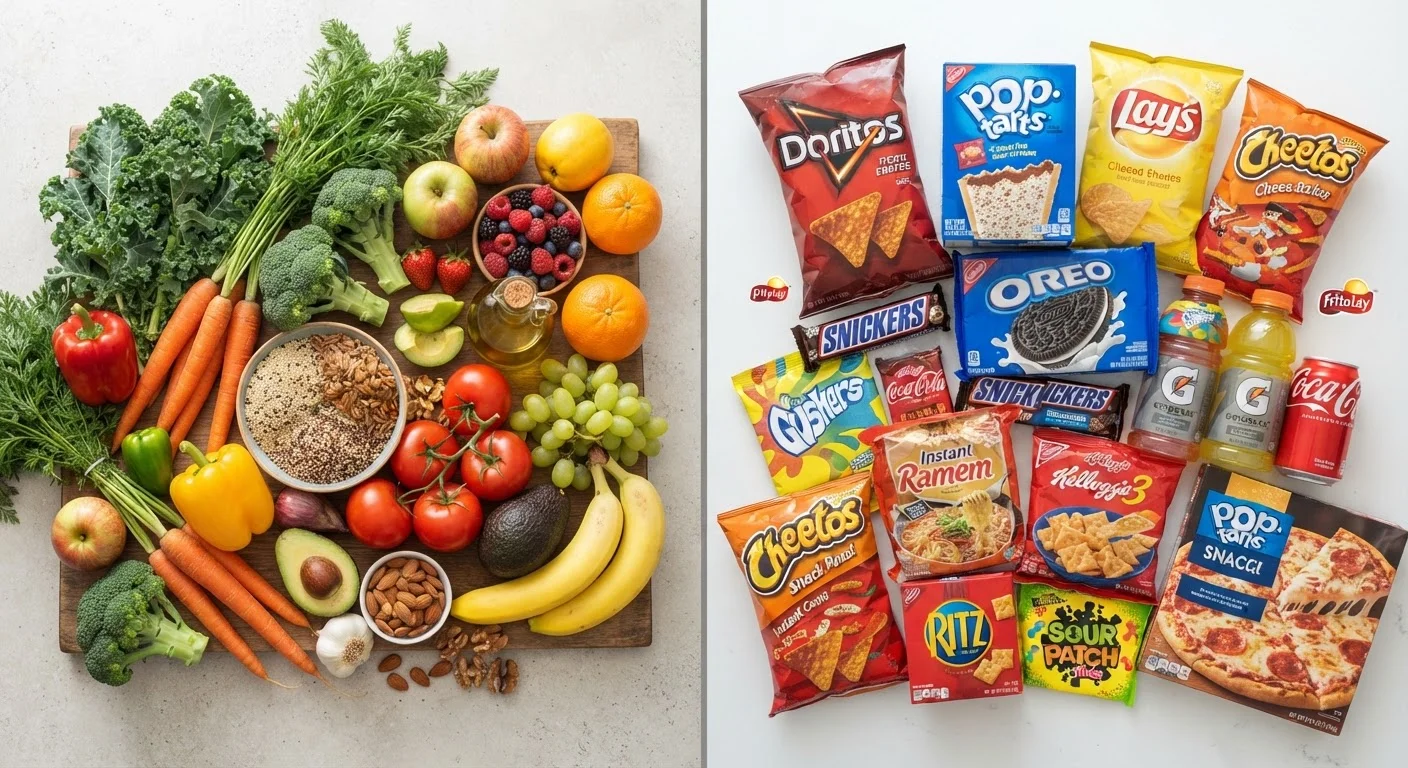
Whole Foods
Minimally altered, nutrient-dense foods in or close to their natural state.
Best for: Adults seeking maximum nutrient density, fiber, and bioactive compounds with minimal added ingredients.
Option B
Processed Foods
Foods altered from their natural state through industrial or culinary techniques.
Best for: Convenient, longer-lasting food options that range widely in nutritional quality depending on processing degree.
If your priority is maximizing nutrient density and fiber intake
Whole Foods
Whole foods consistently deliver a broader array of vitamins, minerals, fiber, and phytochemicals with no added sugars, sodium, or synthetic additives.
If convenience and shelf stability are essential in your lifestyle
Processed Foods
Minimally and moderately processed options — such as canned legumes, frozen vegetables, or plain yogurt — offer practical nutrition without the drawbacks of ultra-processing.
If you want to reduce chronic disease risk based on current evidence
Whole Foods
Diets anchored in whole and minimally processed foods are most strongly associated with lower risks of cardiovascular disease, type 2 diabetes, and certain cancers in epidemiological research.
If you are managing a specific health condition or dietary restriction
Whole Foods
Whole foods give you clearer control over ingredients and macronutrient composition; always consult a healthcare professional or registered dietitian for personalized guidance.
Defining the Terms: What Science Actually Means by 'Processed'
The word processed is one of the most misused terms in popular nutrition discourse. In the strictest scientific sense, nearly every food humans consume has been processed in some way — washing, cooking, fermenting, and freezing all qualify. The meaningful distinction, therefore, is not whether a food has been altered, but how extensively.
The most widely adopted classification framework in nutrition research is the NOVA system, developed by researchers at the University of São Paulo. NOVA groups foods into four categories based on the extent and purpose of industrial processing:
- Group 1 — Unprocessed or minimally processed foods: Fresh fruits, vegetables, eggs, plain meat, and legumes. Altered only by cleaning, chilling, or drying.
- Group 2 — Processed culinary ingredients: Oils, butter, flour, and sugar — substances extracted from Group 1 foods, used in cooking but rarely eaten alone.
- Group 3 — Processed foods: Canned fish, cheese, cured meats, and bread — made by combining Group 1 and 2 items, often for preservation.
- Group 4 — Ultra-processed foods (UPFs): Formulated industrial products containing additives, flavors, emulsifiers, and colorings not found in home kitchens — soft drinks, packaged snacks, reconstituted meat products.
Understanding this spectrum is foundational before drawing any health conclusions. For a broader look at how nutrition research handles contested categories, see how peer-reviewed research evaluates popular nutrition claims.
| Criterion | Whole Foods | Processed Foods |
|---|---|---|
| Definition | Unaltered or minimally altered from natural state | Industrially or culinarily modified; ranges from mild to extensive |
| Fiber Content | Naturally high; intact in grains, produce | Often reduced or absent in refined/UPF products |
| Micronutrient Retention | Generally high; minimal degradation | Variable; some lost, some fortified back in |
| Added Sugars & Sodium | None or minimal | Often elevated, especially in ultra-processed |
| Shelf Life | Short; requires refrigeration or prompt use | Extended; additives and processing aid preservation |
| Satiety Evidence | Higher satiety per calorie in controlled studies | Lower satiety; linked to greater caloric intake |
| Convenience | Requires preparation time | Ready-to-eat or quick to prepare |
| Cost | Varies; fresh produce can be affordable seasonally | Ultra-processed often cheaper per calorie |
What Processing Does to Nutrient Profiles
The nutritional gap between whole and ultra-processed foods is not simply about added sugar or sodium — though both are significant concerns. Processing at industrial scale can alter food in several ways that matter for health:
Fiber Loss
Refining grains removes the bran and germ, stripping fiber and micronutrients. Whole grains retain these components, supporting digestive health and blood glucose regulation. Understanding fiber's classification and function helps clarify why this loss matters metabolically.
Phytochemical Degradation
Heat, light, and oxygen exposure during manufacturing can reduce concentrations of antioxidants, polyphenols, and certain vitamins. Whole plant foods deliver these bioactive compounds in forms and combinations that research continues to study.
Additive Introduction
Ultra-processed products often contain emulsifiers, artificial flavors, preservatives, and high-fructose corn syrup — ingredients linked in some studies to altered gut microbiota composition and increased caloric intake, though causality in humans is still being established.
Importantly, not all processing is nutritionally detrimental. Freezing vegetables shortly after harvest can preserve micronutrient content effectively. Fermenting dairy produces probiotics. Canning legumes makes them convenient without significant protein loss — relevant context if you're exploring protein quality across different food sources.
57%
Share of US calories from ultra-processed foods
A study published in BMJ Open (2016) analyzed US dietary data and found ultra-processed foods account for approximately 57% of daily energy intake among American adults.
12%
Higher cancer risk per 10% UPF increase
A 2019 cohort study in BMJ found a 10-percentage-point rise in ultra-processed food consumption was associated with a 12% higher overall cancer risk, though observational limitations apply.
~500 kcal/day
Extra calories consumed on ultra-processed diet
In a 2019 NIH randomized controlled trial, participants on an ultra-processed diet consumed approximately 500 additional calories per day compared to a whole-food period under controlled conditions.
What the Evidence Says About Health Outcomes
Epidemiological research consistently finds associations between high ultra-processed food consumption and elevated risks of obesity, type 2 diabetes, cardiovascular disease, and all-cause mortality. A 2019 cohort study published in BMJ following more than 100,000 French adults found that a 10% increase in ultra-processed food in the diet was associated with a 12% higher risk of cancer — though observational design limits causal interpretation.
Randomized controlled trial evidence is harder to obtain, but a 2019 NIH study led by Kevin Hall provided controlled conditions demonstrating that participants eating ultra-processed diets consumed significantly more calories and gained weight compared to whole food periods, even when meals were matched for presented macronutrients and fiber. This suggests that food structure and matrix — not just nutrient composition — influence satiety and intake.
Whole-food dietary patterns, including Mediterranean and DASH-style eating, are among the most studied and consistently supported in cardiovascular and metabolic health research. These patterns naturally emphasize minimally processed plant foods, lean proteins, and healthy fats. For those exploring plant-centered approaches, understanding what plant-based, vegan, and vegetarian diets each include adds useful clarity.
The 'Processed' Label Isn't Always a Red Flag
Plain yogurt, frozen spinach, canned chickpeas, and pasteurized milk are all technically processed — yet each offers meaningful nutritional value. The NOVA framework helps distinguish these from ultra-processed products engineered primarily for palatability and shelf life. When evaluating a food, looking beyond the 'processed' label to its ingredient list and NOVA category provides more useful guidance. For a deeper exploration of this spectrum, see the nutritional divide across the processing spectrum.
This article is for general informational purposes only and does not constitute medical or dietary advice. Consult a qualified healthcare professional or registered dietitian before making significant changes to your diet, especially if you have an existing health condition.