

Key Takeaways
Option A
Complete Proteins
The all-in-one amino acid package.
Best for: People who want a straightforward way to meet all essential amino acid needs from a single food source.
Option B
Incomplete Proteins
Versatile building blocks that work best in combination.
Best for: Plant-forward eaters who prioritize variety and can pair complementary foods to cover the full amino acid spectrum.
If you eat a mixed diet including meat, fish, eggs, or dairy
Complete Proteins
Animal-based complete proteins efficiently cover all essential amino acid needs with minimal planning required.
If you follow a plant-based, vegan, or vegetarian diet
Incomplete Proteins
A varied plant diet combining grains, legumes, nuts, and seeds can fully meet amino acid requirements through complementary pairing.
If you want maximum protein efficiency from fewer food sources
Complete Proteins
Complete sources like eggs, fish, and soy deliver all essential amino acids in a single food, simplifying intake tracking.
If you are transitioning toward more plant-based eating
Incomplete Proteins
Strategically combining plant proteins across meals supports adequate nutrition without requiring a full dietary overhaul.
What Makes a Protein 'Complete' or 'Incomplete'?
Protein is made up of amino acids — the molecular building blocks your body uses to repair tissue, produce enzymes, and support immune function. Of the twenty amino acids relevant to human nutrition, nine are classified as essential: they cannot be synthesized by the body in adequate amounts and must come from food. These nine are histidine, isoleucine, leucine, lysine, methionine, phenylalanine, threonine, tryptophan, and valine.
A complete protein contains all nine essential amino acids in proportions sufficient to support the body's needs. An incomplete protein is deficient in one or more of these amino acids — meaning relying on it as your sole protein source would leave certain needs unmet over time.
It's worth noting that "incomplete" doesn't mean nutritionally worthless. Many incomplete protein foods deliver a rich supply of most essential amino acids, along with fiber, micronutrients, and beneficial plant compounds. The distinction is specifically about the full amino acid profile, not overall food quality. For a broader view of how food quality is evaluated, see our guide on what nutrition science distinguishes between whole and processed foods.
| Criterion | Complete Proteins | Incomplete Proteins |
|---|---|---|
| Essential amino acids | All 9 present in adequate amounts | Missing or low in 1 or more |
| Primary food sources | Meat, fish, eggs, dairy, soy, quinoa | Most grains, legumes, nuts, seeds |
| Plant-based options | Soy, quinoa, buckwheat, hemp seeds | Rice, oats, lentils, peas, almonds |
| Dietary planning required | Minimal — one source covers all needs | Moderate — variety or pairing needed |
| Typical digestibility (PDCAAS) | Generally high | Varies; often moderate |
| Additional nutrient benefits | Iron, B12, omega-3s (source-dependent) | Fiber, phytonutrients, lower saturated fat |
Common Sources of Each Protein Type
Most animal-based foods — including meat, poultry, fish, eggs, and dairy — are complete proteins. They naturally provide all essential amino acids, which is one reason animal protein has historically been seen as the dietary gold standard for muscle repair and maintenance.
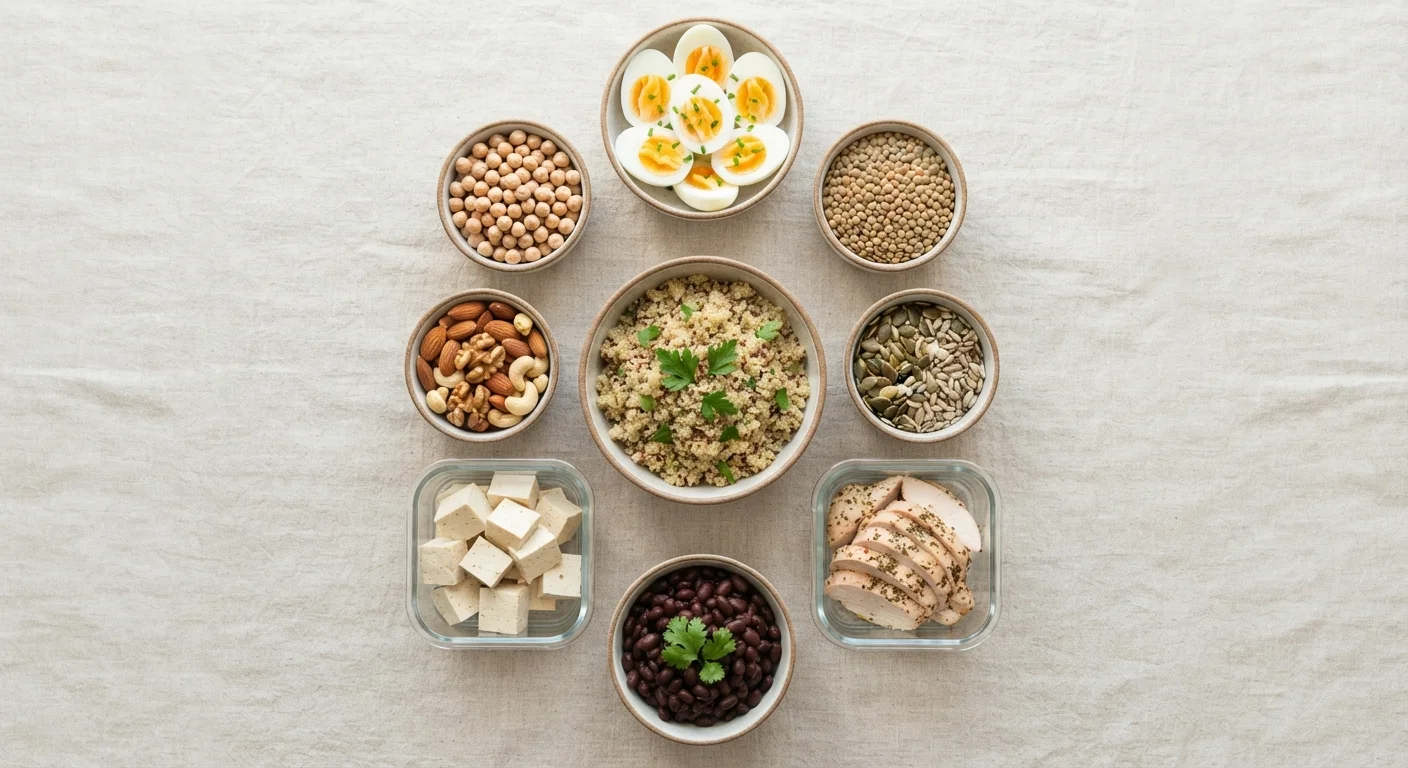
The majority of plant foods are incomplete. Legumes tend to be low in methionine; grains are typically low in lysine. However, notable exceptions exist: soy (including tofu, tempeh, and edamame), quinoa, buckwheat, and hemp seeds are plant sources that contain all nine essential amino acids in meaningful quantities — making them functionally complete.
This nuance matters particularly for those exploring plant-forward eating patterns. You don't have to eliminate plant proteins for being "incomplete" — you simply need to think about variety. Our article on shifting toward plant-based eating gradually covers practical strategies for doing exactly that.
9
Essential amino acids humans must obtain from food
The National Institutes of Health identifies these nine amino acids as essential because the body cannot synthesize sufficient quantities on its own.
~1.0
PDCAAS score for soy protein isolate
The Food and Agriculture Organization uses the Protein Digestibility Corrected Amino Acid Score (PDCAAS), where 1.0 represents the maximum possible score for protein quality.
~70%
Of global protein supply from plant sources
According to the Food and Agriculture Organization, plant foods account for the majority of dietary protein worldwide, underscoring the global relevance of incomplete protein management.
How Plant-Based Eaters Can Meet All Amino Acid Needs
The concept of protein complementation — combining two incomplete proteins to cover each other's amino acid gaps — was once thought to require pairing foods at every single meal. Current nutrition research suggests that the body can draw on amino acid pools throughout the day, meaning the priority is dietary variety over a 24-hour period, not precise meal-by-meal pairing.
Classic complementary pairings include:
- Legumes + grains (e.g., lentil soup with whole-grain bread, or black beans with brown rice)
- Legumes + seeds (e.g., hummus made from chickpeas and sesame tahini)
- Grains + dairy (for vegetarians: oatmeal with Greek yogurt)
Beyond pairing, eating generous amounts of total plant protein across a diverse diet generally ensures adequate intake of all essential amino acids. Digestibility also plays a role — a metric called PDCAAS (Protein Digestibility Corrected Amino Acid Score) accounts for how well the body actually absorbs a protein source. Animal proteins and soy score highly; other plant sources score somewhat lower, which underscores the value of eating a range of plant proteins rather than relying on just one or two.
For a fuller look at how protein fits within an overall balanced eating strategy, explore our resource on building genuinely balanced nutrition. Those curious about the distinctions between plant-based, vegan, and vegetarian eating will also find relevant context in our piece on where the lines between these eating patterns actually fall.
This article is for general informational and educational purposes only and does not constitute medical or dietary advice. Consult a registered dietitian or qualified healthcare professional for guidance tailored to your individual health needs.