

| Vegetarian: excludes | Meat, poultry, seafood |
| Vegetarian: typically includes | Dairy, eggs (varies by subtype) |
| Vegan: excludes | All animal products (meat, dairy, eggs, honey) |
| Plant-based: definition status | No single universal definition |
| Plant-based: core emphasis | Vegetables, fruits, legumes, grains, nuts, seeds |
| Vegan ≠ whole-food plant-based | Vegan allows processed foods; WFPB does not |
| Key nutrients to monitor (vegan/strict vegetarian) | B12, iron, calcium, omega-3s, zinc (Academy of Nutrition and Dietetics) |
Three Terms, Three Distinct Meanings
Walk through any grocery store or scroll through any nutrition blog and you'll encounter the terms plant-based, vegan, and vegetarian used almost interchangeably. They aren't. Each describes a different set of boundaries around what a person eats — and in some cases, how they live. Getting these definitions straight matters, especially if you're evaluating which approach, if any, aligns with your goals.
For a broader comparison of how these and other eating frameworks differ across key dimensions, see our side-by-side eating pattern overview.
| Vegetarian: excludes | Meat, poultry, seafood |
| Vegetarian: typically includes | Dairy, eggs (varies by subtype) |
| Vegan: excludes | All animal products (meat, dairy, eggs, honey) |
| Plant-based: definition status | No single universal definition |
| Plant-based: core emphasis | Vegetables, fruits, legumes, grains, nuts, seeds |
| Vegan ≠ whole-food plant-based | Vegan allows processed foods; WFPB does not |
| Key nutrients to monitor (vegan/strict vegetarian) | B12, iron, calcium, omega-3s, zinc (Academy of Nutrition and Dietetics) |
Vegetarian diets exclude animal flesh — meaning no meat, poultry, or seafood. Most vegetarians continue eating animal products such as dairy and eggs. This umbrella category includes several subtypes: lacto-vegetarians (dairy included, eggs excluded), ovo-vegetarians (eggs included, dairy excluded), and lacto-ovo vegetarians, the most common form in the United States, who include both.
Vegan diets take the exclusions further. Veganism eliminates all animal products — no meat, seafood, poultry, dairy, eggs, or honey. Many people who identify as vegan also extend this principle beyond food, avoiding leather, wool, and products tested on animals. In dietary terms, though, the defining feature is the complete removal of anything derived from animals.
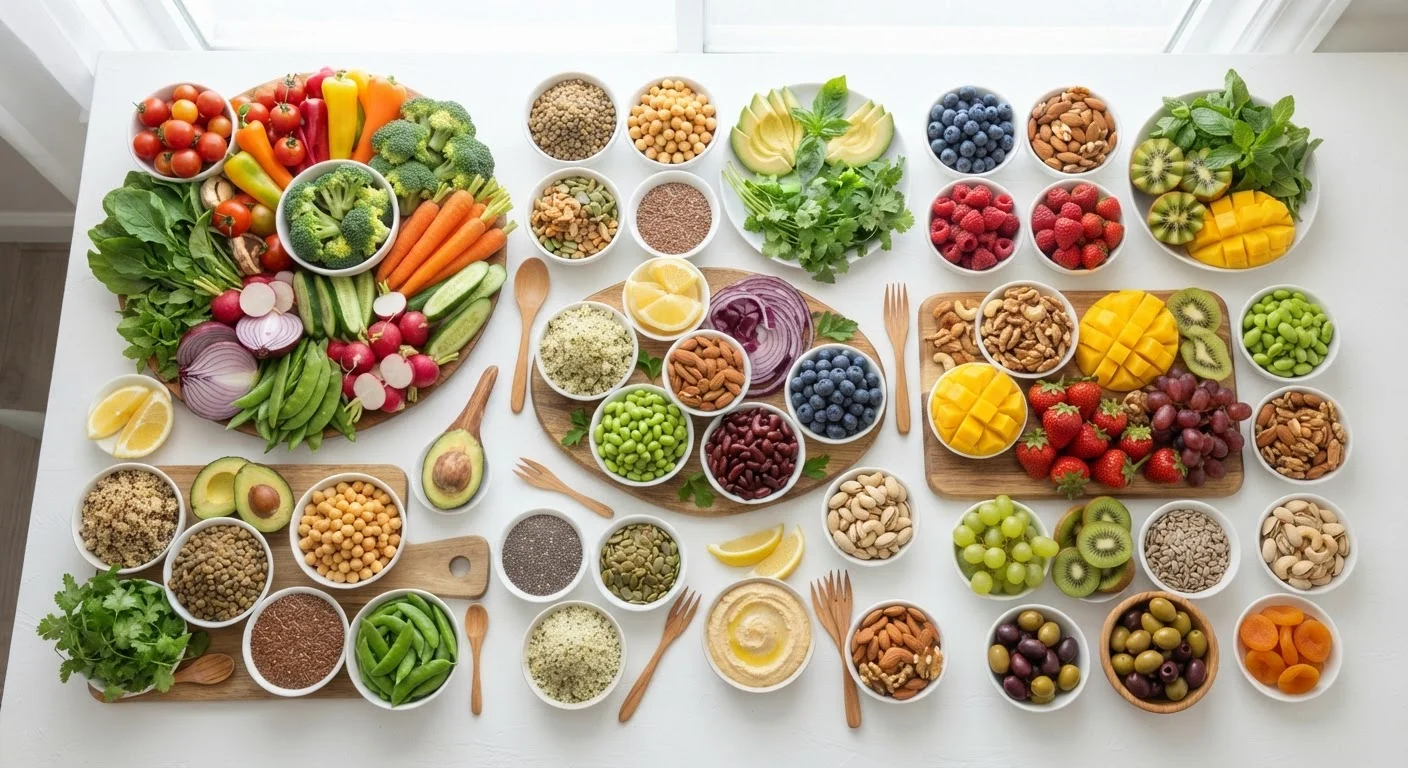
Plant-based is the most flexible — and most frequently misused — of the three terms. It does not have a universally agreed-upon definition. In practice, it generally describes a dietary pattern that centers whole or minimally processed plant foods: vegetables, fruits, legumes, grains, nuts, and seeds. Some people who eat plant-based are also vegan; others are not. A person can follow a plant-based diet and still occasionally eat fish or dairy. The term emphasizes what is emphasized in the diet, not necessarily what is strictly excluded.
Where the Overlap Gets Complicated
The confusion between these labels is understandable because the categories genuinely overlap. A vegan diet is always plant-based by nature, but a plant-based diet is not always vegan. A vegetarian diet often includes many plant-based meals but is defined by what it excludes rather than what it centers.
Vegetarian diet
An eating pattern that excludes animal flesh (meat, poultry, seafood) but typically allows animal-derived products such as dairy and eggs. Multiple subtypes exist based on which animal products are included.
Vegan diet
A dietary pattern that excludes all animal products, including meat, poultry, seafood, dairy, eggs, and honey. Veganism as a broader lifestyle may also exclude non-food animal products.
Plant-based diet
A dietary pattern centered on plant foods — vegetables, fruits, legumes, grains, nuts, and seeds. The term does not have a strict universal definition and does not always exclude all animal products.
Whole-food, plant-based (WFPB)
A more specific dietary pattern emphasizing unrefined, minimally processed plant foods while limiting or avoiding oils and animal products. Distinct from vegan in that it applies quality standards to food choices.
Lacto-ovo vegetarian
The most common vegetarian subtype in the US, this pattern excludes animal flesh but includes both dairy products (lacto) and eggs (ovo).
Complete protein
A protein source that contains all nine essential amino acids in adequate amounts. Most animal proteins are complete; plant proteins often are not, making food variety important in plant-exclusive diets.
One area that trips people up is the phrase whole-food, plant-based (WFPB). This more specific term refers to a dietary pattern that emphasizes unrefined, minimally processed plant foods while avoiding or minimizing oils and animal products. WFPB is sometimes used interchangeably with vegan, but they differ: a vegan diet imposes no quality requirements on food choices, so highly processed vegan snack foods, refined sugars, and vegan junk food all qualify. A WFPB approach would not include these. For more on how the whole-food concept plays out across different frameworks, see our article on what whole-food diets actually mean.
Another common question concerns protein. Plant-exclusive diets can meet protein needs, but doing so requires attention to food variety, since most plant proteins are considered incomplete — meaning they don't contain all essential amino acids in sufficient quantities on their own. Understanding complete versus incomplete proteins is especially relevant for vegans and strict vegetarians planning their meals.
It's also worth noting that none of these labels automatically makes a diet nutritionally adequate. Poorly planned versions of all three can fall short in vitamin B12, iron, calcium, omega-3 fatty acids, and zinc. Anyone making significant dietary changes should consider consulting a registered dietitian to assess their individual needs. This article provides general educational information and is not a substitute for personalized medical or nutritional advice.
Choosing a Framework That Works for You
Understanding these distinctions is useful not just for labeling your own choices, but for reading nutrition research accurately. Studies on "plant-based" diets vary widely in what they actually studied — some examined fully vegan cohorts; others looked at populations simply eating more vegetables. The label alone doesn't tell you what the evidence actually shows.
For those interested in the broader nutritional science behind food quality — regardless of dietary identity — the whole-foods versus processed foods science explainer offers a useful lens. And if you're weighing how any of these approaches stack up against other patterns like Mediterranean or low-carb eating, the low-carb eating explainer provides helpful contrast.
Ultimately, no single label defines a healthy diet. What matters most across research on dietary patterns is overall food quality — the degree to which a diet is built around minimally processed, nutrient-dense foods. Whether you call your approach plant-based, vegetarian, vegan, or none of the above, that underlying principle holds. If you're looking to move beyond frameworks and build something that fits your actual life, our guide to building an eating pattern around your life offers evidence-informed next steps.
This article is for general informational and educational purposes only and does not constitute medical or nutritional advice. Consult a qualified healthcare professional or registered dietitian before making significant changes to your diet.