

| Common daily step target | 8,000–10,000 steps (U.S. physical activity research consensus) |
| Recommended moderate aerobic activity | 150 min/week (U.S. Department of Health & Human Services Physical Activity Guidelines) |
| Sitting break frequency suggested | Every 30–60 minutes (General sedentary behavior research guidance) |
| Tracker step count accuracy range | ±10–20% error (Wrist-worn accelerometer validation studies) |
| Step threshold for meaningful benefit | ~6,000 steps/day (Emerging population-level epidemiological research) |
Why These Three Metrics Matter
Most fitness trackers and health apps report the same trio of numbers: steps taken, minutes spent sitting, and active minutes earned. Each metric captures a different dimension of how your body moves through the day — and none of them tells the complete story alone.
| Common daily step target | 8,000–10,000 steps (U.S. physical activity research consensus) |
| Recommended moderate aerobic activity | 150 min/week (U.S. Department of Health & Human Services Physical Activity Guidelines) |
| Sitting break frequency suggested | Every 30–60 minutes (General sedentary behavior research guidance) |
| Tracker step count accuracy range | ±10–20% error (Wrist-worn accelerometer validation studies) |
| Step threshold for meaningful benefit | ~6,000 steps/day (Emerging population-level epidemiological research) |
Understanding what these figures are measuring, and what they're not measuring, helps you respond to the data with intention rather than anxiety. As the research on cumulative movement shows, it's the pattern of movement across the whole day — not a single intense session — that most consistently predicts long-term health outcomes.
Step Counts: What 10,000 Really Means
The ubiquitous 10,000-step goal originated as a marketing concept in 1960s Japan, not from clinical research. More recent large-scale studies suggest meaningful health benefits begin accruing at lower thresholds — roughly 6,000–8,000 steps per day for older adults, and somewhat higher for younger populations — with benefits continuing to increase up to around 10,000 steps before plateauing.
Steps are a useful proxy for overall ambulatory activity because they're easy to count and understand. Their limitation is that they don't distinguish between a stroll and a brisk walk. Two people logging 8,000 steps can have very different cardiovascular stimulus depending on pace, terrain, and incline.
A practical frame: your current daily average is your baseline. Increasing it by 500–1,000 steps per week is a sustainable progression. Turning everyday routines into more steps is often more achievable than adding dedicated walks.
Sitting Time: The Independent Risk Factor
Prolonged uninterrupted sitting has been identified in population research as a health risk that is partly separate from how much structured exercise you get. In other words, someone who runs 30 minutes each morning but sits for 10 hours afterward may still face elevated metabolic risk compared with someone who sits less overall — though exercise does partially offset that risk.
Sedentary behavior
Time spent in low-energy activities — typically sitting or reclining — while awake. Distinct from simply being inactive; it refers specifically to prolonged stillness rather than the absence of exercise.
Moderate-intensity activity
Physical effort that noticeably raises your heart rate and breathing — roughly equivalent to a brisk walk. Most health guidelines use this as their baseline threshold for counting aerobic activity minutes.
NEAT
Non-exercise activity thermogenesis: the energy your body uses for all movement that isn't formal exercise, sleep, or eating — including fidgeting, standing, and incidental walking.
Active minutes
A device-calculated metric representing time spent above a defined intensity threshold, usually moderate or vigorous activity. Algorithms vary by manufacturer, so figures aren't directly comparable across devices.
Accelerometer
A sensor in fitness trackers that detects acceleration and movement in multiple directions. It's the primary technology used to estimate step counts and activity intensity in wrist-worn devices.
Most guidelines suggest breaking up sitting every 30–60 minutes with brief standing or light movement. The specific duration of each break matters less than the regularity. Short movement breaks spread across the day are a direct, evidence-informed response to excessive sitting time.
Your tracker's sitting alerts are a simple behavioral nudge — not a diagnostic tool. Use them as a reminder system rather than a source of alarm.
Active Minutes: Intensity Captured in Time
Active minutes — sometimes split into moderate and vigorous categories — reflect time spent above a meaningful intensity threshold. Most devices use heart rate or accelerometer data to estimate when you've crossed into moderate-intensity activity (broadly equivalent to a brisk walk) or vigorous activity (jogging, cycling hard).
U.S. physical activity guidelines generally recommend at least 150 minutes of moderate-intensity aerobic activity per week, or 75 minutes of vigorous-intensity activity, or an equivalent combination. These benchmarks come from extensive population-level research linking them to reduced risk of cardiovascular disease, type 2 diabetes, and certain cancers — though they represent population targets, not individual prescriptions.
Active minutes are the metric most closely tied to structured exercise, but non-exercise activity thermogenesis (NEAT) also accumulates here when tracked accurately. A vigorous house-cleaning session or a fast-paced grocery run can register as active minutes.
Reading Your Data Without Over-Interpreting It
Consumer-grade trackers carry measurement error. Step counts from wrist-worn devices can vary by 10–20% from pedometer-validated counts depending on gait, device placement, and sensitivity settings. Heart rate-based active minute estimates are similarly imprecise. Treat the numbers as directional rather than exact.
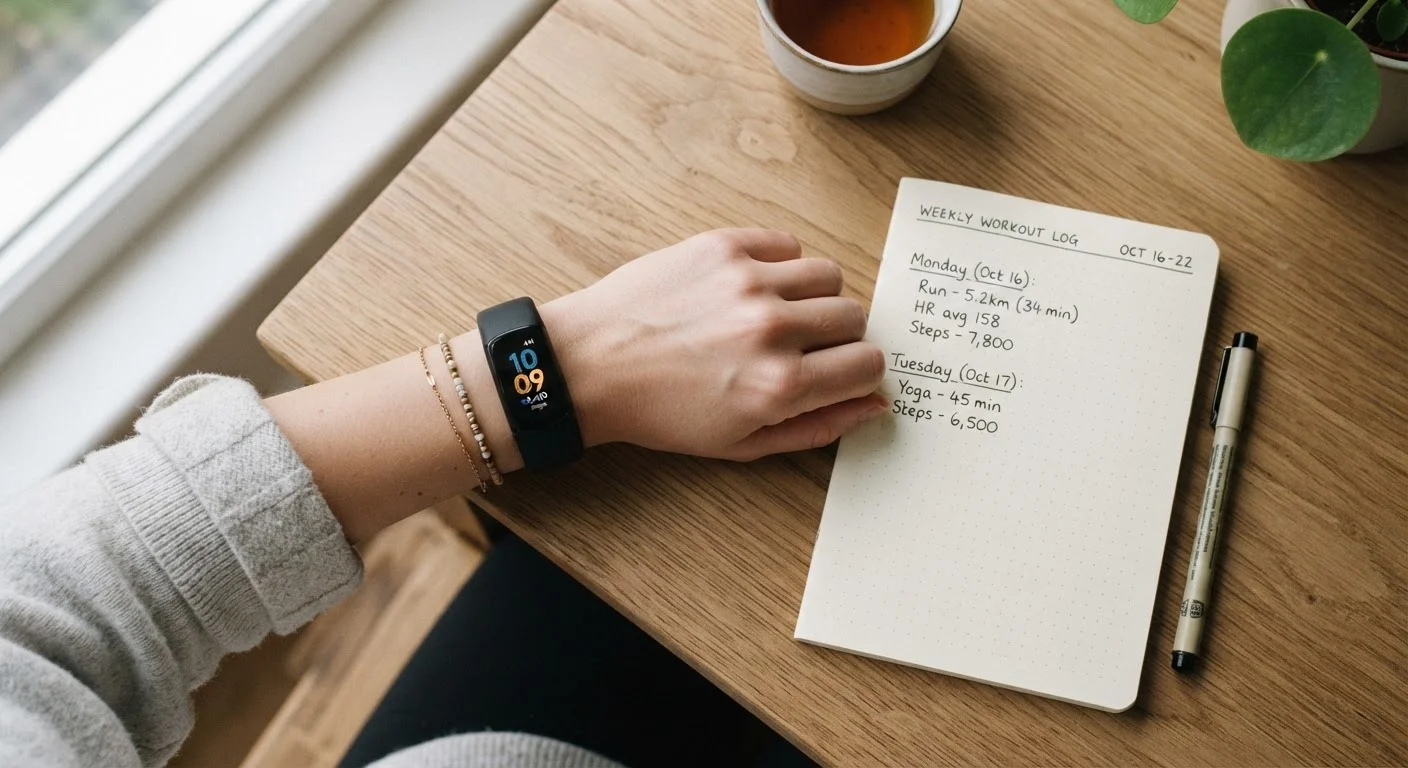
The most useful signal is your own trend over days and weeks, not any single day's total. Use a structured movement audit to identify where your day naturally loses momentum — early afternoon, long meetings, evenings — and target those gaps specifically. Different tracking methods suit different people; if a wearable creates stress rather than motivation, a simple paper tally can serve the same behavioral function.
Small, consistent improvements across all three metrics — a few hundred more steps, one fewer hour seated, a handful more active minutes — are the compound movements that add up to meaningful fitness gains over months. No single day's numbers define your health trajectory.
This article provides general health information for educational purposes only and is not a substitute for advice from a qualified healthcare or fitness professional. Consult a professional before making significant changes to your activity levels, particularly if you have existing health conditions.