
The Overlap Between Chronic Conditions: Why Many Adults Manage More Than One

Key Takeaways
Multimorbidity
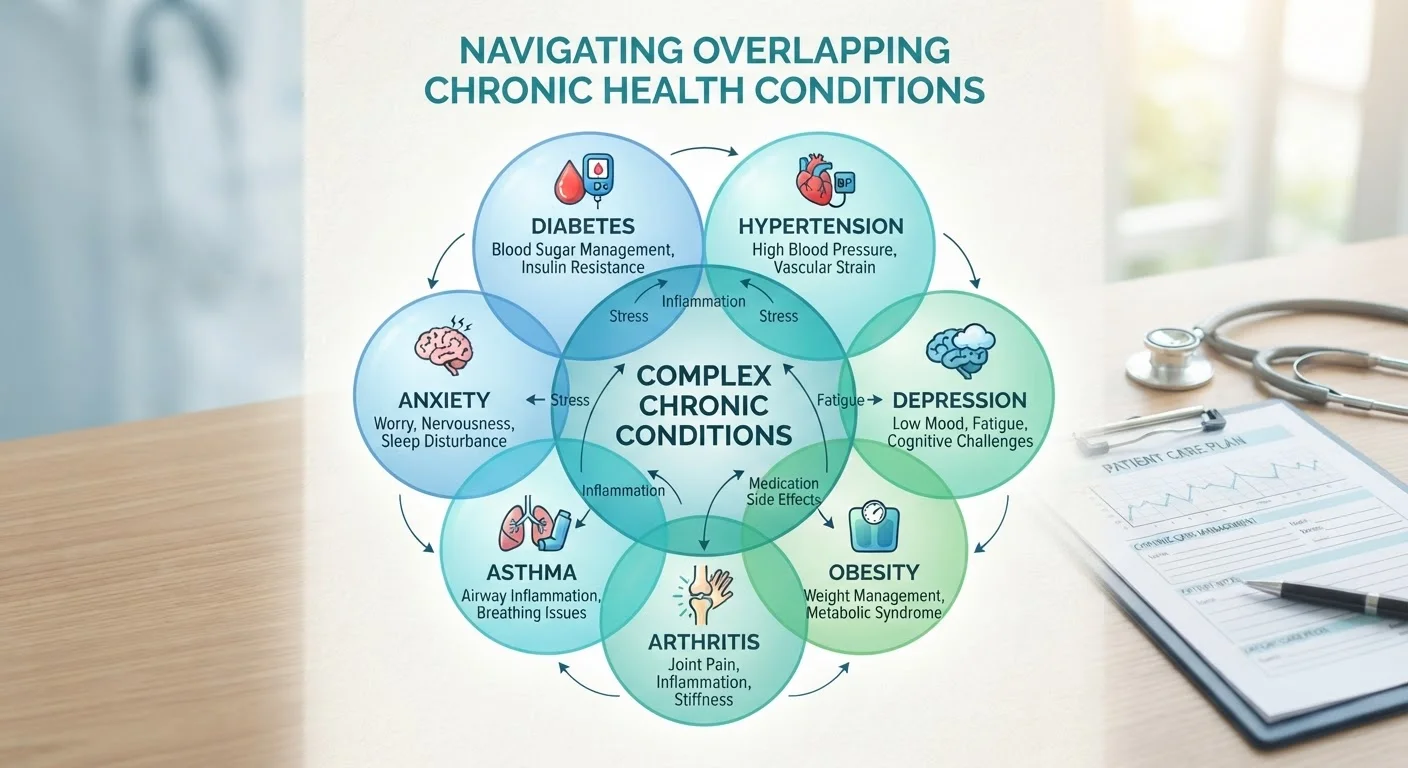
Multimorbidity refers to the presence of two or more chronic health conditions in the same person at the same time. It is not simply bad luck — many conditions share underlying biological, behavioral, and social risk factors that cause them to cluster together. Managing multimorbidity typically requires coordinated care across multiple health concerns rather than treating each one in isolation.
Clinicians distinguish multimorbidity (two or more conditions, without designating one as primary) from comorbidity, which traditionally frames additional conditions relative to one index disease.
How Common Is It to Have More Than One Chronic Condition?
Living with a single chronic condition has become the exception rather than the rule for many American adults. According to the Centers for Disease Control and Prevention, approximately 60% of US adults have at least one chronic condition, and roughly 40% have two or more. Among older adults, multimorbidity is even more prevalent — but it is by no means limited to older age groups.
The conditions that most frequently cluster together include hypertension (high blood pressure), type 2 diabetes, obesity, cardiovascular disease, chronic kidney disease, depression, and osteoarthritis. These are not random pairings. They tend to co-occur because they share biological and lifestyle risk factors that set multiple disease processes in motion simultaneously.
Understanding the difference between acute and chronic symptoms is a useful first step — chronic conditions, by definition, persist over time and typically require ongoing management rather than a one-time intervention.
40%
US adults with two or more chronic conditions
According to the Centers for Disease Control and Prevention, approximately 40% of American adults have multiple chronic conditions simultaneously.
60%
US adults with at least one chronic condition
The CDC estimates that about 6 in 10 US adults live with at least one chronic disease, making chronic condition management a central challenge in adult health.
4 in 5
US healthcare costs tied to chronic disease
The CDC attributes approximately 90% of the nation's annual healthcare expenditure to people with chronic and mental health conditions.
Why Chronic Conditions Cluster: Shared Pathways
At the heart of many co-occurring conditions are a few shared biological mechanisms. Chronic low-grade inflammation is one of the most well-documented. Elevated inflammatory markers — such as C-reactive protein — are found in people with obesity, type 2 diabetes, cardiovascular disease, and depression, suggesting that inflammation is not merely a symptom but a driving pathway.
Insulin resistance is another major thread. When cells become less responsive to insulin, blood glucose rises — but insulin resistance also disrupts blood pressure regulation, contributes to fat accumulation around abdominal organs, and raises cardiovascular risk. This explains why type 2 diabetes and hypertension so frequently appear together. For a closer look at how blood pressure fits into this picture, see how hypertension develops and what influences it.
Social determinants of health — including access to nutritious food, safe spaces for physical activity, and economic stress — also create conditions in which multiple chronic diseases take root and progress simultaneously. Chronic psychological stress itself activates physiological stress pathways that promote inflammation and metabolic disruption, linking mental and physical health in tangible ways.
What Multimorbidity Means for Treatment and Care
Managing multiple conditions at once introduces complexity that single-disease care frameworks are not designed to handle. A medication that effectively lowers blood pressure may interact with a drug used for a thyroid condition. A high-protein dietary recommendation for kidney health may conflict with carbohydrate targets for blood glucose control. These tensions are real, and navigating them requires a provider — ideally a primary care physician — who can see the full picture.
Polypharmacy (taking multiple medications simultaneously) is a significant concern for people with multimorbidity. The more medications a person takes, the higher the risk of drug-drug interactions, side effects, and adherence challenges. Regular medication reviews with a healthcare provider are an important safeguard.
Bring a Complete Medication List to Every Visit
When managing more than one condition, it is easy for prescriptions from different providers to accumulate without any single clinician reviewing them together. At every appointment — with any provider — bring a current list of all medications, supplements, and over-the-counter products you take. This single habit significantly reduces the risk of harmful drug interactions.
Conditions that affect related organ systems deserve particular attention. Thyroid dysfunction, for example, influences cardiovascular function, metabolism, and mood — meaning an unmanaged thyroid condition can worsen outcomes in someone also managing heart disease or depression. Understanding hypothyroidism and hyperthyroidism side by side can help clarify how thyroid health fits into a broader chronic condition profile.
People living with multiple conditions also tend to require adjusted preventive care schedules. Preventive care priorities shift when chronic conditions are present — certain screenings become more frequent while others may be deprioritized based on overall risk profile.
Self-Management Strategies That Work Across Conditions
While care coordination belongs in the hands of qualified healthcare professionals, individuals living with multimorbidity can take meaningful steps to support their own health. One of the most practical is structured symptom tracking — recording when symptoms occur, their severity, and any potential triggers. This kind of data helps providers identify patterns that might otherwise be missed across separate appointments. Building symptom tracking habits before your next appointment gives you concrete information to share with your care team.
Lifestyle factors that broadly reduce inflammation and improve metabolic function — such as regular moderate physical activity, sleep consistency, and stress reduction — have been shown to support management across several common chronic conditions simultaneously. However, any specific targets or significant changes should always be discussed with a qualified provider who understands your full health situation.
Finally, communication is itself a form of self-management. Bringing an updated medication list to every appointment, asking about interactions when a new treatment is proposed, and ensuring all specialists are aware of your other conditions are simple but high-impact habits. A whole-person approach — rather than condition-by-condition management in separate silos — consistently produces better outcomes for people living with multimorbidity.
This article is for general informational and educational purposes only and does not constitute medical advice. Always consult a qualified healthcare professional for guidance specific to your health history and needs.