
| Equipment required | None — floor space only |
| Movement patterns covered | Push, squat, hinge, core, pull |
| Suitable for | Hotel rooms, parks, small living spaces |
| Minimum space needed | Approximately 6 × 4 feet |
| Beginner modifications | Included for every movement |
| Progressions included | Yes — one per movement |
How to Use This Reference
This guide is organized by movement pattern — the functional categories that define how your body moves rather than which individual muscles fire in isolation. Each entry includes the primary muscles targeted, key form cues, and one beginner modification and one progression. Whether you're in a hotel room, a park, or your living room, these movements translate directly. For a broader framework on building consistent exercise habits without a gym, see The Busy Adult's Complete Guide to Working Out at Home.
All movements here are general fitness information. If you have an injury, chronic condition, or are returning from a period of inactivity, consult a qualified healthcare or fitness professional before beginning any new exercise routine.
| Equipment required | None — floor space only |
| Movement patterns covered | Push, squat, hinge, core, pull |
| Suitable for | Hotel rooms, parks, small living spaces |
| Minimum space needed | Approximately 6 × 4 feet |
| Beginner modifications | Included for every movement |
| Progressions included | Yes — one per movement |
Movement-by-Movement Reference
Push Pattern
- Push-Up
- Targets: Chest, anterior shoulder, triceps, core stabilizers.
Form cues: Hands just outside shoulder width; body forms a straight line from heel to crown; lower until chest nears the floor; elbows track at roughly 45° from the torso.
Beginner mod: Elevate hands on a stable surface (countertop, bench) to reduce load.
Progression: Slow the descent to a 3–4 second count (tempo push-up) or elevate feet. - Pike Push-Up
- Targets: Shoulders (deltoids), upper trapezius, triceps.
Form cues: Begin in a downward-dog hip position; lower the crown toward the floor between your hands; press back to start.
Beginner mod: Reduce range of motion by not lowering as far.
Progression: Elevate feet to shift more load onto the shoulder.
Squat Pattern
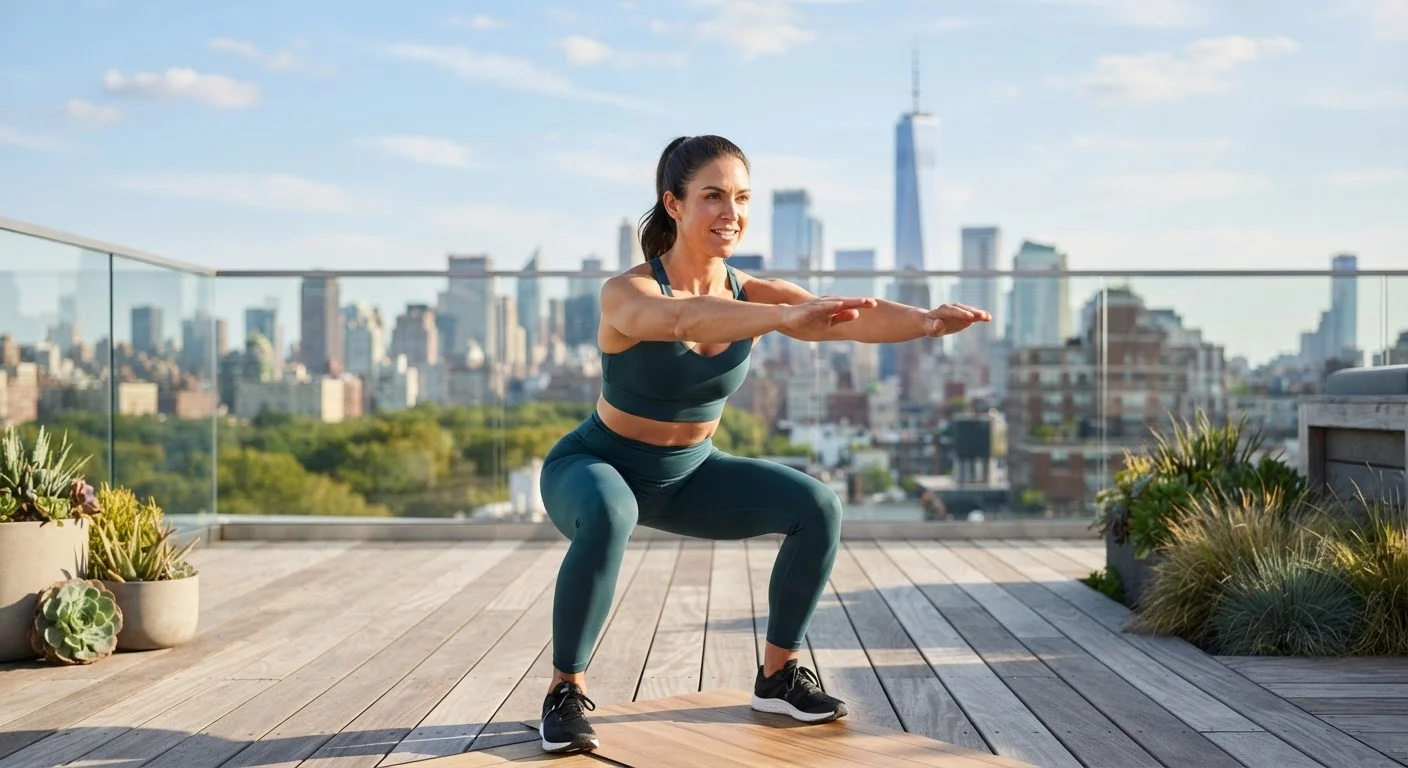
- Bodyweight Squat
- Targets: Quadriceps, glutes, hamstrings, core.
Form cues: Feet shoulder-width apart, toes slightly out; descend until thighs approach parallel; keep chest tall and knees tracking over toes.
Beginner mod: Squat to a chair seat and stand (box squat).
Progression: Pause 2 seconds at the bottom (pause squat) or add a jump at the top. - Reverse Lunge
- Targets: Glutes, quadriceps, hamstrings, single-leg stability.
Form cues: Step one foot back and lower the rear knee toward the floor; front shin stays roughly vertical; return to standing.
Beginner mod: Hold a wall for balance.
Progression: Add a forward knee drive at the top.
Hinge Pattern
- Glute Bridge
- Targets: Glutes, hamstrings, lumbar stabilizers.
Form cues: Lie on your back, feet flat and hip-width; drive hips to ceiling by squeezing glutes; avoid overextending the lower back at the top.
Beginner mod: Reduce range by lifting only a few inches.
Progression: Single-leg variation — extend one leg while bridging on the other.
Core & Anti-Rotation
- Plank
- Targets: Transverse abdominis, obliques, erector spinae, shoulder girdle.
Form cues: Forearms or hands on floor; body forms a straight line; brace the abdomen and squeeze glutes; avoid letting hips sag or pike.
Beginner mod: Drop knees to floor while keeping hips level.
Progression: Lift alternate arms or legs for added instability. - Dead Bug
- Targets: Deep core stabilizers, hip flexors, coordination.
Form cues: Lie on your back, arms extended toward the ceiling, knees at 90° above hips; slowly lower one arm and the opposite leg toward the floor without arching your lower back; return and repeat.
Beginner mod: Move only the arms or only the legs at first.
Progression: Add a long exhale through each repetition to increase core tension.
Pull & Carry Patterns
True pulling movements (rows, pull-ups) typically require some form of anchor or overhead bar. For a candid assessment of what bodyweight training can and can't deliver for strength development, see Strength Training Without a Gym. In purely equipment-free contexts, the dead bug and plank variations above complement pushing and squatting patterns well.
Movement pattern
A category of motion the human body performs — such as pushing, pulling, squatting, or hinging — rather than a named exercise. Training by pattern ensures balanced muscle development.
Tempo
The speed at which each phase of a repetition is performed. Slowing a movement (e.g., a 3-second descent) increases time under tension and can intensify an exercise without adding load.
Anti-rotation
A core training concept where the goal is to resist rotation rather than create it. Exercises like the plank and dead bug train this quality, which supports spinal stability.
Regression / Modification
A simpler version of an exercise that reduces load, range of motion, or balance demand. Regressions allow beginners or those with limitations to build toward the full movement safely.
Hip hinge
A fundamental movement pattern involving bending at the hip while maintaining a neutral spine. The glute bridge is a floor-based example that targets the posterior chain.
Combining Movements into a Quick Session
A reference list becomes most useful when you can snap movements together into something purposeful. A simple circuit structure — one push, one squat, one hinge, one core movement — covers the major patterns in under 20 minutes. Pair this guide with the ideas in Building a Movement-Rich Day Without Setting Foot in a Gym to weave sessions into travel days or busy schedules.
Rest between sets as needed for recovery — there is no universal prescription. Adjust tempo, rep range, and rest based on your current fitness level and goals. If you spend extended periods seated, desk-friendly movement breaks complement these fuller sessions well. For a deeper look at exercises that deliver the most return per session, explore Compound Movements You Can Do at Home.
This article is for general informational and educational purposes only and is not a substitute for professional medical or fitness advice. Consult a qualified healthcare provider before starting a new exercise program, particularly if you have any health conditions or injuries.